
Former Rwandan Ambassador Welcomes Sanctions Against Rwanda’s Military
Dr. Theogene Rudasingwa Photos: YouTube Screenshots The following is and open letter sent to U.S. Secretary of State Marco Rubio by former Ambassador Dr. Theogene Rudasingwa regarding the recent sanctions placed against the Rwanda Defence Force by the U.S. Department of the Treasury’s Office of Foreign Assets Control. Dear Mr. Secretary, I write to express my sincere appreciation for the United States Department of the Treasury’s March 2 action, in coordination with the State Department, to designate the Rwanda Defence Force (RDF) and four of its senior commanders for their role in destabilizing eastern Democratic Republic of the Congo. For the benefit of the wider public, it is important to state clearly what this action entails. The United States has designated the RDF as an institution, along with Lieutenant General Mubarakh Muganga, Chief of Defence Staff; Major General Vincent Nyakarundi, Army Chief of Staff; Major General Ruki Karusisi, Commander of the 5th Infantry Division; and Brigadier General Stanislas Gashugi, Commander of the Special Operations Forces. According to the U.S. Government’s findings, these individuals and the units under their authority have supported and coordinated with the M23 armed group—an already sanctioned entity—through operational assistance, command oversight, and direct engagement in eastern Congo, actions that have contributed to violence, displacement of civilians, and the undermining of agreed peace frameworks. The sanctions impose asset freezes within U.S. jurisdiction, prohibit U.S. persons from engaging in transactions with the designated actors, and signal to the international financial system that involvement in such activities carries consequences. This is a serious and principled step. Peace agreements must be credible. When violations go unpunished, diplomacy erodes. By acting in response to documented support for an armed group operating across borders, the United States has reinforced the integrity of negotiated commitments and affirmed that regional stability cannot coexist with proxy warfare. I express my gratitude not only because action has been taken, but because it reflects a recognition that instability in the Great Lakes region is not abstract. It has human faces—families displaced, communities fractured, and generations shaped by recurring cycles of insecurity. If I may, in the spirit of constructive engagement, I would respectfully suggest that this important step could now evolve into a broader accountability architecture. In that context, the United States might consider: Ensuring consistent and rigorous enforcement of the designations, including scrutiny of financial and commercial networks linked to sanctioned actors; Clarifying measurable benchmarks for compliance that would guide future diplomatic and security engagement; Supporting credible, independent investigations into alleged grave violations of international humanitarian law in eastern DRC; Strengthening transparency mechanisms in mineral supply chains, so that natural resources cease to function as accelerants of conflict; Encouraging institutional reform and protection of civic space, recognizing that long-term stability rests on accountable institutions rather than personalities. These are offered not as prescriptions, but as reflections born of long engagement with the region—as a former public servant of Rwanda, a diplomat, and a citizen committed to peaceful transformation. For three decades, cycles of conflict in the Great Lakes region have been sustained in part by the perception that geopolitical considerations would ultimately override accountability. By designating both an institution and its senior leadership, the United States has helped recalibrate that perception. Sanctions, however, are most effective when embedded within a sustained, principled framework that aligns strategic interests with human dignity and rule-based order. In that regard, this moment presents an opportunity—not only to respond to violations of a specific peace agreement, but to reinforce a culture of compliance and responsibility across the region. I commend President Donald Trump’s peace efforts in the Great Lakes, your leadership, and that of your colleagues for taking this step. I hope it marks the beginning of a steady, predictable, and institution-centered approach that contributes to lasting peace for the peoples of Rwanda, Congo, and the wider Great Lakes region. With respect and appreciation, Dr. Theogene Rudasingwa Former Ambassador of Rwanda to the United States Founder, Rwanda Truth Commission Dr. Theogene Rudasingwa formerly held positions of RPF Secretary General (1993-1996), Ambassador of Rwanda to the United States (1996-1999), and Chief of Staff for President Paul Kagame (2000-2004). He has testified before French Judges Marc Trevidic and Natalie Poux in the investigation of the shooting down of th
 Black News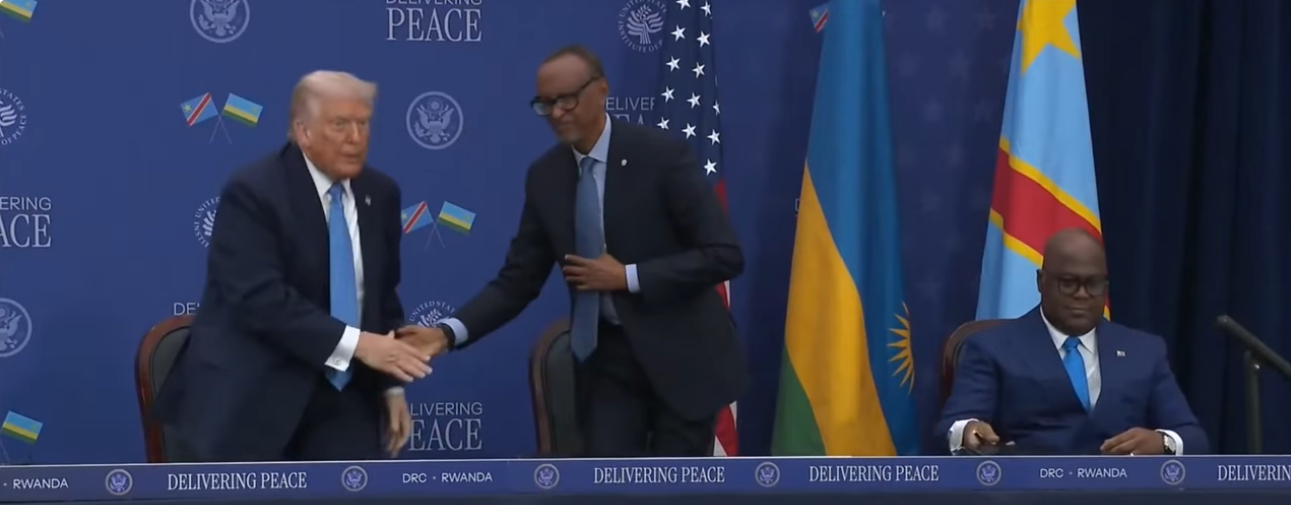


Dr. Theogene Rudasingwa
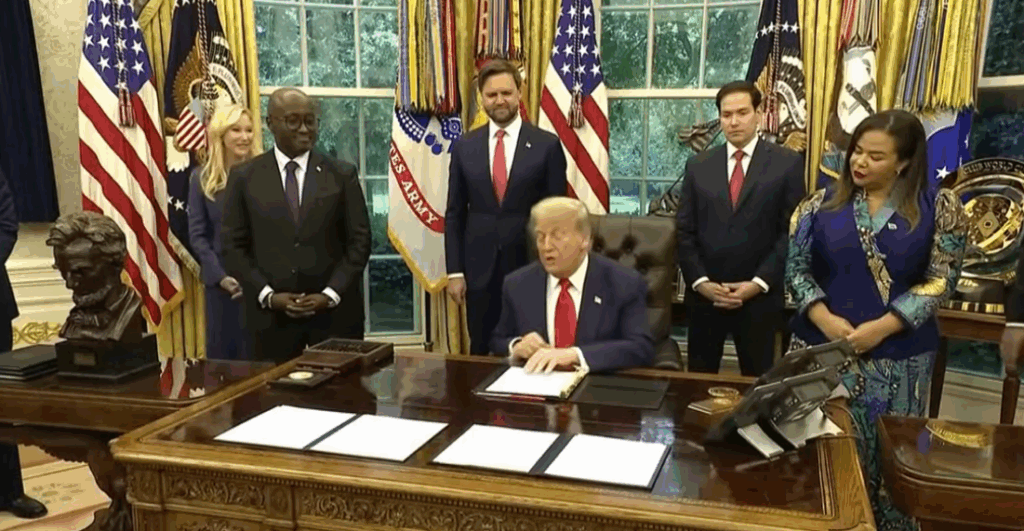
Photos: YouTube Screenshots
The following is and open letter sent to U.S. Secretary of State Marco Rubio by former Ambassador Dr. Theogene Rudasingwa regarding the recent sanctions placed against the Rwanda Defence Force by the U.S. Department of the Treasury’s Office of Foreign Assets Control.

Dear Mr. Secretary,
I write to express my sincere appreciation for the United States Department of the Treasury’s March 2 action, in coordination with the State Department, to designate the Rwanda Defence Force (RDF) and four of its senior commanders for their role in destabilizing eastern Democratic Republic of the Congo.
For the benefit of the wider public, it is important to state clearly what this action entails. The United States has designated the RDF as an institution, along with Lieutenant General Mubarakh Muganga, Chief of Defence Staff; Major General Vincent Nyakarundi, Army Chief of Staff; Major General Ruki Karusisi, Commander of the 5th Infantry Division; and Brigadier General Stanislas Gashugi, Commander of the Special Operations Forces. According to the U.S. Government’s findings, these individuals and the units under their authority have supported and coordinated with the M23 armed group—an already sanctioned entity—through operational assistance, command oversight, and direct engagement in eastern Congo, actions that have contributed to violence, displacement of civilians, and the undermining of agreed peace frameworks.
The sanctions impose asset freezes within U.S. jurisdiction, prohibit U.S. persons from engaging in transactions with the designated actors, and signal to the international financial system that involvement in such activities carries consequences.
This is a serious and principled step.
Peace agreements must be credible. When violations go unpunished, diplomacy erodes. By acting in response to documented support for an armed group operating across borders, the United States has reinforced the integrity of negotiated commitments and affirmed that regional stability cannot coexist with proxy warfare.
I express my gratitude not only because action has been taken, but because it reflects a recognition that instability in the Great Lakes region is not abstract. It has human faces—families displaced, communities fractured, and generations shaped by recurring cycles of insecurity.
If I may, in the spirit of constructive engagement, I would respectfully suggest that this important step could now evolve into a broader accountability architecture. In that context, the United States might consider:
- Ensuring consistent and rigorous enforcement of the designations, including scrutiny of financial and commercial networks linked to sanctioned actors;
- Clarifying measurable benchmarks for compliance that would guide future diplomatic and security engagement;
- Supporting credible, independent investigations into alleged grave violations of international humanitarian law in eastern DRC;
- Strengthening transparency mechanisms in mineral supply chains, so that natural resources cease to function as accelerants of conflict;
- Encouraging institutional reform and protection of civic space, recognizing that long-term stability rests on accountable institutions rather than personalities.
These are offered not as prescriptions, but as reflections born of long engagement with the region—as a former public servant of Rwanda, a diplomat, and a citizen committed to peaceful transformation.
For three decades, cycles of conflict in the Great Lakes region have been sustained in part by the perception that geopolitical considerations would ultimately override accountability. By designating both an institution and its senior leadership, the United States has helped recalibrate that perception.
Sanctions, however, are most effective when embedded within a sustained, principled framework that aligns strategic interests with human dignity and rule-based order. In that regard, this moment presents an opportunity—not only to respond to violations of a specific peace agreement, but to reinforce a culture of compliance and responsibility across the region.
I commend President Donald Trump’s peace efforts in the Great Lakes, your leadership, and that of your colleagues for taking this step. I hope it marks the beginning of a steady, predictable, and institution-centered approach that contributes to lasting peace for the peoples of Rwanda, Congo, and the wider Great Lakes region.
With respect and appreciation,
Dr. Theogene Rudasingwa
Former Ambassador of Rwanda to the United States
Founder, Rwanda Truth Commission

Dr. Theogene Rudasingwa formerly held positions of RPF Secretary General (1993-1996), Ambassador of Rwanda to the United States (1996-1999), and Chief of Staff for President Paul Kagame (2000-2004). He has testified before French Judges Marc Trevidic and Natalie Poux in the investigation of the shooting down of the President Habyarimana plane in 1994, as well as before the Spanish Judge Fernando Andreu Merelles in the case in which General Karenzi Karake and others are indicted. He has authored “Healing A Nation” and “Urgent Call.”










.png)


