Gambia, Nigeria deepen security ties amid rising regional threats
The delegation, led by Major General Khalifa Myam, was in the country as part of a week-long study tour under the theme: “Defeating Emerging Asymmetric Threats: The Need for Regional Cooperation.” The visit forms part of ongoing efforts to strengthen collaboration among countries in the ECOWAS sub-region. Welcoming the delegation on behalf of the Foreign Affairs Minister, Sering Modou Njie, Ambassador Yabou described The Gambia as Nigeria’s “second home,” reaffirming longstanding diplomatic relations and expressing appreciation for Nigeria’s continued support, particularly in training Gambian security personnel. Addressing the delegation, Ambassador Yabou stressed that the region is increasingly confronted with complex and dynamic security threats, including terrorism, maritime insecurity, irregular migration, and illegal fishing. He emphasised that no single country can tackle those challenges alone, calling for strengthened regional solidarity, intelligence sharing, and coordinated responses. He noted that Nigeria has played a pivotal role in advancing peace and security across Africa, highlighting the training of many Gambian officers in Nigerian institutions as a testament to the enduring partnership between the two nations. “Asymmetric threats demand collective action,” Ambassador Yabou said, adding that sustained cooperation, capacity building, and inclusive governance are critical to addressing root causes such as poverty, youth unemployment, climate change, and instability. He further called for stronger institutional frameworks and partnerships to safeguard sovereignty, enhance resilience, and ensure long-term peace and development in the sub-region. The engagement also provided a platform for in-depth discussions on key security concerns, including maritime security, illegal, unreported and unregulated fishing, and migration—issues increasingly affecting coastal and transit countries in West Africa. Speaking on behalf of the delegation, Major General Myam expressed gratitude for the warm reception and commended the quality of discussions, noting that the visit had strengthened mutual understanding and cooperation between the two countries. He reaffirmed Nigeria’s commitment to maintaining strong bilateral relations with The Gambia, describing the partnership as “unique and beneficial,” and pledged continued collaboration in promoting regional peace and stability. Officials say the study tour, which included visits to key Gambian institutions, is expected to enhance knowledge exchange and contribute to ongoing regional strategies aimed at combating security threats. Analysts believe the engagement signals a renewed push by west African nations to prioritise collective security, as governments increasingly recognise that addressing modern threats requires coordinated regional action rather than isolated national efforts.
 Black News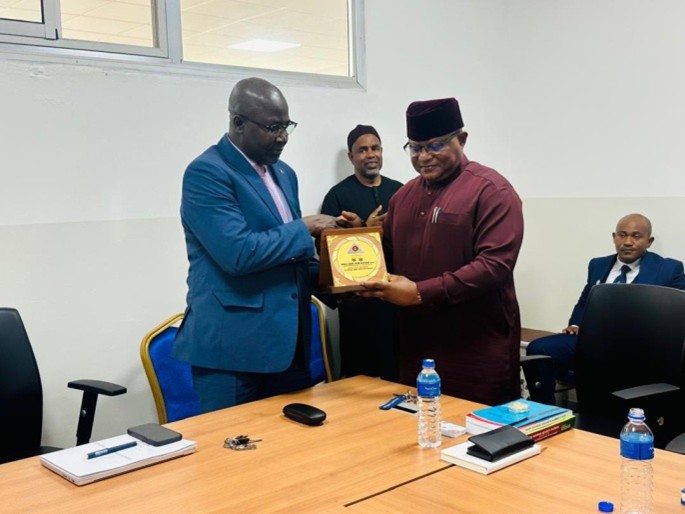


The delegation, led by Major General Khalifa Myam, was in the country as part of a week-long study tour under the theme: “Defeating Emerging Asymmetric Threats: The Need for Regional Cooperation.” The visit forms part of ongoing efforts to strengthen collaboration among countries in the ECOWAS sub-region.
Welcoming the delegation on behalf of the Foreign Affairs Minister, Sering Modou Njie, Ambassador Yabou described The Gambia as Nigeria’s “second home,” reaffirming longstanding diplomatic relations and expressing appreciation for Nigeria’s continued support, particularly in training Gambian security personnel.
Addressing the delegation, Ambassador Yabou stressed that the region is increasingly confronted with complex and dynamic security threats, including terrorism, maritime insecurity, irregular migration, and illegal fishing. He emphasised that no single country can tackle those challenges alone, calling for strengthened regional solidarity, intelligence sharing, and coordinated responses.
He noted that Nigeria has played a pivotal role in advancing peace and security across Africa, highlighting the training of many Gambian officers in Nigerian institutions as a testament to the enduring partnership between the two nations.
“Asymmetric threats demand collective action,” Ambassador Yabou said, adding that sustained cooperation, capacity building, and inclusive governance are critical to addressing root causes such as poverty, youth unemployment, climate change, and instability.
He further called for stronger institutional frameworks and partnerships to safeguard sovereignty, enhance resilience, and ensure long-term peace and development in the sub-region.
The engagement also provided a platform for in-depth discussions on key security concerns, including maritime security, illegal, unreported and unregulated fishing, and migration—issues increasingly affecting coastal and transit countries in West Africa.
Speaking on behalf of the delegation, Major General Myam expressed gratitude for the warm reception and commended the quality of discussions, noting that the visit had strengthened mutual understanding and cooperation between the two countries.
He reaffirmed Nigeria’s commitment to maintaining strong bilateral relations with The Gambia, describing the partnership as “unique and beneficial,” and pledged continued collaboration in promoting regional peace and stability.
Officials say the study tour, which included visits to key Gambian institutions, is expected to enhance knowledge exchange and contribute to ongoing regional strategies aimed at combating security threats.
Analysts believe the engagement signals a renewed push by west African nations to prioritise collective security, as governments increasingly recognise that addressing modern threats requires coordinated regional action rather than isolated national efforts.