Leveraging soft power: Taiwan and its Commonwealth diplomatic allies
By Edwin Laurent Taiwan’s concerns With its anomalies and contradictions, the situation of Taiwan can seem surreal, but the constructive ambiguity of the status quo has enabled tranquillity. Nonetheless, the perception that its closest neighbour poses a real existential threat, which it has both the will and the means to pursue, obsesses Taiwan and is […] The post Leveraging soft power: Taiwan and its Commonwealth diplomatic allies appeared first on Caribbean News Global.
 Black News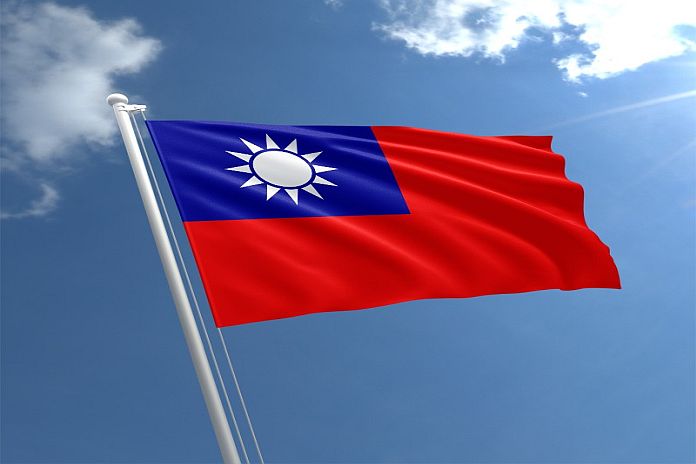


By Edwin Laurent
Taiwan’s concerns
With its anomalies and contradictions, the situation of Taiwan can seem surreal, but the constructive ambiguity of the status quo has enabled tranquillity. Nonetheless, the perception that its closest neighbour poses a real existential threat, which it has both the will and the means to pursue, obsesses Taiwan and is a key driver of its international and domestic policies. It is important to note that, although the PRC and the ROC have avoided open warfare, no armistice or peace treaty has ever been signed.
The government in Beijing rejects the legitimacy of the ROC government and is committed to unification, and, most worryingly for Taiwan, the PRC has not ruled out the military option for pursuing and achieving that goal. The fear in Taiwan is that at some point, the CCP government in Beijing might, whether by political, military or other means, launch a takeover of the island or coerce it into submission, with the resultant loss of its sovereignty and de facto independence.
Three changes contribute to the islanders’ view that they are now in a much more vulnerable position than in earlier years:
- Most significantly, China has become a global economic and political superpower.
- The People’s Liberation Army (PLA) has developed into a formidable military force.
- The ROC no longer enjoys widespread diplomatic recognition, having lost that of the UN and the bulk of its members.
Despite considerable bilateral economic collaboration and the absence of a credible threat of impending invasion from the mainland, the underlying sense of insecurity is fed by a range of measures taken by the PRC that Taiwan views as threatening and intimidating. They include:
- A plethora of grey-zone military tactics being deployed by Beijing,Footnote18 ranging from bellicose broadcasts and messaging to air and naval incursions by the Chinese military and the conduct of manoeuvres and exercises close to and sometimes even encroaching onto air and naval space that is under Taiwan’s control.
- Concerted efforts to diplomatically isolate and reduce the influence of the ROC government and bring an end to its diplomatic recognition, which would undermine its claims for national sovereignty. An example is Beijing’s consistent opposition to Taiwan’s participation in international organisations. Also, according to accusations by the US and Taiwan, the PRC often attempts to ‘poach’ remaining diplomatic allies.
- Sporadic outreaches aimed at directly or indirectly influencing public opinion in Taiwan.
Policy responses
To counter the perceived existential threat from the mainland, Taiwan’s response is founded on essentially three components, all of which are integral to its broader defence strategy.
- Military deterrence.
- Economic and commercial engagement for international power and influence.
- Diplomacy and the skilful use of soft power.
For context, the first two components will be explained, then the paper will focus on the third pillar, and how soft power is used by Taiwan to secure and retain the diplomatic support of the six Commonwealth members in its ‘battle for survival’.
Military deterrence
Taiwan has invested heavily in developing a modern, combat-ready military and currently has a formidable capability, ranking at 22nd globally (Global Firepower 2025 Military Strength Ranking). Footnote19 Its military budget is in the region of US$20 billion, which is 2.45 percent of GDP, Footnote20 and president Lai Ching-te has promised to increase defence spending to 3 percent of GDP. That, however, remains tiny when compared with China’s defence spending, which was officially set at USD 246 billion for 2024/25. Footnote21
Even if Taiwan’s firepower is dwarfed by the People’s Liberation Army, for which it would be no match in an all-out conflict, Taipei’s defence capability is sufficiently formidable to offer credible initial deterrence. Its situation can be likened to that of a porcupine, whose threat of inflicting pain could initially dissuade an aggressor, even one that is stronger. Its defence capability can deny an invader the possibility of rapid victory, thereby buying time to permit the mobilisation and deployment of international military and political support.
An integral component of this strategy is American support. Following its switch of diplomatic recognition from the ROC to the PRC, the USA adopted comprehensive legislation Footnote22 that, among other things, agreed to provide defensive weaponry to Taiwan and declared that any non-peaceful attempt to change Taiwan’s future by force or coercion would be viewed as a threat to the peace and security of the Western Pacific, and ‘of grave concern to the United States’. It is unclear from this formulation whether or not a definite obligation has been imposed by the legislation on the USA to directly intervene militarily in the event of armed conflict or an invasion of Taiwan.
[This is an excerpt from an article in The Round Table: The Commonwealth Journal of International Affairs and Policy Studies.]
- Edwin Laurent is head, the International Development Empowerment and Representation Agency (IDERA), Castries, Saint Lucia.
The post Leveraging soft power: Taiwan and its Commonwealth diplomatic allies appeared first on Caribbean News Global.