US–China mineral race heats up as US targets Africa’s largest uranium producer to increase imports
The United States is stepping up efforts to secure critical mineral supplies from Africa, focusing on uranium-rich Namibia as competition with China intensifies across the continent.
 Black News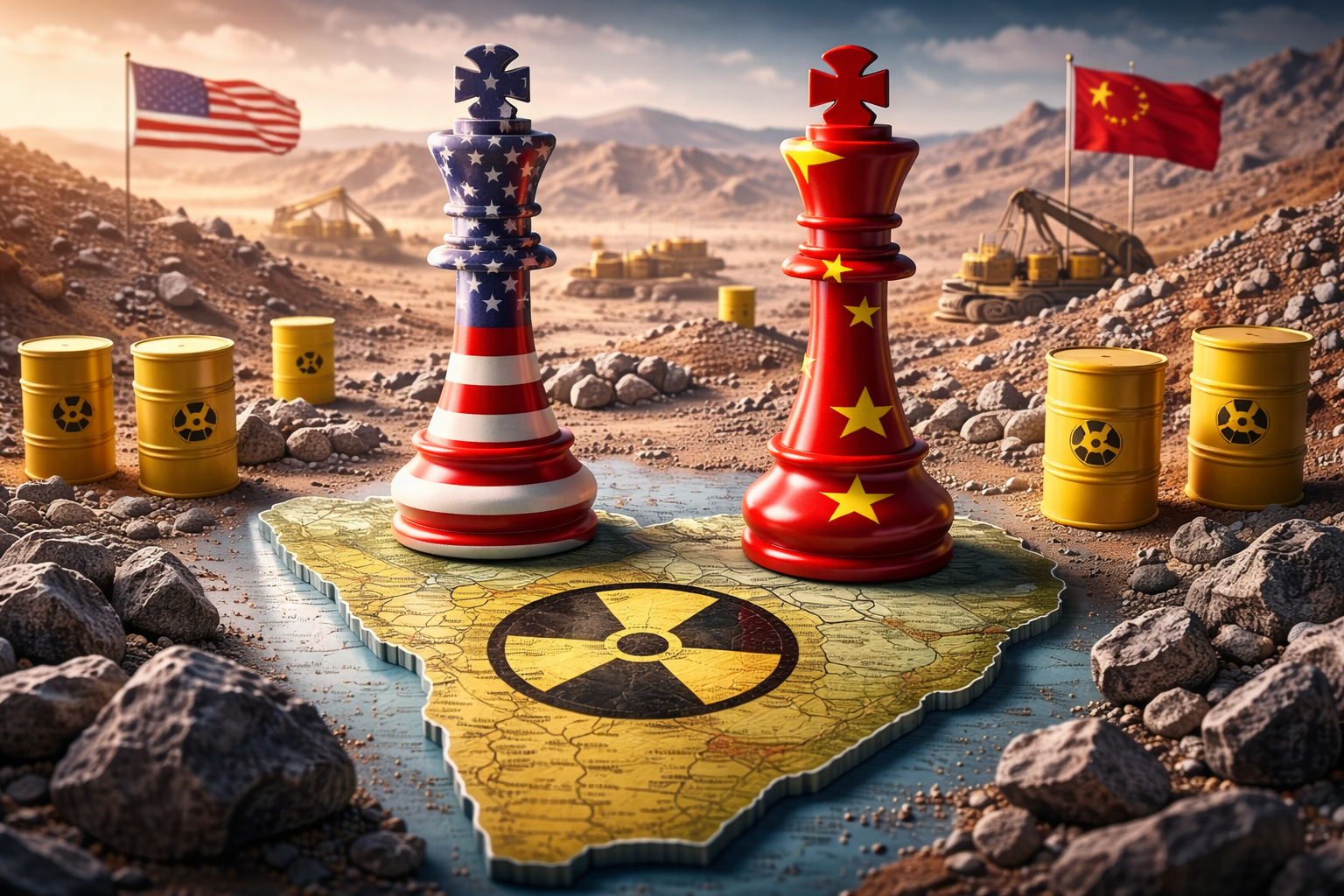



The United States is stepping up efforts to secure critical mineral supplies from Africa, focusing on uranium-rich Namibia as competition with China intensifies across the continent.
- The US is increasing efforts to secure uranium and other critical minerals from Namibia amid competition with China.
- US officials aim to boost uranium imports and support local production through partnerships with American companies.
- At the Powering Africa Summit, the strategy was presented as a way to strengthen US-Namibia ties and improve supply chain security.
- The strategic focus on Namibia reflects a broader US push to counter China’s dominance in Africa’s critical minerals
US officials say Washington plans to increase uranium imports from Namibia while also supporting local production through partnerships with American companies.
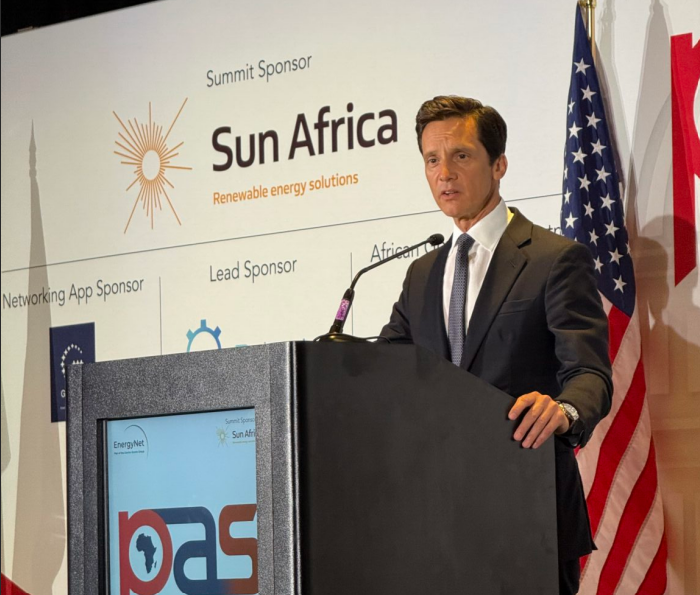
The strategy was outlined by John Giordana, the US ambassador to Namibia, who highlighted growing American interest in a sector still heavily influenced by Chinese capital.
During the Powering Africa Summit held in Washington, D.C. last month, Ambassador Giordana said US-led investment is strengthening ties with Namibia while improving energy and supply chain security.
He spoke alongside US Department of State Senior Africa Bureau Official Nick Checker, as well as representatives from EXIM, the US Trade and Development Agency (USTDA), the Millennium Challenge Corporation, and the US Chamber of Commerce.
He said future industrial strength rests on three pillars: reliable energy, secure critical mineral supply chains, and the infrastructure needed to scale both.
“Countries like Namibia that can deliver these elements at scale will shape the global economy in the decades ahead,” he said, adding that the US aims to anchor American capital, expertise, and technology in this transition to deepen long-term cooperation with Namibia.
Ambassador Giordana reiterated this position in an interview with Bloomberg on April 17, pointing to rising global demand driven by the expansion of nuclear power and describing uranium as a key issue for both countries
He added that no specific projects or investments have yet been announced, but efforts are underway to align US commercial interests with Namibia’s mining sector.
The ambassador also noted increasing engagement from US firms seeking connections with institutions such as the US International Development Finance Corporation (DFC) and the Export-Import Bank (Exim), suggesting growing private-sector interest in African mineral assets.
US push to counter China’s dominance in Africa’s critical minerals
Namibia ranks as Africa’s top uranium producer and is consistently among the world’s leading suppliers, accounting for about 10–12% of global output and benefiting from a well-established mining sector and stable regulatory framework
Beyond uranium, Namibia is also rich in gold and diamonds and is developing lithium, rare earths, and copper—minerals central to the global energy transition. These resources place the country at the centre of intensifying US–China competition.
Back in Namibia on April 2, Ambassador Giordano met with Minister of Industries, Mines and Energy Hon. Modestus Amutse to discuss a strategic shift in US–Namibia relations, focusing on trade expansion, investor-led development, capital mobilisation, and industrial resilience.
The meeting explored deeper US investment in offshore oil and gas, alongside the use of the DFC, EXIM, and USTDA to support critical mineral exploration, value-added projects, and infrastructure development along the Southern African energy corridor.
Both sides also discussed civil nuclear cooperation, anchored in Namibia’s status as a leading uranium producer and its role in a diversified global energy mix.
The US push comes amid efforts to expand its footprint in Africa’s critical minerals sector, where China maintains a strong position through long-term investment and infrastructure-backed deals.
Tensions over mineral access have also widened beyond southern Africa, with Washington reportedly exploring deeper ties with resource-rich countries such as the Democratic Republic of Congo to secure cobalt and copper supplies and reduce dependence on China.
As global demand for critical minerals rises, Africa is increasingly becoming a key battleground in US–China economic rivalry.