
Egypt move to secure wheat imports from Russia as global food security fears grow
Egypt is moving to deepen its grain partnership with Russia as authorities seek to shield the country from growing global food supply disruptions and rising pressure on strategic food reserves.
 Black News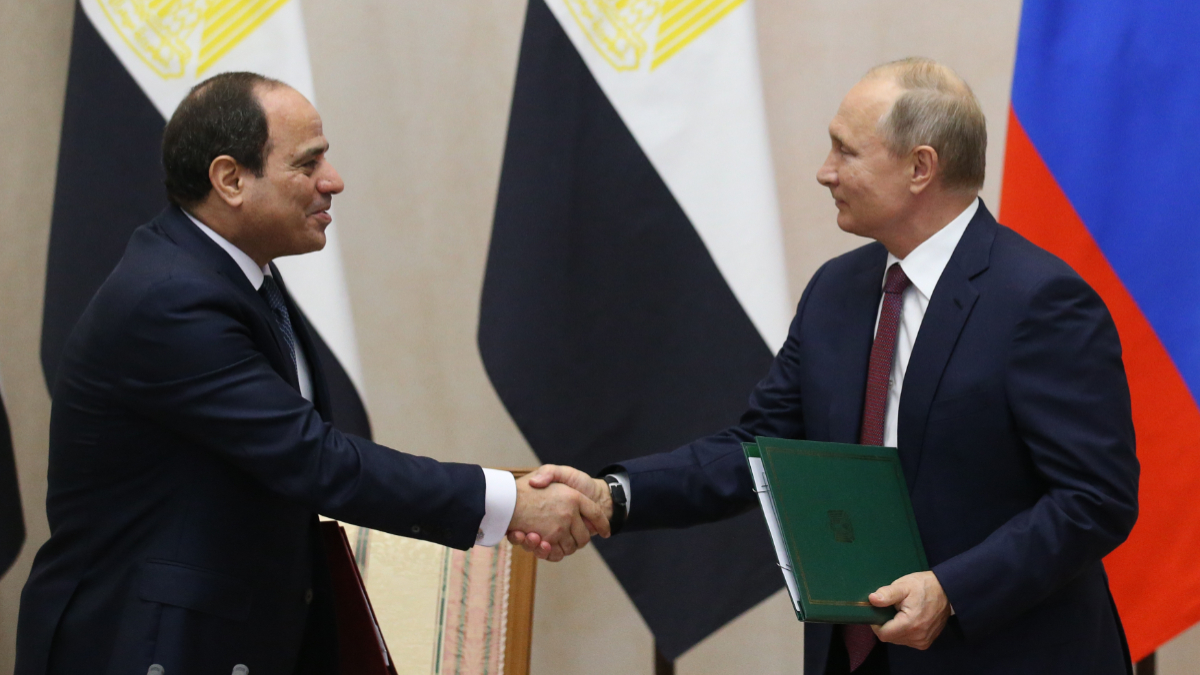
![Russian President Vladimir Putin (R) greets Egyptian President Abdel Fattah el-Sisi (L) during their meeting in Sochi, Russia, October,17, 2018. [Photo by Mikhail Svetlov/Getty Image]](https://ocdn.eu/pulscms/MDA_/b771d04f6d321cc058a6c8e784de6420.jpg)
Egypt is moving to deepen its grain partnership with Russia as authorities seek to shield the country from growing global food supply disruptions and rising pressure on strategic food reserves.
- Egypt is seeking deeper grain cooperation with Russia as global food supply risks continue to rise.
- Talks at the Russian Grain Forum in Sochi focused on long-term wheat supply agreements and strategic food reserves.
- Egypt and Russia also explored investment opportunities in grain storage, logistics, and digital supply chain infrastructure.
- The move reflects Cairo’s wider push to secure stable wheat imports and strengthen national food security amid volatile global markets.
The latest push came during the Fifth Russian Grain Forum in Sochi, where Egypt’s Minister of Supply and Internal Trade, Sherif Farouk, held talks with executives from Russian grain giant OZK and the Russian Union of Grain Exporters and Producers over long-term wheat supply arrangements and broader food security cooperation.
The meeting signals Egypt’s growing urgency to secure stable wheat imports amid volatile global grain markets driven by geopolitical tensions, climate pressures, export restrictions, and shifting trade routes.
Russia remains one of Egypt’s most important wheat suppliers, making the relationship critical for a country that is widely regarded as the world’s largest wheat importer.
According to a statement from Egypt’s Ministry of Supply and Internal Trade, discussions focused on mechanisms to secure long-term Russian wheat shipments to stabilise Egypt’s strategic supply chains and strengthen the country’s reserves of essential commodities.
The talks were attended by Egypt’s ambassador to Russia, Hamdy Shaaban, alongside senior trade officials from both countries.
But beyond wheat imports, the discussions also revealed Egypt’s broader ambitions.
Officials explored plans linked to grain storage infrastructure, logistics cooperation, and the possibility of establishing a regional grain trade and storage hub at Egyptian ports, a move that could strengthen Egypt’s position within regional food supply networks connecting Africa, the Middle East, and global exporters.
![Wheat is loaded aboard a cargo ship in the international port of Rostov-on-Don to be shipped to Turkey, on July 26, 2022. [Photo by STRINGER/AFP via Getty Images]](https://ocdn.eu/pulscms/MDA_/a6861ba6bd5779d9a20e9752d0903ce0.jpg)
Farouk said the discussions align with efforts by both governments to expand economic cooperation, diversify supply sources, and modernise grain transportation and storage systems.
He added that Egypt is increasingly seeking partnerships with major international grain companies as it attempts to build a more resilient food security system capable of withstanding future global shocks.
For Russia, Egypt remains a strategically important market. Dmitry Sergeyev, Executive Director of OZK and President of the Russian Union of Grain Exporters and Producers, described Egypt as one of the most significant destinations for Russian grain exports and expressed interest in expanding cooperation with Cairo.
The meeting also covered possible joint investments in grain collection centres, satellite storage projects, and digital technologies linked to grain trading and logistics management.
Those discussions come as countries across Africa and the Middle East race to strengthen food security strategies following years of supply chain instability triggered by conflicts, inflation, and disruptions in global commodity markets.
Egyptian officials say securing stable food supplies remains a national security priority under the administration of Abdel Fattah el-Sisi.











![Taylor Polidore Williams Says Indie Film ‘HPV: Her Pretty Vagina’ Is Bigger Than Entertainment: ‘I Knew It Was A Necessary Conversation’ [Exclusive]](https://bossip.com/wp-content/uploads/sites/28/2026/05/17794757122146.jpg?quality=80&strip=all&w=1024&crop=0,0,100,683px#)
