Europe's search for alternatives to Russian and Middle Eastern gas revives two African pipelines worth $38 billion
Europe's quest for new energy supplies is breathing fresh life into two of Africa's most ambitious gas infrastructure projects, with a combined value of roughly $38 billion.
 Black News

Europe's quest for new energy supplies is breathing fresh life into two of Africa's most ambitious gas infrastructure projects, with a combined value of roughly $38 billion.
- Europe is showing renewed interest in the Nigeria-Morocco Atlantic Gas Pipeline and the Trans-Saharan Gas Pipeline, worth a combined $38 billion.
- These pipelines could significantly transform Africa's role in global energy markets and help Europe reduce dependence on Russian and Middle Eastern gas.
- The Nigeria-Morocco project aims to transport up to 30 billion cubic meters of gas annually along West Africa's coast to Morocco and Spain
- The Trans-Saharan pipeline will route Nigerian gas through Niger to Algeria, connecting to Europe via existing networks, with similar capacity to the Nigeria-Morocco project.
The renewed interest centers on the proposed Nigeria-Morocco Atlantic Gas Pipeline, estimated at about $25 billion, and the Trans-Saharan Gas Pipeline linking Nigeria, Niger and Algeria, valued at roughly $13 billion.
Together, the projects could reshape Africa's role in global energy markets while strengthening Europe's efforts to diversify away from Russian and Middle Eastern gas supplies.
DON'T MISS THIS: 3 African countries team up to supply Europe with 30 billion cubic metres of gas as it cuts reliance on Russia
According to Bloomberg, Europe's energy concerns have intensified amid disruptions linked to the conflict in the Middle East, increasing the strategic importance of African gas exporters, particularly Nigeria and Algeria.
The publication noted that policymakers and investors are once again paying close attention to pipeline projects that had languished for years due to financing, political and security challenges.
Two rival routes, one European market
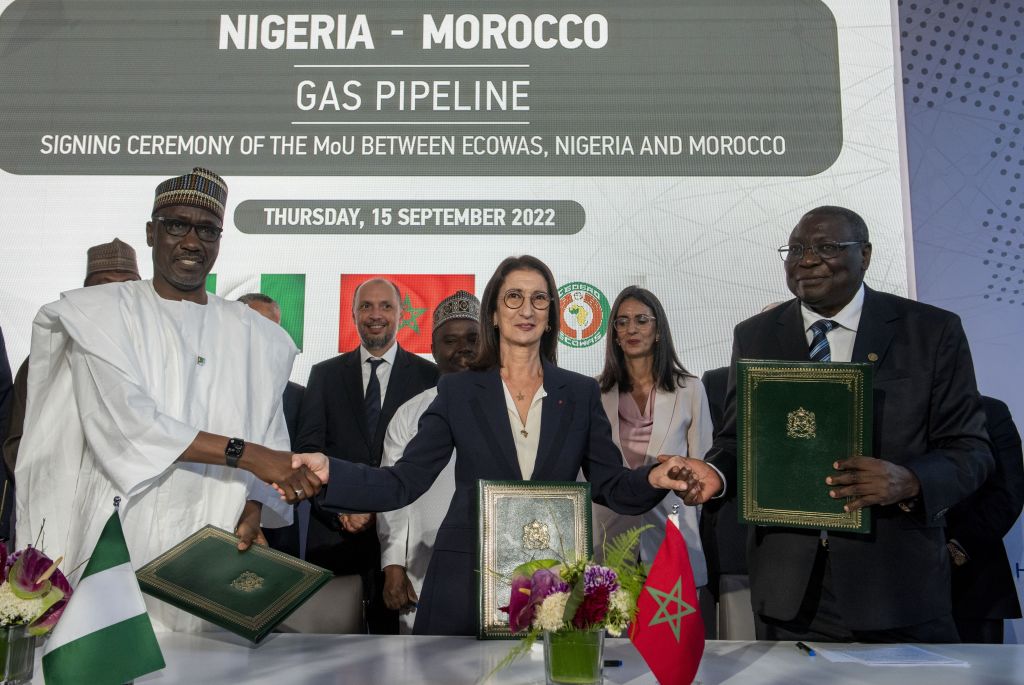
The Nigeria-Morocco project would transport Nigerian gas along the West African coast through multiple countries before connecting to European networks via Morocco and Spain.
The long-delayed project has gained fresh momentum after Nigeria and Morocco completed key technical studies and moved closer to signing a final intergovernmental agreement, a critical step toward unlocking construction of the $25 billion pipeline.
Once completed, the project is expected to strengthen West Africa's energy integration while positioning Nigeria as a major long-term gas supplier to Europe.
DON'T MISS THIS: Nigeria forfeits $3.3bn oil gains as joint Morocco $25bn pipeline project advances
The pipeline is expected to stretch nearly 7,000 kilometers and carry up to 30 billion cubic meters of gas annually. Officials from both countries are targeting a definitive intergovernmental agreement before the end of 2026.
Its rival, the Trans-Saharan Gas Pipeline, would move Nigerian gas north through Niger into Algeria, where it could connect to existing export infrastructure serving Europe.
The 4,128-kilometer pipeline is also designed to transport around 30 billion cubic meters of gas per year. Nigeria, Niger and Algeria signed agreements in 2025 to accelerate implementation after decades of delays.
For Africa, the stakes extend beyond energy exports. Both projects promise investment, industrial development, job creation and improved regional energy access.
Yet major hurdles remain, including financing needs, security concerns in the Sahel, and uncertainty over how long Europe will rely on natural gas as it accelerates its transition toward cleaner energy sources.