South Africa’s richest black man loses $700 million in 3 months as gold rally reverses
A sharp reversal in gold and mining stocks has wiped roughly $700 million from the fortune of South African billionaire Patrice Motsepe in just three months, showing how quickly global market shocks can reshape the wealth of Africa’s richest business leaders.
 Black News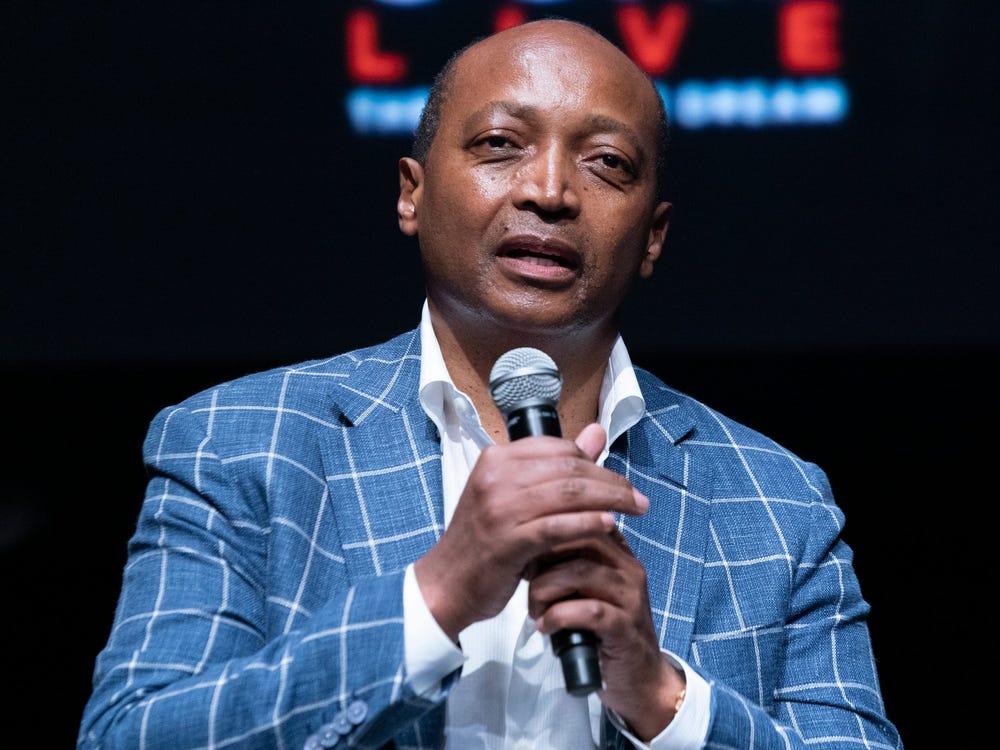

A sharp reversal in gold and mining stocks has wiped roughly $700 million from the fortune of South African billionaire Patrice Motsepe in just three months, showing how quickly global market shocks can reshape the wealth of Africa’s richest business leaders.
- Patrice Motsepe’s fortune has fallen by roughly $700 million since March as gold prices retreated and mining shares sold off.
- The decline highlights how quickly commodity-driven wealth can swing when global markets shift.
- Harmony Gold and African Rainbow Minerals, two pillars of Motsepe’s mining empire, have come under pressure from weaker sentiment and lower metals prices.
- The setback comes as the billionaire increasingly expands into banking, telecoms and technology investments beyond mining.
The mining magnate, who built his fortune through decades of investments in minerals and natural resources, saw his net worth climb to about $4.3 billion earlier this year as gold prices surged.
By early June, that figure had fallen to roughly $3.6 billion, according to Forbes estimates.
The decline is not simply a story about one billionaire losing money. It reflects a bigger reality facing resource-dependent economies and investors across Africa: fortunes tied to commodities can rise and fall dramatically based on events unfolding thousands of kilometres away.
When gold stopped climbing
The rally that boosted Motsepe’s wealth was driven largely by record-high gold prices and strong investor demand for mining shares.
For months, gold benefited from geopolitical uncertainty, concerns about global growth and demand for safe-haven assets.
That environment helped lift valuations across the mining sector and added hundreds of millions of dollars to the value of Motsepe’s holdings.
The trend later reversed.
As investors reassessed expectations for US interest rates and reacted to shifts in global risk sentiment, gold retreated from its highs. Mining companies, whose earnings are heavily influenced by commodity prices, suffered a sharper pullback than the metal itself.
For billionaire shareholders, the impact was immediate.
The mining empire behind Motsepe’s fortune
Much of Motsepe’s wealth remains tied to African Rainbow Minerals, the diversified mining group he founded and still controls.
The company has interests spanning iron ore, platinum group metals, manganese, coal, copper and gold, giving it exposure to some of the commodities most closely linked to industrial activity and global economic growth.
That diversification has historically helped cushion the business against downturns in any single commodity. But the current market environment has presented challenges on several fronts.
Demand concerns in China, the world’s largest consumer of many industrial metals, have weighed on commodity prices, while investors have become increasingly selective about mining stocks amid uncertainty over global growth.
At the same time, shares of Harmony Gold Mining Company, another key source of Motsepe’s wealth, have come under pressure as the market reassessed expectations for the sector.
Beyond the mines
The recent decline also shows why Motsepe has spent years building businesses outside mining.
In addition to his resource holdings, the billionaire has developed a growing portfolio of investments through African Rainbow Capital, targeting banking, telecommunications and technology.
Among its most prominent investments is Tyme Group, one of Africa’s most closely watched digital banking businesses, alongside stakes in telecom operator Rain and several financial services firms.
Those assets have not experienced the same level of volatility as publicly traded mining shares, helping soften the impact of the commodity downturn.
A reminder
Motsepe’s wealth swings have long mirrored the fortunes of the mining industry.
The businessman became Africa’s first Black billionaire through investments in South Africa’s mining sector before expanding into finance, telecommunications and sport.
Today he also serves as president of the Confederation of African Football, one of the continent’s most influential sporting organisations.
His latest setback serves as a reminder that even the continent’s wealthiest individuals remain exposed to forces beyond their control.
Commodity prices are influenced by geopolitics, central-bank policy, currency movements and global economic growth.
When those factors move in the right direction, fortunes can be created at remarkable speed. When they move the other way, billions of dollars can disappear just as quickly.
For Motsepe, the long-term structure of his empire remains intact. But the past three months have demonstrated how rapidly commodity markets can rewrite the fortunes of even Africa’s most successful mining investors.