AFRICOM chief: Somalia must end political infighting or risk losing US military support
Key Points AFRICOM commander Gen. Dagvin R.M. Anderson warns continued US engagement in Somalia depends on ending political infighting Anderson says the elite Danab commando force is fully built and “ready” – sustaining it is now Somalia’s responsibility Somalia’s location on key global shipping routes remains central to US strategic interest Anderson defends US airstrike […]
 Black News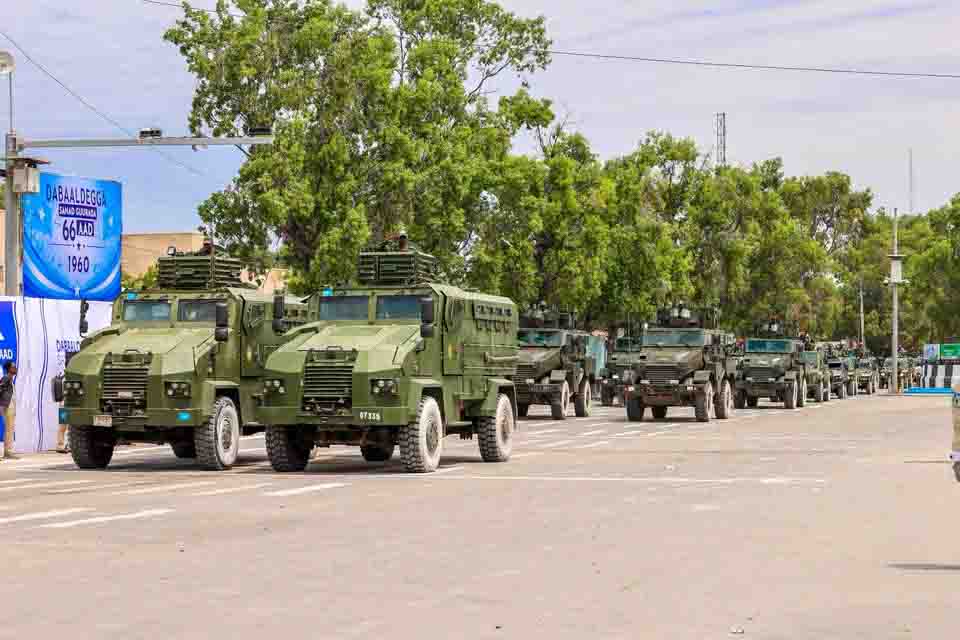

Key Points
- AFRICOM commander Gen. Dagvin R.M. Anderson warns continued US engagement in Somalia depends on ending political infighting
- Anderson says the elite Danab commando force is fully built and “ready” – sustaining it is now Somalia’s responsibility
- Somalia’s location on key global shipping routes remains central to US strategic interest
- Anderson defends US airstrike record on civilian harm, accuses Al-Shabaab of routinely making false claims
- Al-Shabaab remains resilient despite sustained pressure, though pushed back from areas near Mogadishu
- Warning comes as the US threatens to end UN logistical funding for AUSSOM by year’s end, risking the mission’s collapse
The commander of United States Africa Command has issued a direct warning to Somalia’s political class: Washington’s willingness to remain engaged in the fight against Al-Shabaab is now conditional on Mogadishu ending its infighting and political dysfunction.
In a new interview, General Dagvin R.M. Anderson said the United States has stood by Somalia for years and invested heavily in building its security capacity, but stressed that the burden must now shift decisively onto Somali institutions themselves.
“The United States has not turned its back on Somalia. We’ve been committed here for several years. We have engaged, I think, very constructively,” Anderson said, responding to speculation that Washington may be preparing to scale back its support for the counterterrorism campaign against Al-Shabaab.
Danab Built and “Ready” – Now Somalia’s to Sustain
Anderson pointed to the elite Danab commando force as the clearest evidence of America’s commitment, calling it one of the most capable units on the African continent.
“We helped build the Danab, one of the most capable forces on the continent. I am very proud of our engagement building that counterterrorism force. We have completed that. We have built that force, and it is here, and it’s ready to be used for counterterrorism,” he said.
But the AFRICOM commander was clear that responsibility now rests with Somalia to carry that investment forward. “It’s up to Somalia to sustain that force, to continue that force, to build it and continue to make it effective going into the future and use it as it was designed to counter terrorism,” Anderson said.
Somalia’s Strategic Weight in the Horn of Africa
Asked why the United States should remain invested in Somalia at all, Anderson pointed to the country’s geography and its bearing on global trade routes.
“Somalia sits on key terrain. The Horn of Africa is critically important to the commerce of the world. The waterways to the north and the entrance to much of East Africa is Somalia. So that alone makes it important,” he said.
Political Dysfunction Handing Territory Back to Al-Shabaab
Anderson expressed visible frustration over what he described as a repeating pattern: territory cleared of Al-Shabaab fighters being lost again once political attention shifts elsewhere.
“I come back to AFRICOM as the commander, and we’re retaking the same territory again. This is what causes the frustration, because that territory was lost because somewhere the focus on terrorism was not there and was elsewhere,” he said.
That frustration translated into a direct ultimatum for Somalia’s leadership. “If Somalia steps up and the government takes the lead on this, we will continue to be there because there is mutual interest. But if we can’t see that, and political instability and political infighting continue, then it’s going to be very hard for us to continue to stay engaged,” Anderson warned.
On Civilian Casualties, Anderson Defends US Airstrike Record
Pressed on US airstrikes in Somalia, which have killed dozens of civilians and wounded many more this year alone, Anderson defended the military’s process for minimizing civilian harm while acknowledging past mistakes.
“I don’t think there’s any nation in the world that does more and puts more resources into how we do this to mitigate civilian harm and civilian casualties. We take this very seriously. Any credible instance, we will investigate. There have been times when we have made mistakes and we have provided reparations,” he said.
He also accused Al-Shabaab of routinely fabricating claims of civilian harm to undermine the campaign against it. “We do investigate it, but we make sure that it is credible. But also understand that Al-Shabaab is very willing to make false accusations, and they do this almost every single time,” Anderson said.
Al-Shabaab Still Resilient Despite Sustained Pressure
Despite continued airstrikes and ground operations, Anderson reiterated that Al-Shabaab remains a resilient and capable adversary, even as Somali forces and their partners have succeeded in pushing the group back from areas near Mogadishu.
Background: A Long, Costly Partnership Now at a Crossroads
Anderson’s warning is the latest marker in a security relationship that has defined Somalia’s war against Al-Shabaab for nearly two decades, spanning US-backed African Union peacekeeping missions, drone and airstrike campaigns, and the training of specialized Somali units like Danab. That partnership has repeatedly been tested by the same fault line Anderson raised: military gains against Al-Shabaab proving difficult to hold whenever Mogadishu’s political attention turns inward.
His comments signal that this recurring tension has now reached a decision point for Washington, with the durability of US support increasingly framed as contingent on Somali political stability rather than treated as an open-ended commitment.
Backdrop: AUSSOM Funding Crisis and Uganda Talks
Anderson’s remarks land against the backdrop of a deepening crisis over the African Union mission in Somalia, AUSSOM. The United States has threatened to end its support for United Nations logistical funding of the mission by the end of the year, a move that could risk the mission’s collapse. Leaders of the troop-contributing countries met in Uganda on Friday for a crucial meeting aimed at resolving the impending funding crisis.
Contact us: info@somaliguardian.com