Birmingham Launches Children and Youth Commission to Drive Economic Mobility
By Sym Posey | The Birmingham Times Standing before students, educators, and community leaders in front of Woodlawn High School, city officials on Monday unveiled an ambitious new initiative aimed at reshaping the future of Birmingham’s children. Against the backdrop of a school that represents both the challenges and promise of the city’s education system, Mayor […]
 Black News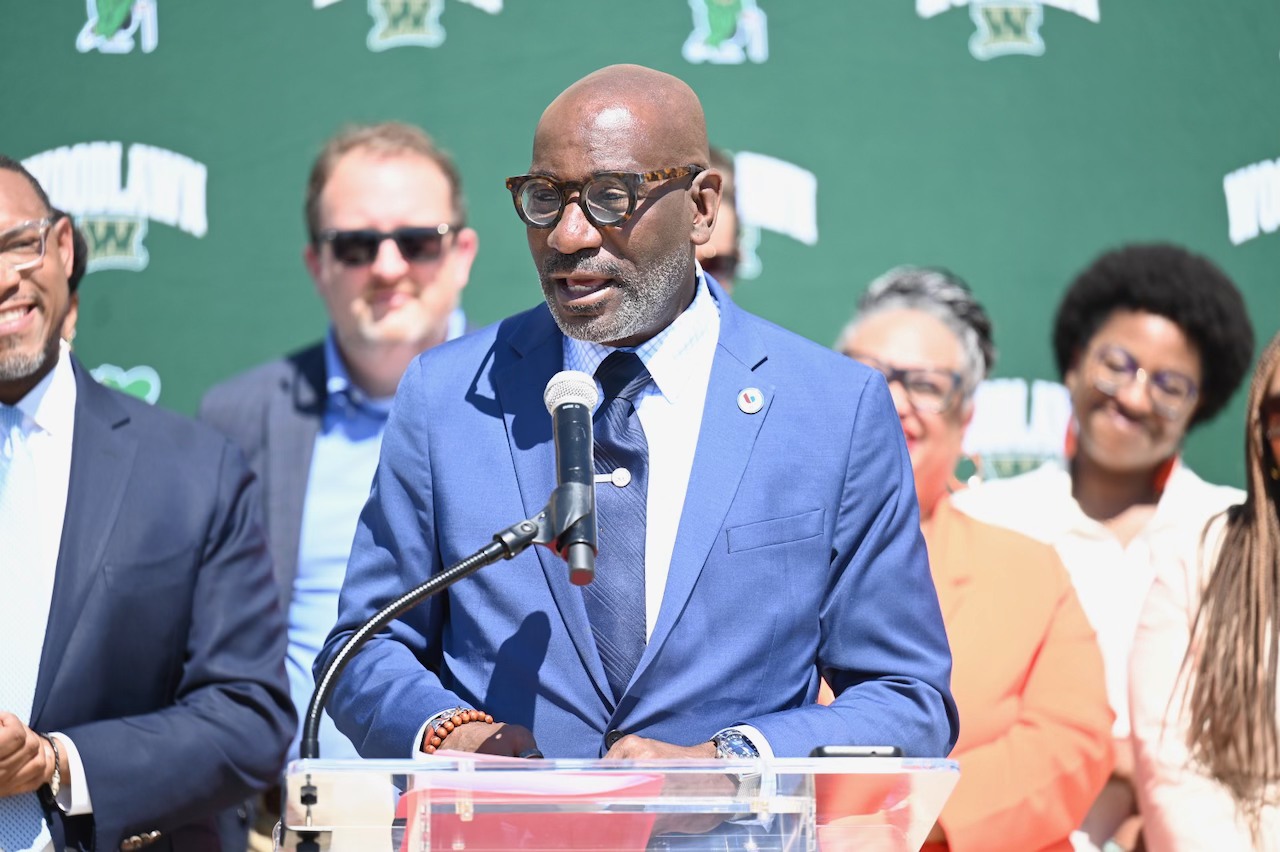

By Sym Posey | The Birmingham Times
Standing before students, educators, and community leaders in front of Woodlawn High School, city officials on Monday unveiled an ambitious new initiative aimed at reshaping the future of Birmingham’s children. Against the backdrop of a school that represents both the challenges and promise of the city’s education system, Mayor Randall Woodfin and Birmingham City Schools Superintendent Dr. Mark Sullivan announced the creation of the Birmingham Children and Youth Commission — a coordinated effort to align resources, improve educational outcomes, and expand opportunity from cradle to career.
The announcement marks a significant step in the city’s long-term strategy to address persistent inequities and create clearer pathways to economic mobility. The commission, co-led by Woodfin and Sullivan, will bring together leaders from education, philanthropy, business, and community organizations to develop a unified roadmap for investing in Birmingham’s youth.
“This is his vision,” Sullivan said of the mayor during the press conference. “We are going to help carry that vision out. It is the right work.”
A Public Roadmap
The Birmingham Children and Youth Commission is designed as a structured, time-bound initiative rather than a symbolic advisory group. Over the coming months, members will convene for three sessions to review citywide data, identify systemic gaps, and craft a comprehensive “cradle-to-career” strategy. That process will culminate in a public roadmap intended to guide investments in children and families for years to come.
Mayor Woodfin emphasized the urgency and intentionality behind the effort.
“This is not a study group. This is not a listening tour,” he said. “This is a structured, time-bound process designed to produce a plan — and then execute on that plan.”
The initiative comes at a critical moment for Birmingham. According to data cited by the mayor, approximately 73,000 children in the city are living in poverty. Even more striking, only about 6% of children born into poverty in Birmingham reach the highest income levels as adults—a figure that drops to as low as 1–3% in some neighborhoods.
“These numbers should keep everyone up at night,” Woodfin said. “Far too many of our children — the zip code they’re born in still determines the life they get to live.”
Bridging the Gap
For Superintendent Sullivan, the commission represents an opportunity to bridge the gap between education and real-world outcomes. While Birmingham City Schools has seen measurable improvements over the past five years, he acknowledged that academic progress alone is not enough.
“Students do not learn in isolation,” Sullivan said. “They learn with their parents, they learn in their communities. As a community, we need to come together to make sure our scholars have the skills necessary not only to be successful in school, but to be successful in life.”
That philosophy has already shaped changes within the school system. Sullivan highlighted the district’s decision to rename its “postsecondary readiness” department to “postsecondary success,” signaling a shift in focus from graduation to long-term achievement.
“The goal should not be getting here as a 12th grader and graduating,” he said. “The goal should be: once they’ve graduated, how are they positioned to be successful in life?”
He outlined four potential pathways for students after high school — employment, higher education, enlisting in military service, or entrepreneurship — often referred to as the “four Es.” The commission, he said, will help ensure students are prepared to succeed in any of those directions.
Neighborhood-Focused Strategy
A key component of the initiative is its emphasis on neighborhood-level engagement. City leaders plan to align schools and community partners in targeted areas, creating coordinated systems of support tailored to local needs.
“The data is clear — outcomes for children vary dramatically depending on where they live in Birmingham,” Woodfin said. “So, our approach has to meet children and families where they are.”
The commission will work to identify existing assets within neighborhoods while addressing gaps in services. A supporting Steering Committee will meet between sessions to conduct detailed analysis, map resources, and maintain momentum.
Ultimately, officials aim to build a scalable, citywide infrastructure that connects efforts across sectors and eliminates barriers for families.
“The goal is to build a system that aligns effort across sectors, removes barriers for families, and creates real, tangible pathways for economic mobility,” Woodfin said.
National Context
The Birmingham initiative is modeled in part after the Harlem Children’s Zone, a nationally recognized nonprofit known for its cradle-to-career approach. Representatives from the organization were present at the announcement, underscoring the broader significance of the effort.
“This is not some commission to figure out what to do,” Christian Rhodes, Chief National Impact Officer at Harlem Children’s Zone, said during the event. “Great work is already happening here. This is about identifying those efforts and scaling them up.”
Rhodes also framed the initiative within a larger national context, noting that Birmingham is among a growing number of cities adopting comprehensive, data-driven strategies to improve outcomes for children.
The Blueprint
The commission’s work will culminate in the release of Birmingham’s Cradle to Career Roadmap, expected later this year. The document will outline a shared vision for the city’s youth, highlight key challenges and opportunities, and identify areas where greater coordination and investment are needed.
Woodfin described the roadmap as a generational blueprint rather than a short-term plan.
“It will be the blueprint for how this city invests in our children—not for an election cycle, but for a generation,” he said.
The mayor also emphasized that the recommendations will be tied directly to future policy and funding decisions.
“The recommendations that come out of this process will not sit on a shelf somewhere and collect dust,” he said. “They will help guide future investments, coordination, and long-term strategy.”
Community Collaboration
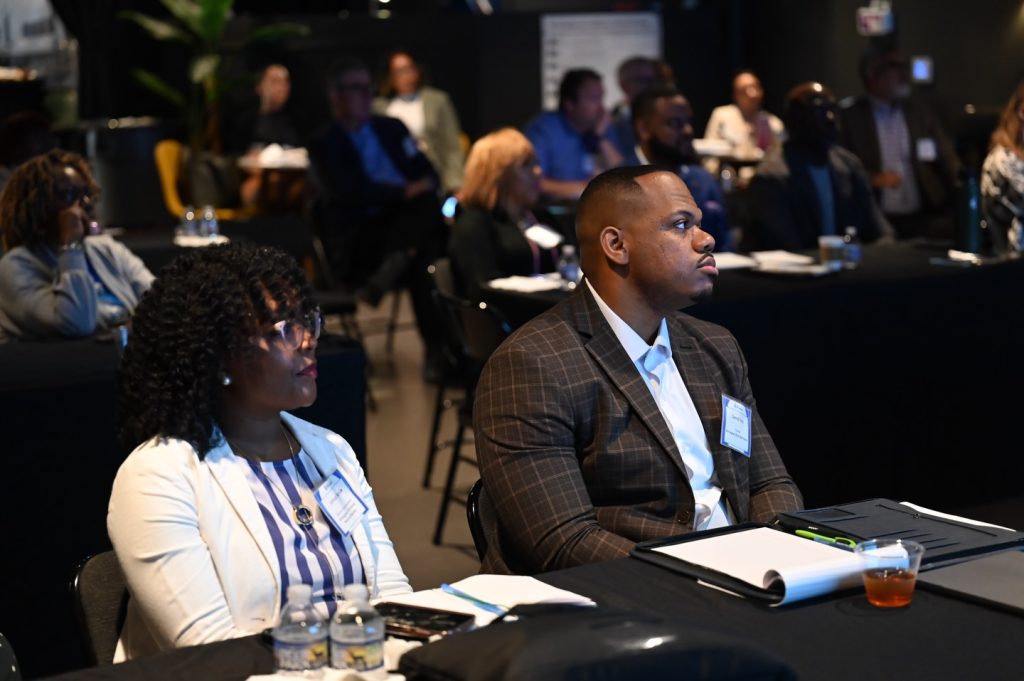
The commission includes a diverse group of leaders from across Birmingham, including representatives from education, nonprofit organizations, and advocacy groups. Among them are Carlos Aléman of the Hispanic and Immigrant Coalition of Alabama, Samantha Williams of Birmingham Promise, Mariohn Michel of Breakthrough Birmingham, and Dr. Ashley Samuels of the Birmingham Education Foundation.
City officials say this broad coalition is essential to the initiative’s success.
“I’m asking our community organizations to align their efforts and collaborate in a new way,” Woodfin said. “I’m asking our philanthropic partners to invest in the planning and coordination that will make this work sustainable. I’m asking employers to step up and build real pathways to careers.”
He also called on parents and residents to play an active role.
“I’m asking every resident of Birmingham to see this work as their own,” he said.
Speakers at the event repeatedly described the launch as a historic milestone — not only for Birmingham but for cities nationwide.
“For the first time in the country, the mayor, the superintendent, and philanthropic leaders have all come together to establish a commission for children, youth, and families,” Rhodes noted. “Very rarely do the centers of gravity come together — they normally pull apart.”
The setting of Woodlawn High School added symbolic weight to the announcement. As a community hub and educational institution, the school represents the intersection of the issues the commission aims to address: education, opportunity, and neighborhood vitality.
The commission’s first session focused on establishing urgency and defining the scope of the challenge. Subsequent meetings will refine the city’s vision and translate it into actionable strategies.
While the work ahead is complex, city leaders expressed confidence in Birmingham’s ability to meet the challenge.
“This work will be hard,” Woodfin said. “It requires us to think beyond election cycles and budget years. It requires us to believe in people we might never meet—the children who will reap what we sow today.”
He closed with a call to action rooted in Birmingham’s history.
“We are the city that changed America,” he said. “Now our goals have to match that legacy. This commission is how we move from promise to plan, from plan to action—and from action to a Birmingham where every child has a real chance to thrive.”
For more information, and to see a full list of the commission members, visit www.birminghamal.gov/cradletocareer.