For China’s rich, the new must-have is a luxury home in Zimbabwe
Chinese buyers are finding bargain mansions — and a discreet place to move money — in Harare, a city shaped by colonialism and cricket. By Bloomberg ON the main road through the affluent suburb of Highlands in Zimbabwe’s capital, Harare, a billboard displays a beaming young Chinese family standing outside a newly built house. […] The post For China’s rich, the new must-have is a luxury home in Zimbabwe appeared first on NewZimbabwe.com.
 Black News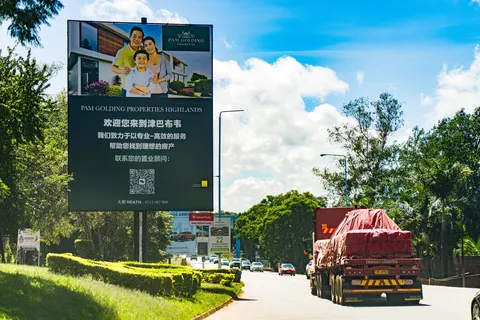

- Chinese buyers are finding bargain mansions — and a discreet place to move money — in Harare, a city shaped by colonialism and cricket.
By Bloomberg
ON the main road through the affluent suburb of Highlands in Zimbabwe’s capital, Harare, a billboard displays a beaming young Chinese family standing outside a newly built house.
The sign reflects Chinese buyers’ growing demand for upmarket residences, which cost about $500,000 to $2 million, in the city’s prime neighborhoods, according to interviews with several real estate brokers. At least two estate agencies — Pam Golding Properties and Guest and Tanner — have hired Mandarin speakers to assist the new customers.
Chinese buyers often pay in physical cash, which “enables them to conclude transactions speedily and gives them huge leverage in negotiations,” says Kura Chihota, a property consultant at eXp Realty in Harare.
Their arrival in Zimbabwe echoes a broader pattern across much of the developing world — with one notable difference: Whereas many Chinese migrants elsewhere have been relatively poor laborers, those in Zimbabwe are often wealthy. That’s partly because Zimbabwe has high literacy, established (if rundown) industries and a well-trained workforce, leaving little need for lower-skilled imported labor.
The country’s push to boost earnings from natural resources has also drawn more Chinese migrants into well-paid jobs running mines and other businesses.
“Harare is a beautiful city. This is the place to be,” says Steve Zhao, founder of the China-Zimbabwe Exchange Centre, which in February hosted a Chinese New Year celebration attended by about 30,000 people.
“Some people I have helped to come here as tourists are now investors here in this city and the country. They are almost everywhere, from retail to mining.”
China’s ties to Zimbabwe go back decades. In the 1970s, Beijing backed Robert Mugabe’s liberation army as it fought for independence against Rhodesia’s Whites-only government. Leaders of the independence movement underwent military training in China along Maoist lines, while Mugabe as president championed a so-called Look East policy that favored China over Western nations.
Following in the footsteps of British colonialists of the 19th century, the Chinese today are drawn to Zimbabwe’s mineral wealth. In recent years Chinese companies have come to dominate Zimbabwe’s lithium extraction industry — which supplies about 10% of global demand — and have poured money into a steel mill and chrome mines.
The Chinese have also built and repaired state power plants, taken stakes in local banks and invested in farming, while loans from China underpin the recent expansion of Harare airport. Even Zimbabwe’s new Parliament building was built by Chinese developers.
‘Asian Feeling’
Although Zimbabwe won independence from the UK in 1980, Harare has retained much of its colonial character. British street names are still prominent, while the legacy of empire lingers in the school system and on the cricket pitches that dot the city’s leafy northern suburbs.
Alongside these remnants of the capital’s past are signs of the latest wave of arrivals. On the grounds of what was once a stately home in the upmarket suburb of Belgravia is the San de Li center, a complex with Chinese restaurants and a supermarket selling Chinese beer, woks and Asian delicacies, including packs of frozen duck tongues. There’s also a casino, open until 3 a.m. every day, that’s typically packed with Chinese men smoking cigarettes and playing five-card and seven-card, gambling games similar to poker.
At San de Li’s KungFu Kitchen, waitress Valentine Tamupakare hands a menu to a diner whom she addresses in Mandarin, a language she learned on the job from customers and her Chinese managers.
“It’s still early in the morning, but toward lunchtime and evening this place will be packed,” she says.
Just outside San de Li, Rumbidzai Ngwadza lays out a selection of Asian fruit grown in neighboring Mozambique. Jackfruit, selling for $10 apiece, is popular with Asian customers who value its medicinal purposes, Ngwadza says.
Nearby, a travel agency advertises passport photos with a poster showing young African and Chinese men, while signs in a premium shopping area are written in Chinese.
“This area has changed a lot. We also have new buildings, which previously were not there,” Tamupakare says.
“There is a bit of an Asian feeling to it.”
For all the reminders of Harare’s colonial charm, the city’s vital infrastructure was degraded over decades by Mugabe’s failed economic policies, before he was deposed in 2017 and died two years later. Swaths of the capital no longer have running water. Streetlights on major roads don’t work, and suburban lanes and avenues are riddled with potholes.
The government sees that “Chinese investment has by and large made significant changes to the country’s economic and social landscape,” says a senior finance ministry official who spoke on condition of anonymity, as he is not an official spokesman. Their ventures “have changed the landscape of some parts of the capital,” he says, referring to Chinese-funded real estate developments.
China’s interest in Zimbabwe has been most pronounced over the past five years, amid rising demand for lithium — used in batteries — and a multiyear rally in gold prices. The gold boom has been a boon for the country, a major producer, even as large Western companies such as Anglo American have divested amid bouts of hyperinflation.
Government policies have also forced companies to hand over stakes to Black Zimbabweans, many of whom are politically connected, while the country remains locked out of international debt markets after defaulting on loans from the World Bank and other lenders a quarter of a century ago.
The influx of Chinese immigrants doesn’t always translate into tax revenue: They and other high-end homebuyers typically pay in cash to avoid onerous exchange control rules and to evade taxes, according to five real estate agents, all of whom declined to be named because the practice is frowned upon by local financial authorities. It’s not against the law, but cash payments are hard to track, and in some cases it’s not clear whether the money has changed hands within Zimbabwe.
Meanwhile, high inflation and a volatile local currency means mortgages are impractical, and many mistrust the banking industry, with memories still fresh of how foreign exchange holdings were twice converted into nearly worthless local currency, on government orders.
Zimbabwe’s finance ministry didn’t respond to a request for comment.
Communal Living
The government does not keep records of homebuyers by nationality, but several agents Bloomberg News spoke to said interest from Chinese buyers is driving double-digit increases in house prices in the capital.
Harare’s real estate brokers say the interests of Chinese homebuyers are similar to those of locals. In the most affluent areas, houses boast five or more bedrooms, large swimming pools and plots of well over an acre. They lie close to the city’s best private schools, institutions with names like St. Johns, St. Georges and Arundel. While streets and infrastructure have deteriorated, as elsewhere in the city, homes in these areas typically have their own solar power supplies and private water boreholes to lessen their dependence on the state.
There are quirks, however. Some Chinese buyers are concerned about whether the design of buildings or the landscaping of gardens conforms to feng shui principles, which focus on the flow of energy affected by design, say the agents.
Borrowdale Brooke, Harare’s most exclusive suburb, features a manmade lake and a golf course partly designed by former Zimbabwean professional golfer Nick Price. It includes Mugabe’s last private residence, known as Blue Roof because of its distinctive turquoise tiles imported from China.
Inside the 623-acre estate, though, agents say there is tension between the new arrivals and long-term residents. Some recent homebuyers have expanded properties soon after they’ve purchased them, often without regard for the estate’s design rules or the historical nature of some of the houses. Chihota, the real estate consultant, says existing homeowners have been upset that the new arrivals appear “to live freely without regards to the rules of communal living.” Some long-standing residents have left the area.
Still, real estate agents view the growing numbers of Chinese as a boon to Zimbabwe, a trend with more positives than negatives.
“There has been a steady increase in the number of Chinese buyers,” the manager of one agency says.
“They are investing in the country when everyone else is trying to get money out.”
The post For China’s rich, the new must-have is a luxury home in Zimbabwe appeared first on NewZimbabwe.com.