France, UK intercept Cameroon-bound Russian oil tanker, sparking debate over African maritime sovereignty
A French military operation against a tanker carrying Russian crude oil to Cameroon is drawing attention far beyond Europe, raising fresh questions about sanctions enforcement, maritime sovereignty, and the growing impact of geopolitical rivalries on African trade routes.
 Black News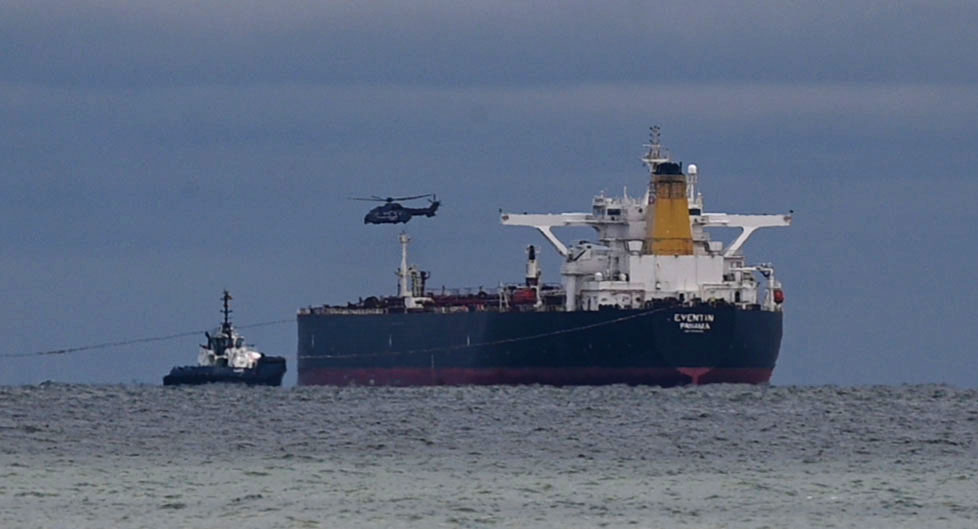
![Mecklenburg-Western Pomerania, Sassnitz: The unmaneuverable tanker "Eventin" is lying in the Sassnitz roadstead between Binz and Sassnitz. The tanker, loaded with around 99,000 tons of oil, is to remain there until a decision is made on how to proceed. [Photo by Stefan Sauer/picture alliance via Getty Images]](https://ocdn.eu/pulscms/MDA_/8c55cf968f75d2a54fbf3516a5f97618.jpg)
A French military operation against a tanker carrying Russian crude oil to Cameroon is drawing attention far beyond Europe, raising fresh questions about sanctions enforcement, maritime sovereignty, and the growing impact of geopolitical rivalries on African trade routes.
- France has intercepted a Madagascan-flagged tanker carrying Russian crude oil to Cameroon in international waters, escalating tensions over sanctions enforcement.
- The seizure has raised questions about the rights of African nations whose trade and shipping interests are increasingly affected by geopolitical disputes.
- Russia has condemned the move, while concerns are growing over its implications for Madagascar's maritime jurisdiction and Cameroon's energy supply chain.
- The incident highlights how global sanctions regimes are increasingly intersecting with African trade routes, diplomacy, and economic interests.
The vessel, identified as the Tagor and sailing under the Madagascan flag, was intercepted in the North Atlantic while travelling through international waters. French authorities, supported by British military assets, said the action was justified because the tanker falls under European Union sanctions targeting Russia's energy sector.
The interception marks the fourth such operation reportedly carried out by France since September 2025 as European governments intensify efforts to restrict Russian oil exports following years of sanctions linked to the war in Ukraine.
However, the latest incident has generated debate because the tanker was not headed to Europe. Its destination was Cameroon, an African country that has not imposed sanctions on the vessel or its cargo. Madagascar, whose flag the ship carried, has also not sanctioned the vessel.
According to a report by Russia's Pivot to Asia, the tanker was carrying approximately 100,000 barrels of Russian crude oil, valued at about $6 million at current market prices. French authorities are reportedly escorting the vessel to a port in northern France while the cargo's legal and regulatory status is assessed.
Russia has strongly criticised the operation, reportedly describing the seizure as an act of "piracy" and questioning Europe's authority to enforce sanctions against a vessel travelling outside EU waters.
Madagascar and Cameroon in Focus
The incident has also placed Madagascar in an uncomfortable position. Under international maritime practice, ships operate under the jurisdiction of the country whose flag they fly. The flag state is generally responsible for regulating the vessel and ensuring compliance with international obligations. As a result, questions have emerged over whether Madagascan authorities were informed before the interception and what role, if any, they may play in resolving the dispute.
The development comes at a sensitive time for Madagascar's foreign relations. In recent years, the island nation has sought to diversify its international partnerships beyond its traditional Western allies, strengthening ties with countries such as China and Russia.
For Cameroon, the issue is equally significant. Although Cameroon produces crude oil domestically, the country continues to import petroleum products and crude supplies to support its energy needs.
The cargo aboard the Tagor represented a relatively modest volume by international standards, estimated to cover only a small portion of the country's short-term consumption requirements. Nevertheless, the interruption highlights how geopolitical disputes can affect African energy supply chains, even when African states are not directly involved in the underlying conflict.
Analysts note that African governments have increasingly sought to maintain pragmatic relationships with multiple global powers, including Western countries, China, and Russia. This balancing act has become more complicated as sanctions regimes expand beyond their immediate geographic origins and increasingly influence global trade flows.
The seizure also highlights a broader debate over the reach of sanctions enforcement in international waters.
Supporters of the operation argue that sanctions lose effectiveness if targeted vessels can continue operating freely outside European jurisdictions. Critics, however, contend that aggressive enforcement measures risk creating uncertainty for shipping companies, insurers, and importing nations that are not parties to those sanctions.
Implications for African Trade
The outcome could have implications extending beyond the fate of a single tanker. Should France ultimately release the vessel, the incident may be viewed as a warning to operators involved in Russian energy exports.
If the cargo is confiscated or subjected to legal proceedings, the dispute could escalate into a broader diplomatic and legal confrontation involving Russia, European governments, and potentially African states whose commercial interests are affected.
For African policymakers, the case serves as another reminder that the continent's trade routes increasingly sit at the intersection of global power competition.
What began as a shipment of oil bound for Cameroon has evolved into a test case touching on sanctions policy, maritime governance, and the extent to which international rivalries can reshape commercial activity far from the conflict zones that originally triggered them.