FRODEBU Warns of Democratic Decline 33 Years After Historic 1993 Victory
“Democracy has declined dramatically since the CNDD-FDD came to power,” FRODEBU spokesperson Sylvestre Bikorindagara told local media, accusing the ruling party of weakening political pluralism.
 Black News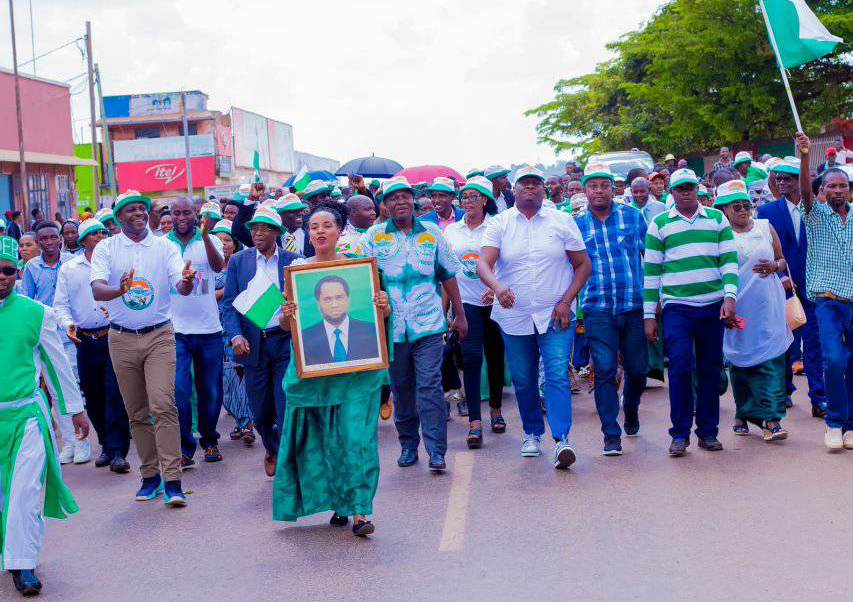
Thirty-three years after its landmark victory in Burundi’s first democratic presidential election, the opposition party Sahwanya-FRODEBU has expressed concern over what it describes as the continued erosion of democracy, political pluralism, and the rule of law in the country.
In a statement released on Monday to commemorate the June 1, 1993 election victory that brought the late President Melchior Ndadaye to power, the Front for Democracy in Burundi (FRODEBU) said significant challenges remain despite decades of political change.
“Thirty-three years after this historic victory, the Sahwanya-FRODEBU Party notes with concern that several challenges continue to weigh on the consolidation of the rule of law and democratic pluralism in Burundi,” the party said in its declaration.
According to FRODEBU, June 1, 1993 remains a symbol of the Burundian people’s aspiration to live in a state founded on democracy, the rule of law, social justice, good governance, and national unity.
The party noted that although Burundi witnessed the emergence of multiple political parties following the 1993 elections, the political space remains restricted.
“Concerns persist regarding the openness of the political space, equal opportunities among political actors, the effective respect of public freedoms, and the strengthening of institutional independence,” the statement said.
FRODEBU further argued that the situation has deteriorated under the rule of the CNDD-FDD party, which has governed Burundi since 2005.
“Democracy has declined dramatically since the CNDD-FDD came to power. They are doing everything possible to undermine political pluralism and appear satisfied being the sole party represented in the Burundian Parliament,” Sylvestre Bikorindagara, spokesperson for Sahwanya-FRODEBU, told local media on Monday.
The ruling CNDD-FDD had not responded to the allegations at the time of publication.
The opposition party also accused the government of contributing to democratic decline through alleged irregularities during the 2025 legislative elections, which resulted in CNDD-FDD winning all seats in both the National Assembly and the Senate. The government has consistently rejected accusations of electoral fraud.
FRODEBU called for stronger national dialogue and reforms aimed at deepening democracy and improving governance.
“It is essential to strengthen national dialogue, good governance, the fight against corruption, and the participation of all components of the nation in the management of public affairs,” the party stated. “Burundi’s long-term stability depends on citizens’ trust in institutions, respect for fundamental rights and freedoms, and responsible governance that serves the public interest.”
The party added that upcoming elections should provide an opportunity to demonstrate Burundi’s commitment to democratic principles.
“Sahwanya-FRODEBU calls for transparent, inclusive, fair electoral processes that respect equal treatment for all political actors,” the statement said.
“A genuine democracy requires that all political parties be able to freely carry out their activities, present their political programs to citizens, and compete under equitable conditions,” it concluded.
A Historic Turning Point
FRODEBU’s victory on June 1, 1993 marked a historic turning point in Burundi’s political history. The election brought Melchior Ndadaye to power as the country’s first democratically elected president, ending decades of political dominance by UPRONA.
However, the political transition proved short-lived. On October 21, 1993, President Ndadaye was assassinated during a military coup attempt, plunging Burundi into a prolonged and devastating civil war.
The conflict eventually led to the signing of the Arusha Peace and Reconciliation Agreement in 2000, followed by a transitional period that paved the way for democratic elections. The CNDD-FDD subsequently won the 2005 elections and has remained in power ever since.