Nigeria’s manufacturers lead business rebound as election spending boosts demand despite rising costs
Nigeria’s business environment remained in expansion territory in May 2026, driven largely by a sharp rebound in manufacturing activity and stronger consumer demand, according to the latest Business Confidence Monitor (BCM) published by the Nigerian Economic Summit Group (NESG).
 Black News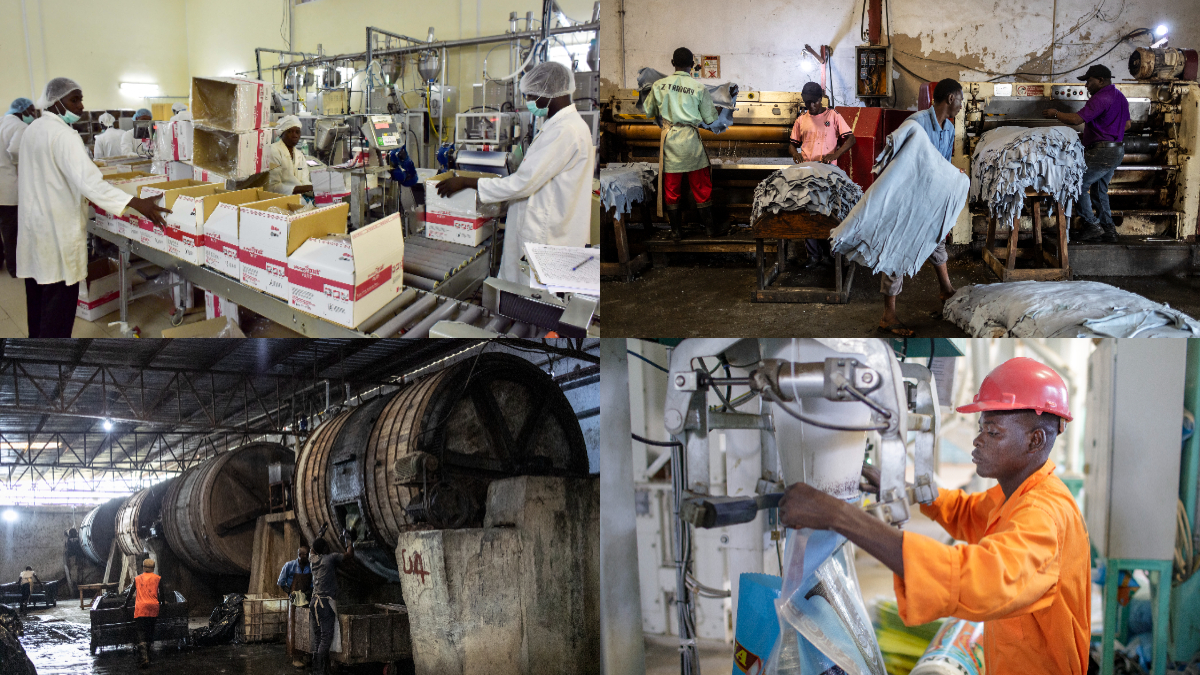
![Workers operate machinery inside a manufacturing facility in Nigeria. The country's manufacturing sector returned to expansion in May 2026, helping drive broader business growth despite persistent challenges, including limited access to finance, power shortages, and rising operating costs. [Getty Images]](https://ocdn.eu/pulscms/MDA_/3cf182652a392b1992647bb7021237e2.jpg)
Nigeria’s business environment remained in expansion territory in May 2026, driven largely by a sharp rebound in manufacturing activity and stronger consumer demand, according to the latest Business Confidence Monitor (BCM) published by the Nigerian Economic Summit Group (NESG).
- Nigeria’s business environment expanded in May 2026, with the NESG Business Confidence Monitor rising to 104.6 points from 102.1 points in April.
- Manufacturing led the recovery, surging back into expansion territory as stronger consumer demand boosted activity across several industrial subsectors.
- Trade and services also recorded growth, signalling resilience in Africa’s largest economy despite ongoing structural challenges.
- However, businesses continue to face headwinds from high operating costs, unreliable electricity, insecurity, and limited access to credit, raising concerns about long-term investment growth.
However, persistent structural challenges continue to weigh on investment and long-term business confidence.
The NESG’s Current Business Performance Index rose to 104.6 points in May from 102.1 points in April, indicating continued expansion across the economy. While the reading was stronger month-on-month, it remained below the 109.8 points recorded in May 2025, suggesting that businesses are still operating below the levels seen a year ago.
The most significant development was the return of manufacturing to expansion territory. The sector’s performance index climbed to 114.1 points from 98.7 points in April, marking one of the strongest improvements among all sectors surveyed.
According to the report, subsectors including food, beverages, and tobacco; textiles, apparel, and footwear; pulp and paper products; and basic metals recorded particularly strong gains.
For investors and policymakers, the manufacturing rebound is noteworthy because it signals improving domestic demand in Africa’s largest economy. The report linked the recovery partly to festive-season spending and stronger consumer activity, highlighting continued resilience in household demand despite elevated costs.
Trade also strengthened during the month, with its index rising to 105.5 points from 102.7 points in April. Wholesale trade outperformed retail trade, supported by higher stockpiling, increased supply orders and fresh investment activity. The services sector likewise maintained expansion at 103.5 points, supported by financial institutions and professional services.
Yet the report paints a mixed picture of Nigeria’s broader economy. Agriculture slipped into contraction at 97.5 points, while non-manufacturing industries, including parts of the oil and gas value chain, fell to 99.4 points. The decline underscores the uneven nature of Nigeria’s recovery and highlights sectors that remain vulnerable to insecurity, infrastructure gaps and rising operating costs.
Businesses surveyed identified limited access to finance, unreliable electricity supply, elevated rental costs and persistent insecurity as the most significant obstacles to growth. Investment and export indicators also remained below the expansion threshold, suggesting that many firms remain cautious about committing fresh capital despite stronger demand conditions.
Looking ahead, firms remain optimistic, with the Future Business Expectations Index at 127.0 in May, indicating positive sentiment over the next 1 to 3 months. Manufacturing and trade businesses expressed the strongest confidence, with expectations supported by anticipated election-related spending and the onset of the early harvest season.
For African investors, the findings suggest that consumer-facing industries, manufacturing and trade could remain among Nigeria’s most resilient sectors in the near term.
However, the report also reinforces a familiar message: unless longstanding infrastructure, financing and security challenges are addressed, the country’s private-sector recovery may struggle to translate into sustained investment-led growth.