PM lays out education reform plan
The Government of Saint Lucia has unveiled a comprehensive roadmap to transform the island’s education system, with Prime Minister Philip J. Pierre outlining a series of reforms aimed at strengthening lifelong learning, expanding access, and aligning education with modern workforce demands. Presenting the 2026/2027 Budget in the House of Assembly on Tuesday evening, the Prime […] The article PM lays out education reform plan is from St. Lucia Times.
 Black News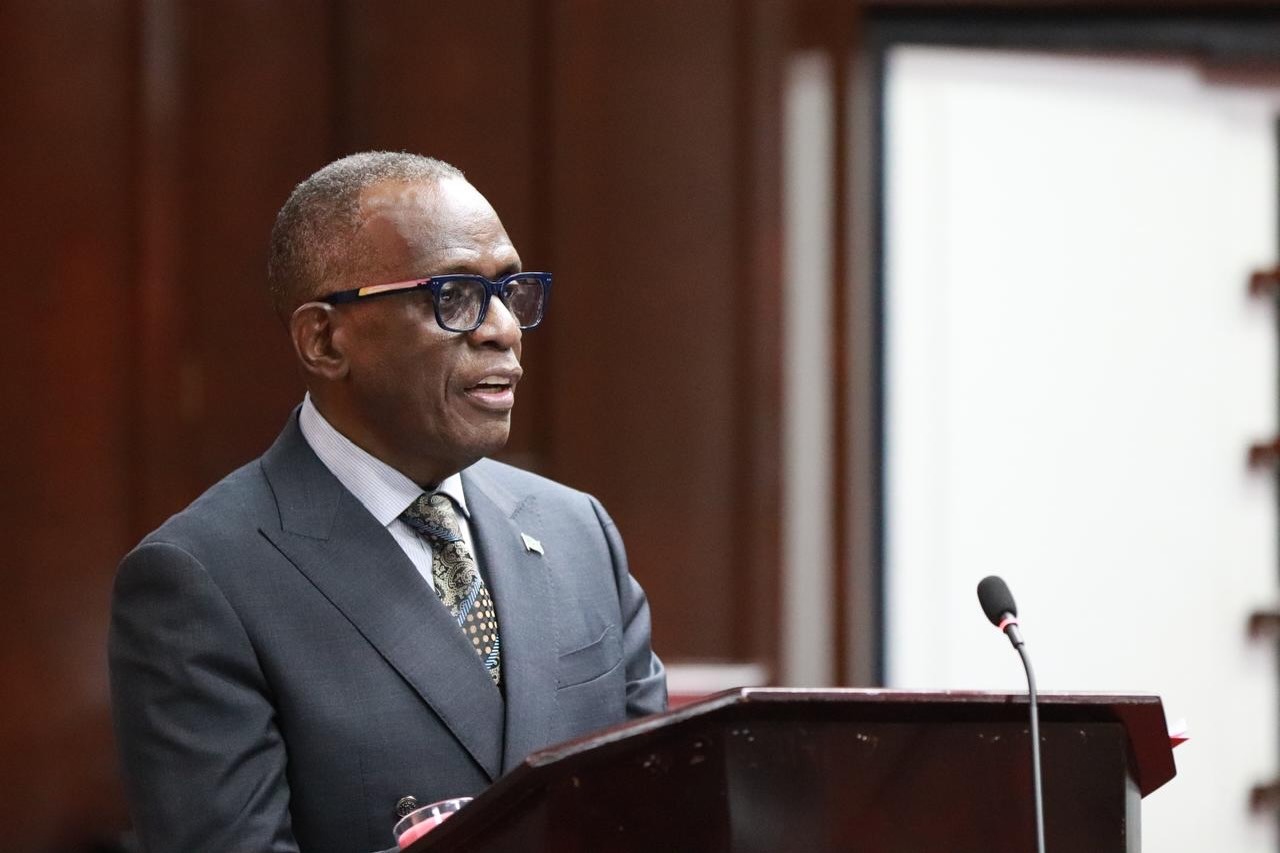


The Government of Saint Lucia has unveiled a comprehensive roadmap to transform the island’s education system, with Prime Minister Philip J. Pierre outlining a series of reforms aimed at strengthening lifelong learning, expanding access, and aligning education with modern workforce demands.
Presenting the 2026/2027 Budget in the House of Assembly on Tuesday evening, the Prime Minister highlighted the administration’s guiding philosophy, stating that “a fundamental belief of my administration is that learning is a lifelong endeavour, and our policies are designed to achieve this national goal.”
He explained that this vision continues to shape national priorities, particularly in early childhood education, special education, and technical and vocational training.
The Prime Minister pointed to existing initiatives, noting that “we introduced the First Generation Scholarship Programme and the one university graduate per household initiative.” He confirmed that these programmes will not only continue but be expanded.
“This year, 25 new scholarships will be offered in partnership with Monroe College,” he said.
Discussions are also expected with the University of the West Indies (UWI) to broaden access.
The Prime Minister stressed the need for modern learning environments: “We must upgrade our classrooms into smart classrooms,” he said, making them more “dynamic” and “interactive” while aligning education with the evolving needs of the workplace.
Pierre pointed to a “persistent shortage of science and mathematics teachers” and announced plans to address this gap by increasing teacher numbers and introducing “the concept of a master teacher to strengthen instruction in these critical areas.”
Beyond the classroom, the government is placing renewed focus on the role of families in education, and the Prime Minister warned that without effective parenting, many of our children will not attain their full potential.
In response, a joint initiative involving the Ministry of Education, the Ministry of Youth Development, and the Saint Lucia Social Development Fund will support parents while targeting student retention. The programme will include early identification of at-risk students and the expansion of technical and vocational pathways for learners whose strengths lie outside traditional academic routes.
Special focus will be placed on vulnerable students, particularly boys, who continue to account for the majority of school dropouts. He noted that while males continue to dominate the dropout figures, the new measures will provide targeted counselling, mentorship, and behavioural support, alongside a senior student support programme for Forms Four and Five.
Early childhood education remains a central pillar of the reform agenda, with the Prime Minister describing these formative years as “the most critical and receptive for learning”.
Government therefore plans to standardise the sector through the development of a national curriculum and a comprehensive assessment of both public and private early childhood centres. More than $1 million has been allocated in this year’s Budget to begin implementation.
Technical and vocational education and training (TVET) will also be significantly expanded, with four secondary schools already being transformed into technical and vocational institutes. Further collaboration with the Centre for Adolescent Renewal and Education (CARE) will support behavioural development, reduce dropout rates, and improve employability through structured training.
Additional measures under the OECS Skills and Innovation Project will support the development of national TVET standards and curricula aligned with labour market needs. Training subsidies will also be introduced for vulnerable learners, alongside a Grants Management Facility to promote innovation and entrepreneurship.
To support implementation, the Programme for Education Realignment and Transformation will establish TVET laboratories and workshops in selected secondary schools, equipped with modern, industry-standard tools and technology.
The article PM lays out education reform plan is from St. Lucia Times.