The Body That Carried Her Through
Diagnosed with breast cancer at 31, model and creative Aisha bint Gladys opens up about navigating the healthcare system, preserving her fertility, and finding beauty and vulnerability in survivorship. The post The Body That Carried Her Through appeared first on Waymaker Journal.
 Black News

A breast cancer diagnosis at 31 forced Aisha bint Gladys to confront questions about her health, future, and relationship with her body that she never imagined facing so young. But beyond the physical demands of treatment, her experience revealed the importance of advocating for herself within a healthcare system that can be difficult to navigate, particularly for young Black women.
From challenging lengthy diagnostic delays to securing financial assistance for fertility preservation, Gladys found herself making life-altering medical decisions while confronting deeply personal questions about femininity, motherhood, and what it means to be strong.
Her experience also became the foundation for Blooming: How I Ate Up Cancer, a fashion editorial that explores her journey through denial, exposure, acceptance, and the future. Rather than framing survivorship solely around strength or triumph, the project makes room for grief, beauty, transformation, and vulnerability.
For Breast Cancer Awareness Month, Gladys spoke with WayMaker Journal about the realities of breast cancer among young Black women, the importance of medical self-advocacy, and why conversations about survivorship must extend beyond awareness to include access, resources, and meaningful support.
Editor’s note: This interview has been edited for length and clarity.

“We need care, and we need to be protected.”
— Aisha bint Gladys
Navigating Breast Cancer as a Young Black Woman
WayMaker Journal: You were diagnosed with breast cancer at just 31. Before your diagnosis, how much did you know about the risks facing young Black women?
Aisha bint Gladys: Prior to my diagnosis, I wasn’t aware of the statistics surrounding Black women and cancer. But I knew that, with many illnesses, Black people experience the worst outcomes because of systemic and interpersonal racism, as well as poverty.
Black women face disproportionately high breast cancer mortality rates. Did you encounter challenges during treatment that you believe were connected to your race or age?
Gladys: I was very fortunate that the challenges I faced during my journey did not feel explicitly race-based. If anything, I think my age, and how young people often perceived me to be, led some medical professionals to minimize what I was going through.
I know it came from a good place. They wanted me to remain upbeat and hopeful by reminding me that, as a young person, I had a better chance of positive health outcomes. But sometimes, I felt dismissed. I felt as though I wasn’t allowed to be as sad as someone older who might have been having a more difficult time with the effects of treatment.
I remember one incident with a radiation technician who was upset with me because of a miscommunication. I felt that she was patronizing me because of my age. I was incredibly exhausted and having a difficult time. I remember respectfully but firmly reminding her that I was a cancer patient and that I was navigating a lot.
I was really proud of myself in that moment. She had a bit of a wake-up call and apologized profusely.
Black women are often told they must advocate for themselves in medical settings. What did that look like during your diagnosis and treatment?
Gladys: One thousand percent, yes. Especially when I was pursuing my diagnosis, I was my number one advocate.
The first facility where I sought care was going to make me wait at least a month and a half just to begin the testing process. Although they were overwhelmed with patients, not one person suggested that I seek care elsewhere. I found that incredibly upsetting.
We had no idea what kind of cancer I was dealing with, but they were willing to make me wait that long just to start investigating. I said, “Absolutely not,” and started calling cancer centers all around New York City to find somewhere that could see me sooner.
I worked with my gynecologist, who sent referrals to every facility where I wanted to make an appointment, before I ultimately landed at NYU’s Perlmutter Cancer Center.
The team there was phenomenal and moved quickly. To put things into perspective, my first meeting with my oncological surgeon happened a day before I would have had my first test at the original facility. By then, I had already undergone two biopsies, multiple MRIs, genetic testing, and developed a treatment plan.
What upsets me is that I’m already an advocate in the work that I do, so I had those skills. But imagine someone navigating a crisis like this for the first time who doesn’t know what to expect or what to look out for.
They might accept the long wait without realizing there could be other options, potentially delaying their diagnosis and treatment.
“Especially when I was pursuing my diagnosis, I was my number one advocate.”
— Aisha bint Gladys
Fertility, Financial Barriers, and the Future

Stylist: Tadea Miles @tadeamiles
Studio: Elsker Studio @elskerstudio
Production: Principle Thing @principlething
As a Black woman working in fashion and modeling, how did undergoing a mastectomy affect your relationship with beauty, femininity, and your body?
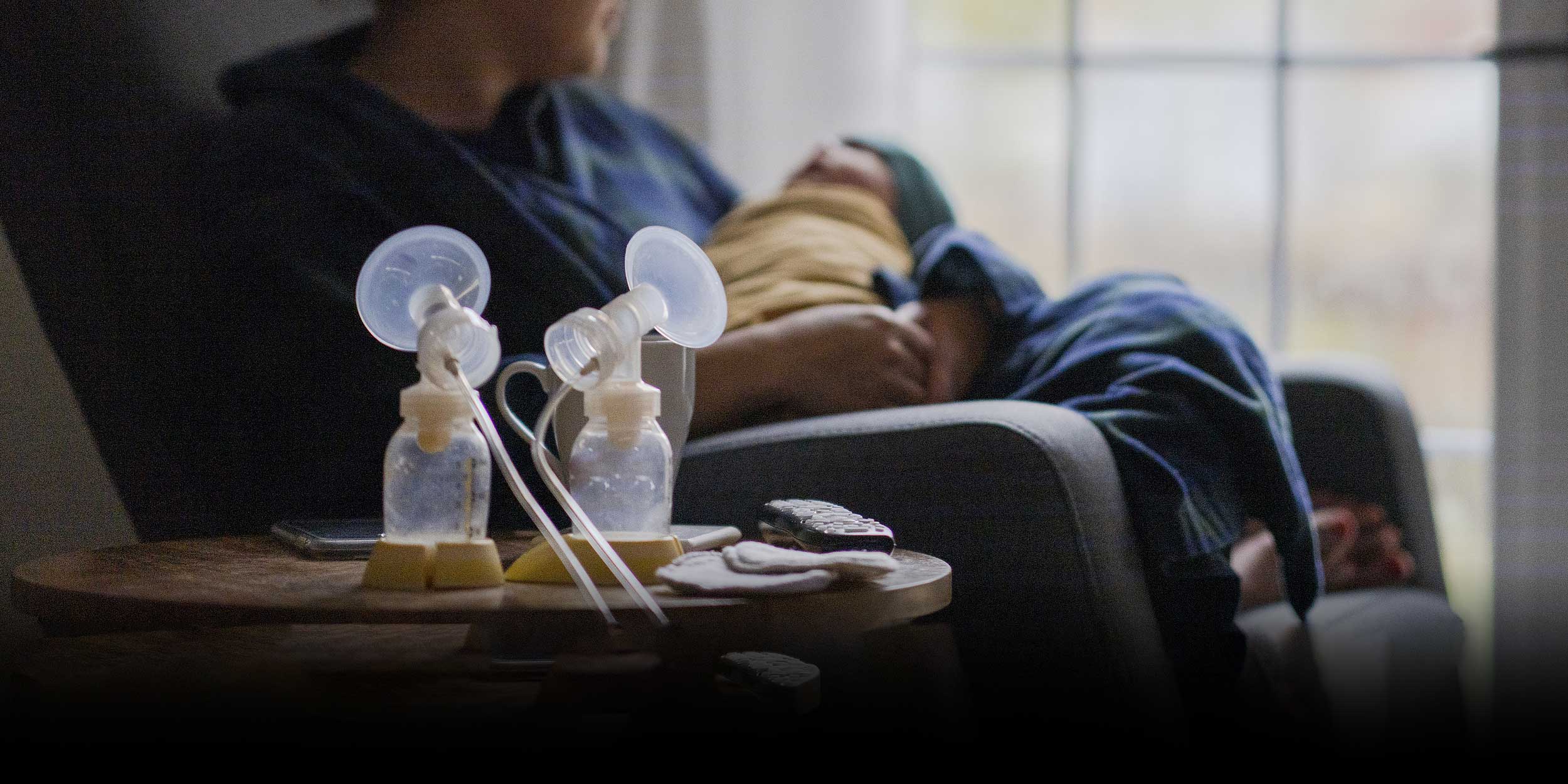
Gladys: Going through the mastectomy was one of the more difficult parts of my journey. I definitely saw it as a challenge to my sense of femininity. I want to be a mother, and I wanted to be able to breastfeed. That’s supposed to be one of the most natural gifts a mother can give her child: nourishment.
But somewhere along the way, I remembered that for everything women are known for, there are women who don’t possess those qualities. And if I know in my spirit that it doesn’t make them any less of a woman, then it doesn’t make me any less of one either.
Even if I hadn’t had cancer, I could still have struggled to breastfeed, whether because of an inability to produce milk, my child not latching, or so many other possibilities. Sometimes I found comfort in considering the worst-case scenarios because the practicality of those situations reminded me that even the worst wasn’t necessarily the worst.
You decided to preserve your fertility before beginning treatment. What was that experience like, and what barriers did you encounter?
Gladys: The fertility preservation process was a trip! I had to mix medications like a chemist and somehow find the courage to stick myself with painful needles every day. It was insane.
Luckily, my treatment included video tutorials and on-call doctors if I had any difficulties. The first time I had to give myself an injection, I was having a full-on panic attack. I’ll never forget the on-call doctor who calmed me down, reminded me that I was capable, and walked me through it step by step.
I think insurance companies should reach out to patients after certain diagnoses and provide a patient navigator or social worker who can explain their options and how to access care through their insurance. Navigating that kind of care was an incredibly mysterious process. There needs to be more transparency around how these procedures are covered.
Eventually, I learned that there were only two providers in the entire city I could use for fertility preservation through my insurance. Neither was close to where I lived, which was particularly difficult because I needed to visit the office two to three times per week.
I was fortunate that my oncology team referred me for fertility preservation and that the gynecological team at NYU helped me apply for grants to cover the procedures. I think OB-GYN offices should also have accessible information about national and local grants that can help patients afford fertility preservation.
You received grants to help cover fertility preservation. How did financial support affect your ability to make decisions about your future?
Gladys: Literally a year before my diagnosis, I had undergone testing to determine my ovarian reserve. I was told that everything looked good, but things could change at any time.
I wanted to pursue fertility preservation then, but it was going to cost a minimum of $15,000. The decision was essentially made for me because it was financially inaccessible. Because of the two grants I received, one of them being the Hope Grant through Chick Mission, a phenomenal organization that I encourage everyone to check out, I ended up paying only $300 for a single medication that wasn’t covered by insurance.
Unfortunately, I live in a country where people have to make decisions about whether they will live or whether they will go into debt.It is unacceptable. I hope to see a time in my lifetime when no one has to make that choice anymore.
$15,000
The minimum estimated cost Aisha was quoted for fertility preservation before her diagnosis.
$300
Her eventual out-of-pocket expense for one medication after receiving grants and insurance support.
One of Aisha’s grants came through Chick Mission, an organization supporting fertility preservation for patients with cancer.
Making Space for Grief, Vulnerability, and Healing
Black women are often expected to be resilient, even during difficult experiences. Did you feel pressure to remain strong throughout your cancer journey?
Gladys: I certainly felt pressured initially, not only to be strong but also to avoid being a burden.
I struggled so much with asking for what I needed without asking for too much because I didn’t want to overwhelm anyone. This is a pattern many Black women know too well.
At times, I found myself project-managing my cancer care. My therapist reminded me that this wasn’t sustainable, and I slowly tried to let go. If I’m being honest, I don’t think I’ve let go of that completely. It’s deeply embedded in who I am, the kind of work I do, and how I see myself.
What gave me more ease was having loved ones show up for me and tell me specifically what they wanted to do to help. For example, my brother lovingly referred to himself as my “mule.” Anytime I needed something while recovering between chemotherapy treatments, whether it was medication, food, sending packages, or anything I didn’t have the time or energy to handle, he came through for me.
Allowing myself space to grieve was also a new experience.
I was grieving many things: the life I thought I had, a good friend who I thought would be with me at the end of the journey but who passed away, and relationships where the dynamics changed and revealed existing cracks. I can truly say that I allowed myself to exist in grief without judgment. I cried anywhere, at any time, in front of anyone. It felt liberating. I had a lot to cry about throughout this process, but it also allowed me to shed tears for things I hadn’t previously made space for.
I cry now without shame.

“I cried anywhere, at any time, in front of anyone. It felt liberating.”
You’ve spoken about no longer viewing your body as a battleground but as a place of healing. What led to that shift?
Gladys: When I was healing from surgeries and chemotherapy, I remember how often medical professionals told me that I was healing faster or better than they had anticipated.
For example, at least four medical professionals remarked on how natural my breast expander looked. One doctor even said, “This typically looks like a stacked pancake!” But somehow, on me, it looked like a perfect mound on my chest.
There were several instances where I was doing better than predicted. Then it dawned on me that my body wanted to survive, despite the tremendous stress I was putting it under to kill the cancer. Beyond sleeping and taking my medication, I wasn’t doing anything extraordinary to produce those results. I just felt tremendous gratitude toward my body for pulling through.
To other women navigating changes in their bodies, I want you to know that your body is fighting for you. The will to live is something our bodies demonstrate every day without prompting.
Remember that. Be gracious with yourself, and have gratitude for your abilities.
Reclaiming Beauty Through Breast Cancer Survivorship

Your fashion editorial, Blooming: How I Ate Up Cancer, explores denial, exposure, acceptance, and the future. Why was it important to tell your story visually?
Gladys: I am a fashion girlie, down!
I knew I was going to have a fashion-forward photoshoot to commemorate the end of this journey. But as I began thinking about how I wanted to represent it, I found beauty in all of its parts. Instead of creating the typical end-of-journey warrior shot, I started thinking about how each part of the experience was compelling. What I hope the project sparks is a conversation around the vulnerability, plurality, and beauty of Black women.
We need care, and we need to be protected.
There’s so much out there telling us who we are, but we always have the opportunity to redefine ourselves and become the people we want to be. Even in the most difficult situations, we can toss the script, refuse clichés, and tell our own stories.

“Even in the most difficult situations, we can toss the script, refuse clichés, and tell our own stories.”
— Aisha bint Gladys
Beyond Breast Cancer Awareness: What Needs to Change?
Beyond Breast Cancer Awareness Month, what needs to change in how young Black women are educated, supported, and cared for?
Gladys: Comprehensive and universal healthcare can go a long way toward closing racial disparities in health outcomes, particularly for young Black women.
But as long as we’re working within our current system, I’d like to see more programs designed specifically for young Black women navigating healthcare. From obtaining routine gynecological care to accessing vision care, I’d love to see a comprehensive program that teaches us how to manage our healthcare after leaving our parents’ insurance.
It’s a complicated system, especially in the United States. There’s so much Googling involved, and a lot of inaccurate information to sort through. Another thing I learned throughout this process was that many people in my community hadn’t experienced major medical crises and therefore didn’t have plans in place for how they would want to be cared for.
In many ways, I was figuring everything out without a guide. I’d like to see more families having conversations about how they want to be cared for in the event of a medical emergency.
Talking is the first step. Documenting those wishes is another.
Breast Cancer Resources and Support
For readers seeking additional information on breast cancer, fertility preservation, or navigating care, the following organizations offer educational resources and support:
- National Cancer Institute — Information on breast cancer diagnosis, treatment, survivorship, and clinical research.
- Chick Mission — Financial assistance and advocacy related to fertility preservation for cancer patients.
- Centers for Disease Control and Prevention — Breast cancer screening, risk factors, prevention, and public health resources.
The post The Body That Carried Her Through appeared first on Waymaker Journal.