‘We will not accept a Bill that legalises land grabs’: DA vows to fight for property rights
DA says the Expropriation Act, in its current form, is unconstitutional.
 Black News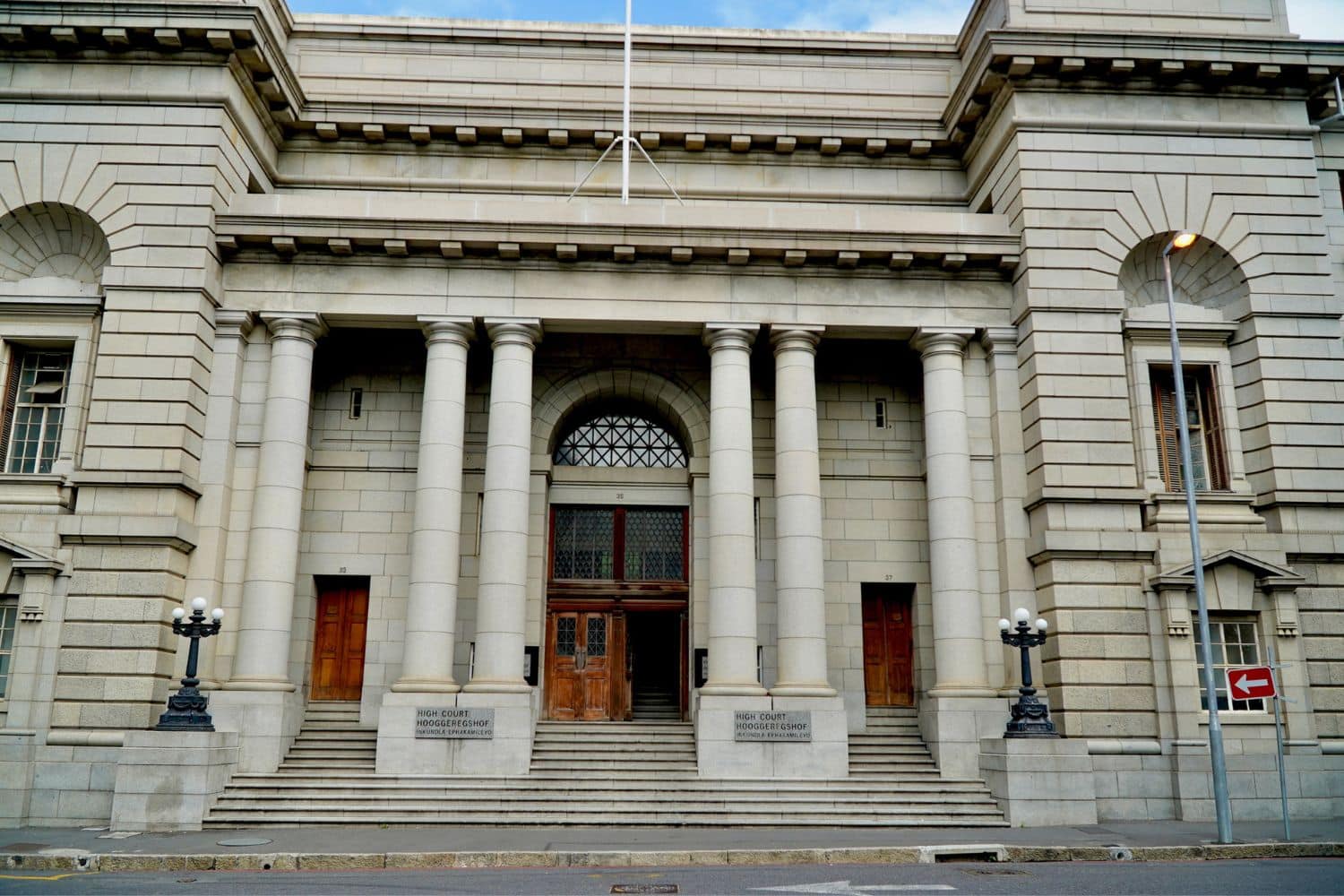

The DA is challenging the Expropriation Act in the Western Cape High Court on Monday. The party claims that this legislation is divisive and poses a danger to property rights in South Africa.
The party’s Federal Council chairperson, Ashor Sarupen, briefed the media ahead of the court proceedings in Cape Town.
“The DA is in court today to protect property rights for all South Africans. We will not accept a Bill that legalises land grabs. It is not acceptable in a constitutional democracy. The DA’s case is built on very specific legal grounds.
“Firstly, that section 19 of this Act is irrational, and that the final mandate before the National Council of Provinces (NCOP) when the Act was voted on was unlawful,” said Sarupen.
Sarupen said the DA does acknowledge South Africa’s history of displacement and apartheid-era land grabs. But he said parallel legislation is not the solution to the problem.
“Considering the history of our country with forced removals, where people were arbitrarily deprived of property, with people being told you can’t, and you can live in a certain area, with so much destruction to private property that denied the right to so many South Africans to build wealth.
“What we need is stable legislation that attracts investments, that ensures that people can build intergenerational wealth and not destroy it further and create uncertainty in our economy, and protect as many rights as possible and not to erode rights,” he said.
What about the injustices of the past?
He said South Africa needs legislation that will not leave citizens feeling nervous and uncertain.
“We do not need anything that creates uncertainty; we do not need anything that creates parallels to what we have lived through in this country,” he said.
Sarupen said that even though the DA is part of the government of national unity (GNU), the party is within its rights to challenge what it believes is unconstitutional legislation.
Fighting in the GNU?
He emphasised that Public Works Minister Dean Macpherson did not bring the Expropriation Bill to parliament. He said this because Macpherson is one of the respondents in the DA’s application before the Western Cape High Court.
“He did not support to vote for it when he was an ordinary member of parliament; it was under the previous administration and the minister at the time was Patricia de Lille.”
Several attempts that threaten property rights
DA spokesperson on public works, Bonginkosi Madikizela, told the media that the ANC has tried several times to pass laws that were dangerous to property rights.
“In 2016, under president [Jacob] Zuma, the Expropriation Act passed parliament, but it lapsed before it was signed into law. The DA strongly opposed this law in parliament, and again in 2018 the debate returned and revolved [around] amending section 25 of the constitution, a section protecting property rights. Again, the DA outright fought against this, and the attempt to amend the constitution failed in parliament,” he said.
State power over private property
DA spokesperson Jan de Villiers said the Expropriation Act gives the state too much power over private property.
“Property rights mean every single person can own property without the fear of the state having the ability of taking it away from them under some vague legislation. Property rights make the economy work and allow for jobs to be created. Without property rights, the economy will tank, and jobs will be lost,” he said.