When a Black Child Dies Without Answers, Grief Has Nowhere to Go
When a death remains unexplained, mourning can become suspended between grief and dread. For Black families, that uncertainty is compounded by a history of racial violence, institutional distrust and the inherited fear that the world may not keep their children safe. The post When a Black Child Dies Without Answers, Grief Has Nowhere to Go appeared first on Word In Black.
 Black News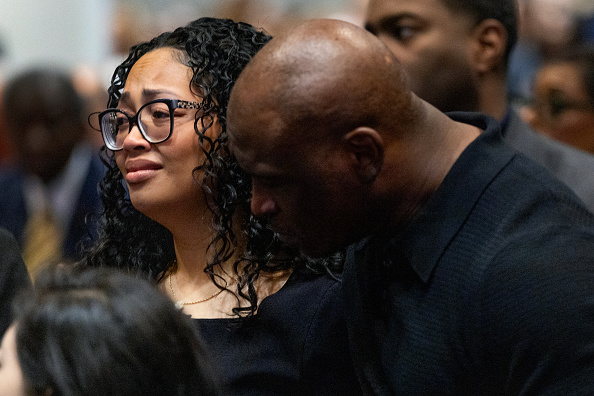


Nolan Wells, 18, disappeared during a July 4 boating trip to Horn Island off the Mississippi coast and was found dead two days later. Officials initially suspected drowning and reported no evidence of foul play, while both the state autopsy and the family’s independent autopsy have been inconclusive or withheld pending a grand jury investigation.
The family, their attorney Ben Crump and the Congressional Black Caucus are pressing for federal review, but the manner of death remains officially undetermined.
LEARN MORE: A Month Later, Nolan Wells’ Death Still Defies Answers
Psychoanalysis distinguishes between mourning, in which the lost object can be gradually relinquished, and melancholia, in which loss cannot be metabolized and becomes lodged in the psyche.
Open Wounds
An undetermined death is a kind of engineered melancholia; without a narrative of how and why, the grieving mind cannot complete its work. For Wells’ parents, and vicariously for Black parents watching, the absence of answers keeps the wound open. The mind abhors a vacuum, and into that vacuum flow the most terrifying possibilities, which for Black Americans are not paranoid fantasies but memories.
The case’s grip on the collective Black psyche cannot be separated from geography. A Black teenager vanishing in a majority-white space in Mississippi activates what could be called a cultural unconscious structured by Emmett Till, whose body was pulled from a Mississippi river in 1955. Trauma theorists like Maria Yellow Horse Brave Heart and psychoanalytic writers on transgenerational transmission (Nicolas Abraham and Maria Torok’s notion of the “phantom”) argue that unmourned historical violence is passed down not as memory but as affect, dread and behavioral injunction.
When the news broke, many Black parents did not experience it as new information; they experienced it as confirmation, the return of something never fully repressed because it was never fully safe to forget.
For Wells’ parents, and vicariously for Black parents watching, the absence of answers keeps the wound open.
The skepticism in the Black community toward the official investigation, whatever the eventual findings, functions as a transference onto institutions that have historically been unreliable containers for Black grief.
In Wilfred Bion’s terms, a community needs institutions that can “contain” catastrophic anxiety, receive it, process it and return it in tolerable form. When sheriffs, coroners and prosecutors have historically failed to serve that function for Black families, the anxiety remains uncontained and circulates as suspicion, activism and sometimes conspiracy thinking. The demand for federal review is, psychologically, a search for a container that can be trusted.
For Black parents specifically, cases like this reinforce what psychologists describe as racialized hypervigilance, which operates almost like a superego injunction: Never let your child be the only one, never let them separate from the group, never assume white spaces are safe. Nolan’s stepfather’s anguished comment that he taught his son “never to separate from friends he arrived with” reveals the protective script and the parent’s torment when the script fails anyway.
Psychic Burdens
This produces several psychic burdens: The anticipatory grief of raising a child one fears burying; the impossible double bind of wanting children to move freely through integrated spaces while dreading those spaces; the guilt-laden fantasy of omnipotent protection, in which any harm becomes evidence of parental failure rather than of a dangerous world; and the erosion of what Erik Erikson called basic trust, now transmitted to the next generation as inherited wariness.
The marches, Wells’ funeral officiated by the Rev. Al Sharpton, the crowdfunding, the celebrity support and the demand for transparency can be read as attempts at collective working-through, converting passive helplessness into active agency. Whether or not foul play is ever established, the mobilization itself serves a psychic function. It insists that a Black child’s death must be seen, countering the historical experience of Black loss being treated as unremarkable.
The tragedy, psychoanalytically, is that even if the investigation ultimately confirms an accidental drowning, the terror the case evoked in Black parents is real and rational, grounded in history rather than fantasy. That is the deepest injury racism inflicts. It makes it impossible to grieve an ambiguous loss simply, because every ambiguous loss arrives already haunted.
I write this not only as a scholar of the psyche, but as a Black mother and grandmother. When the news of Nolan Wells broke, I did not first respond with theory. I responded with my body — that tightening in the chest that every Black parent knows, the one that arrives before thought does.
I raised my children on the same scripts Nolan’s parents gave him: Stay with your friends; don’t wander off alone; be careful in places where you’re the only one. I said those words so many times they became a kind of prayer. And now I watch my children say them to my grandchildren, and I feel both the love in those words and the weight of them — because no child should need a survival liturgy just to go on a boat trip with friends.
Grieving Without Answers
When I look at Nolan’s mother, I see every mother I have ever known. I see my own daughter, who worries over my grandson—a senior civil engineering major away at Penn State University. I see myself, lying awake until I hear the key in the door. And I see my grandchildren, whom I want to send into the world with open hearts, not inherited dread — though I know I have passed some of that dread along anyway, the way it was passed to me, hand to hand, generation to generation, like something too heavy to carry and too dangerous to put down.
RELATED: More Unanswered Questions Fuel Doubts In Nolan Wells’ Death
Whatever the investigation ultimately concludes, this much is already true: A mother in Mississippi is grieving without answers, and millions of us grieve alongside her because we know how easily it could have been our child, our grandchild. This is my attempt to give that grief a language. But before it was language, it was a feeling in my chest. It still is.

The Rev. Sheila Poynter Johnson is a New York State-licensed psychoanalyst, ordained minister, author, and social justice advocate who serves as the Chair and President of Harlem Family Services. She focuses on integrating mental health care with spiritual support and community development
The post When a Black Child Dies Without Answers, Grief Has Nowhere to Go appeared first on Word In Black.