AES Launches Media Outlet to Counter “Hostile Narratives”
The Alliance of Sahel States, known as AES, now has its own joint television channel, Tafouk TV, on air from Bamako since September 16, 2026, alongside a national radio station, with a print title planned and a confederal press agency still awaiting a launch date. The AES media outlet is meant to counter what AES [...]
 Black News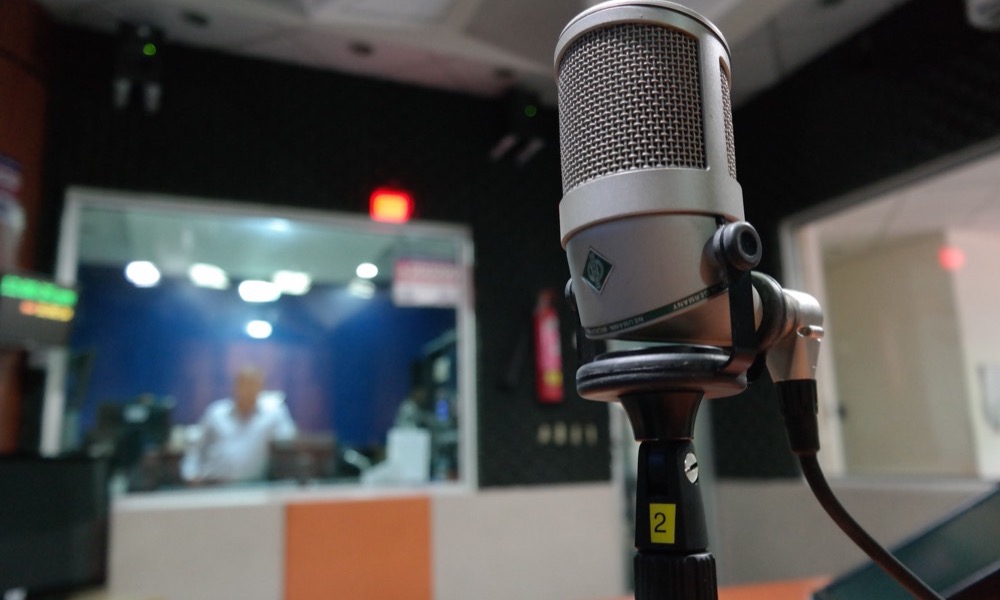
The Alliance of Sahel States, known as AES, now has its own joint television channel, Tafouk TV, on air from Bamako since September 16, 2026, alongside a national radio station, with a print title planned and a confederal press agency still awaiting a launch date. The AES media outlet is meant to counter what AES leaders call “hostile narratives” targeting their states, and it follows bans by Mali, Burkina Faso and Niger on RFI, France 24 and, as of May 2026, nine more French outlets.
The three countries left the West African regional bloc ECOWAS in January 2025 and formed AES as a mutual defense and economic pact, with their own passport, development bank and, now, their own media apparatus. Each step has been presented by AES leaders as evidence the confederation can run its own institutions without relying on the West African or French structures it left behind.
ALSO READ: Burkina Faso, Mali and Niger Launch Joint Development Bank
Building the AES Media Outlet From Scratch
The plan began in December 2024, when AES leaders meeting in Bamako approved a shared confederation logo and a web platform meant to eventually carry the bloc’s television output. A year later, the plan had a launch date.
The confederation’s radio station, Daande Liptako, began broadcasting from Ouagadougou, Burkina Faso, on December 17, 2025. Six days later, presidents Assimi Goïta of Mali, Ibrahim Traoré of Burkina Faso and Abdourahamane Tiani of Niger launched the joint television channel in Bamako. Goïta described it as a tool “to break disinformation campaigns and hostile narratives targeting our states,” according to TRT Afrika’s coverage of the launch.
The channel, named Tafouk TV, took longer to launch formally. Its board of directors was installed in Bamako in June 2026, and regular programming began at 8:00 a.m. on Wednesday, September 16, 2026. Its stated aims are to cover the confederation and to showcase the cultures and languages of the three countries, with national languages alongside French.
Two days earlier, on September 14, the channel posted an official announcement of the launch date to its YouTube page. The video’s description says the channel exists to tell the Sahel’s story “with our voice” and promises an end to “narratives imposed from outside.”
Tafouk TV Signs a Content Deal With Russia’s RT
On July 8, 2026, Tafouk TV, the television arm of the AES media outlet, and Russian broadcaster RT signed a memorandum of understanding in Niamey, on the sidelines of Russian Foreign Minister Sergei Lavrov’s visit to Niger for consultations between AES and Russia, according to Niger’s national press agency, ANP. AES’s chief diplomat, Karamoko Jean-Marie Traoré, welcomed the partnership, ANP reported.
RT says its French-language director, Natalia Lebedeva, and Tafouk TV’s director general, Salif Sanogo, signed the document, which covers content exchange, shared expertise and joint coverage of news from Russia and the Sahel states. RT calls itself the channel’s first international partner. Some outlets report the agreement was with TV-Novosti, RT’s parent organization.
Tafouk TV’s reach also runs through a French distributor. Afrik.com reports the channel has been available since March on Burkina Faso’s terrestrial television and on the Canal+ Afrique bouquet, channel 387, and that the country’s media regulator confirmed this after a March 30 visit. The outlet noted that Canal+ International is a French company and that Tafouk TV is not on the European Union’s list of banned Russian media. It said nothing in public information shows a breach of EU sanctions.
Ouagadougou Forum Puts “Information Warfare” at the Center
Three weeks after Tafouk TV went on air, media professionals from the three countries met in Ouagadougou on October 7 for what was billed as the first AES media forum, held on the margins of the 15th Ouagadougou African Communication Universities (UACO). Its theme was “Media and sovereignty of the Confederation of Sahel States,” and its main topic was what speakers called information warfare.
Burkina Faso’s Communication Minister, Pingdwendé Gilbert Ouédraogo, told participants the war “has moved into the newsrooms,” according to LeFaso.net. Bassolma Bazié, president of Burkina Faso’s national commission for the Confederation and the forum’s sponsor, called information a strategic weapon, “to the mind what the Kalashnikov is to the front.”
Officials announced that building confederal media is a priority, naming a television channel, a radio station and a print publication. The forum is also meant to feed a confederal policy supporting media development and a charter for AES journalists. Researcher Lacina Kaboré of Joseph Ki-Zerbo University presented a study of roughly 20,000 articles from the three countries’ public media, which found a strong rhetoric of rupture, confederal solidarity and sovereignty.
Cooperation between newsrooms is already running ahead of any formal framework. Assétou Badoh, director general of Burkina Faso’s Sidwaya Editions, said newsrooms have started producing joint content and sharing articles, though no formal agreement exists yet, according to Sidwaya. Recommendations from the forum included co-produced series, staff exchanges between newsrooms and a shared archive database.
The press agency was not part of the announcements. LeFaso.net reported that no AES-specific agency was announced at the forum, with the minister mentioning only cooperation among existing agencies in a regional network. Niger’s communication minister, for his part, received the founding texts for a confederal agency based in Niamey on June 16, 2026, and no launch date has been reported since.
Filling a Gap That Took Four Years to Open
The AES media outlet closed a gap that widened in stages. Mali suspended RFI and France 24 in March 2022 over reporting on army conduct that the government disputed. Burkina Faso followed in December 2022, and Niger blocked both broadcasters in August 2023, weeks after the coup that brought its current government to power.
Niger went further in May 2026. Its media regulator, the National Communication Observatory, suspended nine additional French outlets, including AFP, TV5Monde, Jeune Afrique, Mediapart and TF1 Info, citing content it said threatened “public order, national unity, social cohesion and the stability of republican institutions,” according to the Committee to Protect Journalists. France Médias Monde has said the earlier RFI and France 24 bans alone cost it roughly seven million listeners and viewers across the Sahel.
A Sovereignty Project With a Press Freedom Question Attached
AES officials describe the entire build-out as a matter of information sovereignty: three governments no longer willing to let French broadcasters set the terms of coverage inside their own borders. Press freedom groups, including Reporters Without Borders and the Committee to Protect Journalists, describe the same run of suspensions as part of a broader pattern that also reaches local reporters. In Mali, a court sentenced publishing director Youssouf Sissoko to two years in prison in 2026 for a commentary piece criticizing Niger’s president. In Burkina Faso, authorities detained the president of the national journalists’ association, Guezouma Sanogo, in March 2025 and dissolved the association days later. CPJ says Niger has held four journalists in custody since 2025.
Both descriptions apply to the same set of facts. The three governments are building shared news infrastructure for the AES media outlet inside their own borders, at the same time as domestic reporters who criticize those same governments face prison time. What the planned charter for AES journalists allows reporters to publish will say more about that balance than any launch date.