After $25bn in failed refinery revamps, Nigeria turns to China for fresh restart
The Nigerian national oil company has signed a new agreement with Chinese firms in a renewed attempt to revive and expand two of its long-struggling refineries, marking another chapter in the country’s decades-long effort to restore domestic refining capacity.
 Black News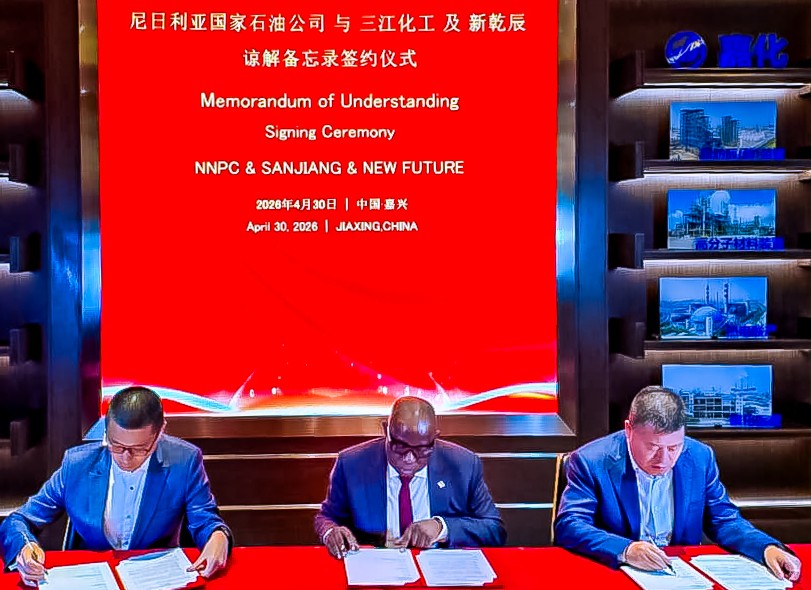

The Nigerian national oil company has signed a new agreement with Chinese firms in a renewed attempt to revive and expand two of its long-struggling refineries, marking another chapter in the country’s decades-long effort to restore domestic refining capacity.
- Nigerian National Petroleum Company has signed a new agreement with Chinese firms to revive and expand the Port Harcourt and Warri refineries.
- The Memorandum of Understanding aims to complete outstanding rehabilitation, improve efficiency, and upgrade the refineries to cleaner and more profitable standards.
- The agreement includes expanding petrochemical production and developing gas-based industrial hubs around the refinery complexes.
- Nigeria has spent over ₦11 trillion ($25 billion) on failed refinery rehabilitation efforts since 2010, with previous partnerships plagued by delays and underperformance.
The Nigerian National Petroleum Company Limited has signed a Memorandum of Understanding with Chinese firms - Sanjiang Chemical Company Limited and Xingcheng (Fuzhou) Industrial Park Operation and Management Co. Ltd to explore a Technical Equity Partnership (TEP) for the completion and operation of the Port Harcourt and Warri refineries.
This follows an earlier statement by the Nigerian National Petroleum Company in February, when it announced plans to collaborate with a Chinese firm to revive its idle refineries through partnerships with experienced operators rather than contractors.
GCEO Bashir Bayo Ojulari said the company would offer equity stakes instead of outright sales, enabling the facilities to become self-financing.
According to the statement issued by the Nigerian national oil company, "The potential framework would cover completion of outstanding work at the two refineries, together with operating and maintaining both facilities to achieve best-in-class, sustainable performance. Planned expansion and upgrades would elevate both facilities to cleaner, more profitable product standards."
It also includes ambitions to expand petrochemical production and develop gas-based industrial hubs around the refinery complexes, signalling a broader shift from basic refining toward integrated energy and industrial ecosystems.
A costly history of failed revamps
The latest deal comes against the backdrop of more than a decade of expensive but largely unsuccessful refinery rehabilitation efforts.
According to a detailed investigation by The Punch, Nigeria has spent over ₦11 trillion (about $25 billion) between 2010 and 2023 on refinery rehabilitation projects, maintenance, and turnaround programmes, yet the facilities have remained largely unreliable and underperforming.
![Nigeria has spent over ₦11 trillion ($25 billion) on failed refinery rehabilitation efforts since 2010, with previous partnerships plagued by delays and underperformance [Pius Utomi EKPEI/AFP via Getty Images]](https://ocdn.eu/pulscms/MDA_/ea0bd7437b6878ace195f4e1cccbe933.jpg)
Earlier efforts involved partnerships with foreign engineering firms, including Tecnimont and Daewoo Engineering & Construction, which were tasked with restoring operations at the country’s refineries.
However, despite major contracts and repeated timelines, the projects were plagued by delays, cost overruns, and repeated shutdowns.
Even after renewed attempts launched in 2021, the refineries continued to suffer from stop-start operations, raising fresh doubts about the effectiveness of past rehabilitation strategies.
Nigeria’s refining pivot
Despite these setbacks, Nigeria’s refining ambitions are now being reshaped by new dynamics. The emergence of the Dangote Refinery—one of the world’s largest single-train refineries—has already begun reducing reliance on imports and repositioning the country as a potential net exporter of refined products.
The planned revival of Port Harcourt and Warri refineries could significantly reinforce this shift, potentially transforming Nigeria from a chronic importer of refined fuel into a multi-refinery production hub serving both domestic and regional markets.
Speaking after the signing, NNPC GCEO Bashir Bayo Ojulari described the MoU as a key milestone following over six months of engagement with Chinese partners Sanjiang and Xinganchen.
“All parties recognise mutually beneficial opportunities for the development and long-term sustainable profitability of NNPC's refining assets in Nigeria, and the collective weight required for success,” he said.
If successful, the combined impact of private and state refining capacity could help reduce Africa’s dependence on imported fuel, stabilise regional energy markets, and strengthen Nigeria’s role as a central supplier of petroleum products across the continent.
Still, the latest agreement remains at the memorandum stage and will require further negotiations and regulatory approvals before implementation.
But it highlights a clear policy direction: after years of costly setbacks, Nigeria is once again betting on foreign partnerships to finally unlock its long-delayed refining potential.