Arrests Mark Moral Monday’s Shift From Washington to the States
Bishop William Barber says the movement's future lies beyond Washington. Faith leaders are returning to churches and neighborhoods to register, educate and mobilize voters in Black communities ahead of November's elections. The post Arrests Mark Moral Monday’s Shift From Washington to the States appeared first on Word In Black.
 Black News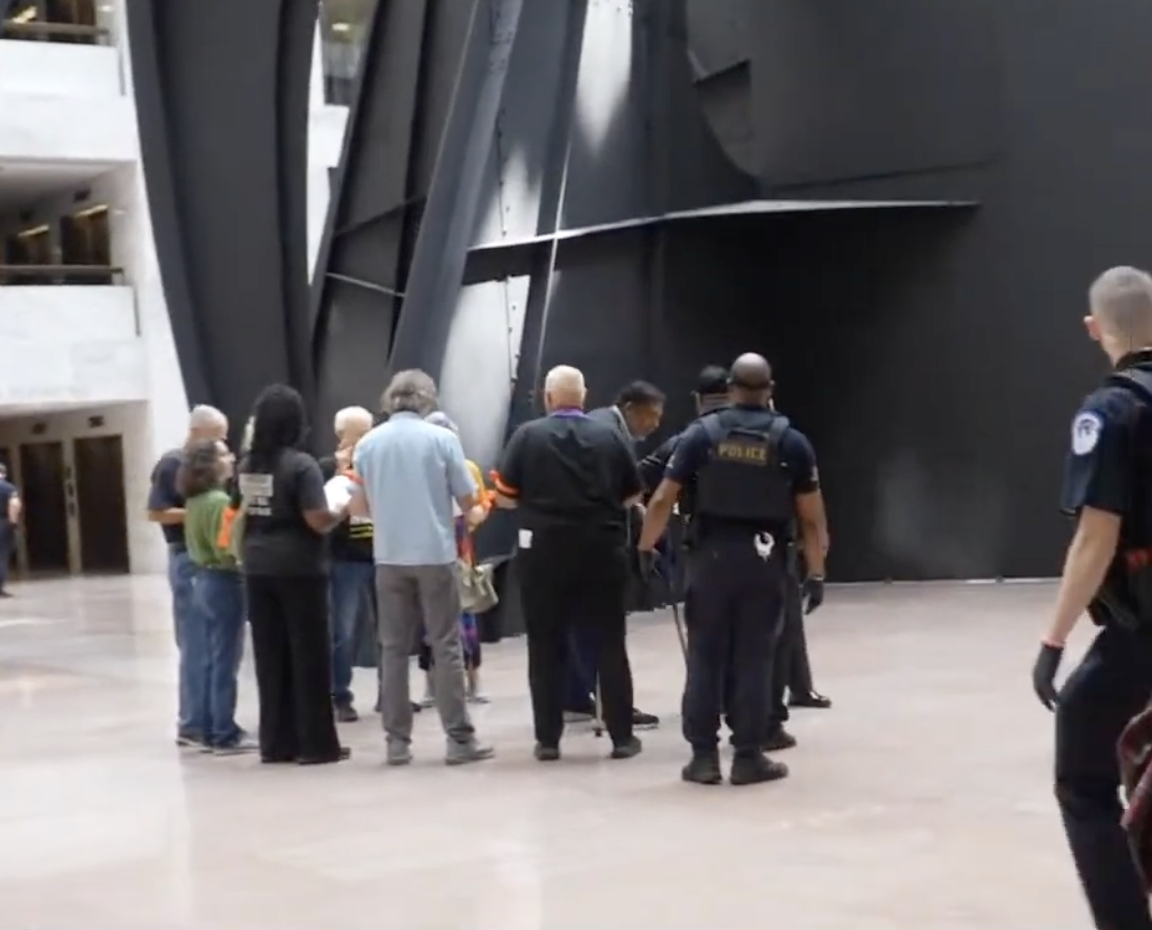


After weeks of praying, protesting, and getting arrested in the shadow of the U.S. Capitol, Bishop William J. Barber II says the next battle for America’s democracy won’t be fought in Washington.
Instead, the Moral Mondays campaign will shift from confronting Congress to mobilizing millions of infrequent voters on the streets, in church basements, on neighborhood sidewalks, and at polling places across the country.
LEARN MORE: ‘Books, Not Bombs’: Moral Mondays Faith Leaders Slam Iran War
The new phase of the campaign, however, began Monday with Barber and several clergy members arrested inside the Hart Senate Office Building. They were detained after Senate Majority Leader John Thune declined to meet with Barber and other faith leaders who wanted to discuss the SAVE America Act and other legislation they say disproportionately harms poor and low-income Americans.
‘Vision of Justice’
The demonstration and arrests officially launched 100 Days; 1,000 Marches to the Polls, a nationwide voter mobilization effort that moves Moral Monday into communities across the country ahead of the Nov. 3 midterm elections.
In a statement, Barber said the movement’s demonstration in Thune’s office was about confronting injustice, not instigating a spectacle.
“We are not supposed to turn a deaf ear and look the other way,” Barber said. “We are called to be in the public square, as it says in scripture, to go down to the leader’s house and offer a vision of justice and love not rooted in what’s left and right but what is right and wrong.”
We don’t need a march on Washington. We need to march to the polls in the states to change Washington.
BISHOP WILLIAM J. BARBER II, REPAIRERS OF THE BREACH
The demonstration followed weeks of Moral Monday gatherings in Washington led by Repairers of the Breach, the social justice organization Barber founded. Since early summer, clergy, labor leaders, voting-rights advocates and directly impacted people have gathered weekly to challenge what they describe as policies harming poor and working-class families.
Those concerns have included voting rights, affordable health care, living wages, immigration, poverty and military spending — issues organizers consistently frame as moral rather than partisan questions.
Marching to Polls
Monday’s action marked the campaign’s pivot.
Rather than continuing weekly demonstrations in Washington, organizers are calling on participants to return to their home states and build local grassroots movements leading up to Election Day.
“We don’t need a march on Washington,” Barber said. “We need to march to the polls in the states to change Washington.”
According to Repairers of the Breach, organizers hope to mobilize 5 million low-wage voters, including at least 1 million Black men, particularly in Southern and battleground states. The effort will rely on peer-to-peer texting, phone banking, neighborhood canvassing, voter education and more than 1,000 locally organized Marches to the Polls.
Back to the Future
For Black churches, the initiative recalls a familiar role.
Historically, congregations have functioned as centers of worship, community organizing and civic participation, from the Civil Rights Movement through contemporary voting-rights campaigns. Organizers say pastors, lay leaders and congregations will again become essential partners in educating voters and encouraging participation in communities where turnout has often lagged despite significant need.
The coalition backing the effort reflects that broad strategy.
In addition to Repairers of the Breach, participating organizations include the African Methodist Episcopal Church, African Methodist Episcopal Zion Church, Christian Church (Disciples of Christ), National Council of Churches, Common Cause, Sojourners, United Church of Christ, Washington Interfaith Network and numerous other faith-based and advocacy organizations.
Extending the Movement
The coalition plans to build a movement that extends beyond election season by connecting voting to issues that directly affect everyday life in Black communities.
For organizers, the arrests inside the Senate office building Monday symbolized what they see as the unwillingness of political leaders to hear the concerns of those most affected by poverty, barriers to the ballot box and widening economic inequality.
Whether Monday’s arrests become the defining image of the campaign remains uncertain.
RELATED: Bishop William Barber Launches Legal Fight Over Gerrymandering
Organizers say they would rather be remembered for what happens next — thousands of faith leaders returning to their congregations, neighborhoods and state capitals to encourage civic participation and remind voters that democracy, like justice, requires more than a single march.
As Moral Monday leaves Washington, its leaders are betting the movement’s greatest impact will come not from the halls of Congress but from the pulpits, sidewalks and polling places of communities across America.
The post Arrests Mark Moral Monday’s Shift From Washington to the States appeared first on Word In Black.