As China dominates antimony supply, Morocco advances strategic mining project
Morocco is taking a step into one of the world’s most strategically important mineral markets at a time when governments and manufacturers are scrambling to reduce their dependence on China.
 Black News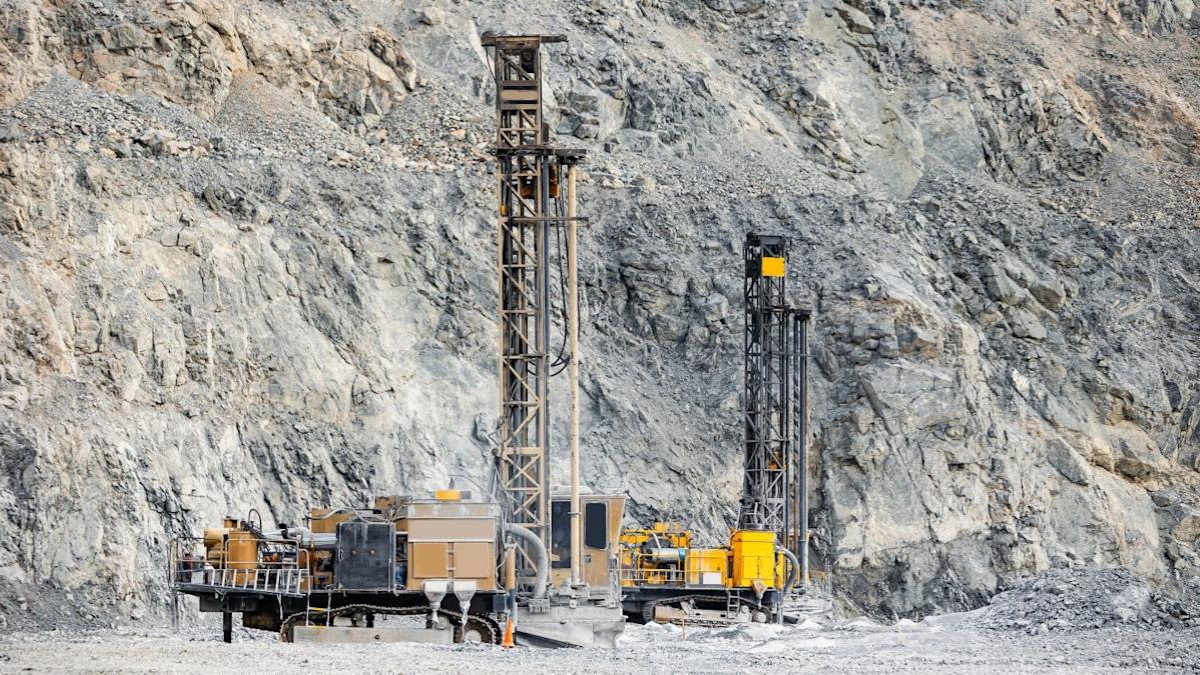
![Morocco is seeking a foothold in the global antimony market as demand for critical minerals rises. [X, formerly Twitter/@miningandenergy]](https://ocdn.eu/pulscms/MDA_/01c39fbddcd73ef8d3cde34f3e62e57f.jpg)
Morocco is taking a step into one of the world’s most strategically important mineral markets at a time when governments and manufacturers are scrambling to reduce their dependence on China.
- Morocco has granted Xtract Resources a 10-year renewable mining licence for its Amghas antimony project.
- The move comes as countries seek alternatives to China, which dominates global antimony supply.
- Antimony is a critical mineral used in defence systems, batteries, semiconductors and flame-retardant materials.
- Xtract aims to begin concentrate production in late 2026, though key questions about the project’s scale remain unanswered.
London-listed Xtract Resources has secured a 10-year renewable mining licence for its Amghas antimony project in northwest Morocco, clearing the way for production of a metal that has become increasingly important to global supply chains, defence industries and advanced manufacturing.
The approval comes amid growing concerns over the concentration of antimony supply in a handful of countries, particularly China, which remains the dominant player in the global market.
While antimony rarely attracts the attention given to lithium, copper or cobalt, it has become one of the minerals attracting increasing interest from policymakers in Washington, Brussels and other capitals because of its role in military equipment, batteries, semiconductors, solar technologies and flame-retardant materials.
Why antimony suddenly matters
The strategic importance of antimony has grown sharply in recent years as geopolitical tensions and supply chain disruptions have exposed the risks of relying on a small number of producers.
China accounts for a significant share of global antimony production and processing capacity, giving it considerable influence over a market that many countries now regard as critical to national security and industrial competitiveness.
The metal is used in ammunition, military-grade alloys, infrared sensors, batteries, electronics and a range of industrial products.
As governments seek to secure supplies of critical minerals, projects outside traditional producing countries are drawing increased attention from investors and policymakers.
That creates an opportunity for countries such as Morocco, which has been working to strengthen its position in global mining and manufacturing supply chains.
Morocco’s growing critical minerals ambitions
The antimony project arrives as Morocco seeks to expand beyond its traditional strengths in phosphates and become a more significant player in critical minerals.
The country has already attracted substantial investment linked to electric vehicle supply chains, battery manufacturing and renewable energy projects, helped by its proximity to European markets and relatively developed industrial infrastructure.
An antimony industry could further support Morocco’s ambitions to become an important supplier of strategic raw materials to Europe and other international markets.
For Morocco, the project is about more than a single mine.
It is another piece of a broader effort to position the country as a key link in the global transition toward more secure and diversified supply chains.
What Xtract plans to do
Xtract said it has already begun relocating processing infrastructure from Casablanca to the Amghas site.
Its Moroccan venture, Wildstone SARL, is also seeking approval for a gravity processing plant designed to handle 70,000 tonnes of ore annually.
The facility will initially process ore from the Amghas mine and material supplied by local small-scale miners.
The company ultimately plans to develop a larger flotation plant capable of processing ore from Amghas, the neighbouring Ighoud mine and additional third-party suppliers.
According to Xtract, metallurgical testing produced antimony concentrate grades of up to 65%, while the company is targeting its first concentrate production and sales in the fourth quarter of 2026.
Executive Chairman Colin Bird described the mining licence as a major milestone for the company’s wider antimony strategy in Morocco.
The unanswered questions
Despite the progress, investors still have limited information about the project’s long-term potential.
The company has completed feasibility and environmental studies, but it has yet to publish a detailed modern resource estimate showing the scale of the deposit.
Key details including total reserves, expected mine life, production costs and capital requirements have not been fully disclosed.
Those factors will ultimately determine whether Amghas becomes a small regional producer or the foundation of a larger Moroccan antimony industry.
For now, the licence marks an important step for both Xtract and Morocco.
But the bigger test lies ahead: proving that Morocco can turn a promising project into a commercially viable source of a mineral that has become increasingly important in an era of geopolitical competition and supply chain security.