U.S. sanctions Congo rebel commanders as eastern conflict threatens critical minerals supply
The United States has imposed sanctions on commanders from rival armed groups in eastern Democratic Republic of Congo, showing growing concern that continued violence could undermine fragile peace efforts in one of the world’s most important mineral-producing regions.
 Black News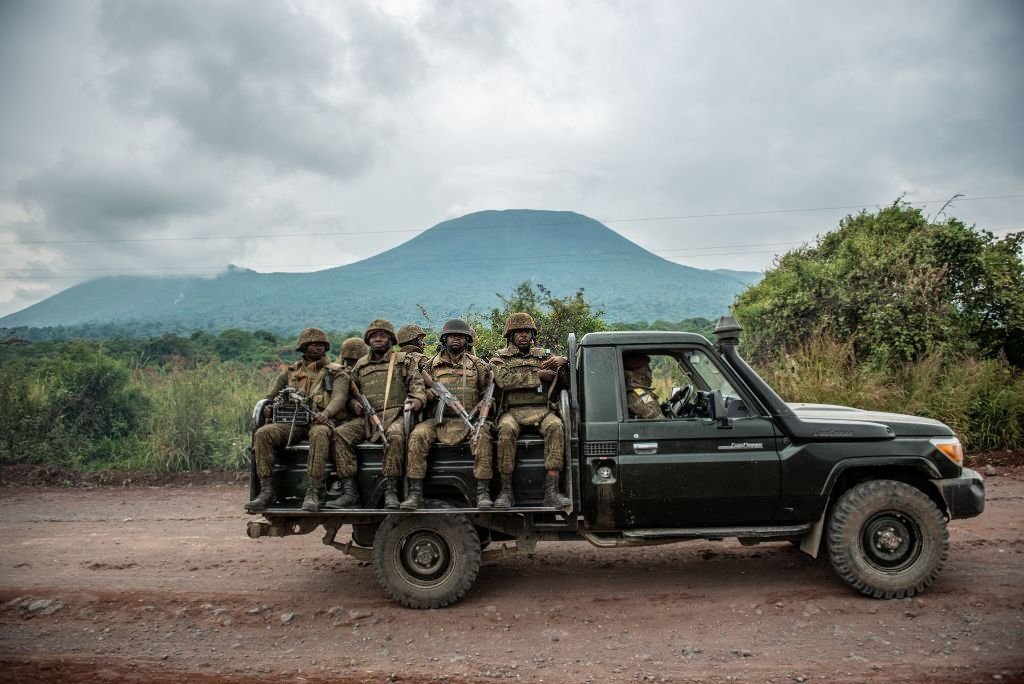

The United States has imposed sanctions on commanders from rival armed groups in eastern Democratic Republic of Congo, showing growing concern that continued violence could undermine fragile peace efforts in one of the world’s most important mineral-producing regions.
- The U.S. has sanctioned commanders from the M23 rebel group and the FDLR militia.
- Washington says armed groups are fuelling violence and worsening the humanitarian crisis in eastern Congo.
- The move comes as peace efforts face renewed pressure despite diplomatic progress between Congo and Rwanda.
- Continued instability threatens a region that supplies minerals critical to global technology and energy industries.
The sanctions target John Imani Nzenze, an M23 commander and intelligence chief, and Gustave Kubwayo, a commander in the Democratic Forces for the Liberation of Rwanda (FDLR), a militia linked to perpetrators of Rwanda’s 1994 genocide.
Washington accused both men of helping sustain violence in eastern Congo, where conflict has displaced millions, triggered a worsening humanitarian crisis and complicated efforts to stabilise the region.
The move highlights the challenges facing ongoing diplomatic efforts between Congo and neighbouring Rwanda, which have been backed by the United States amid fears that escalating violence could destabilise a broader region already grappling with security and economic pressures.
Why eastern Congo matters to the world
The conflict extends far beyond Central Africa.
Eastern Congo sits at the heart of one of the world’s most valuable mineral belts, with vast deposits of cobalt, coltan, copper, gold and other resources used in electric vehicles, smartphones, data centres and defence technologies.
As governments and companies race to secure supplies of critical minerals needed for the global energy transition, stability in Congo has become increasingly important to international investors and major powers alike.
The U.S. has been seeking deeper engagement in the region as Western countries look to diversify critical mineral supply chains and reduce dependence on a handful of dominant suppliers.
Sanctions target commanders on opposing sides
According to the U.S. Treasury Department, Nzenze serves as a senior intelligence figure within M23, the rebel group that has seized significant territory in eastern Congo during the latest phase of the conflict.
Kubwayo was sanctioned for his role within the FDLR, a militia that Rwanda has long described as a security threat.
U.N. experts and the Congolese government have repeatedly accused Rwanda of backing M23, allegations Kigali denies. Rwanda, meanwhile, argues that the continued presence of the FDLR near its border poses a direct security risk.
By targeting commanders from both groups, Washington appears to be signalling that armed actors on all sides of the conflict risk international consequences if violence continues.
Peace efforts face a difficult test
The sanctions come despite ongoing mediation efforts aimed at reducing tensions between Congo and Rwanda and creating conditions for a lasting settlement.
While diplomatic engagement has produced periods of de-escalation, fighting has persisted in several areas of eastern Congo, underscoring the gap between political negotiations and realities on the ground.
“Persistent violence by armed groups is exacerbating an already dire humanitarian crisis and presents a threat to U.S. interests in the region,” U.S. Treasury Secretary Scott Bessent said in a statement announcing the measures.
For Washington, the sanctions represent another attempt to pressure armed groups into supporting a peaceful resolution.
Whether they will change calculations on the battlefield remains uncertain, but the latest move demonstrates that eastern Congo’s conflict is no longer viewed solely as a regional security challenge.
It has become a matter of growing international concern because of its humanitarian toll, geopolitical implications and importance to global mineral supply chains.