Burundi’s Electricity Crisis Is Holding Back Its Economic Ambitions
Persistent power outages are more than an inconvenience in Bujumbura — they are undermining livelihoods, public services and Burundi’s economic ambitions.
 Black News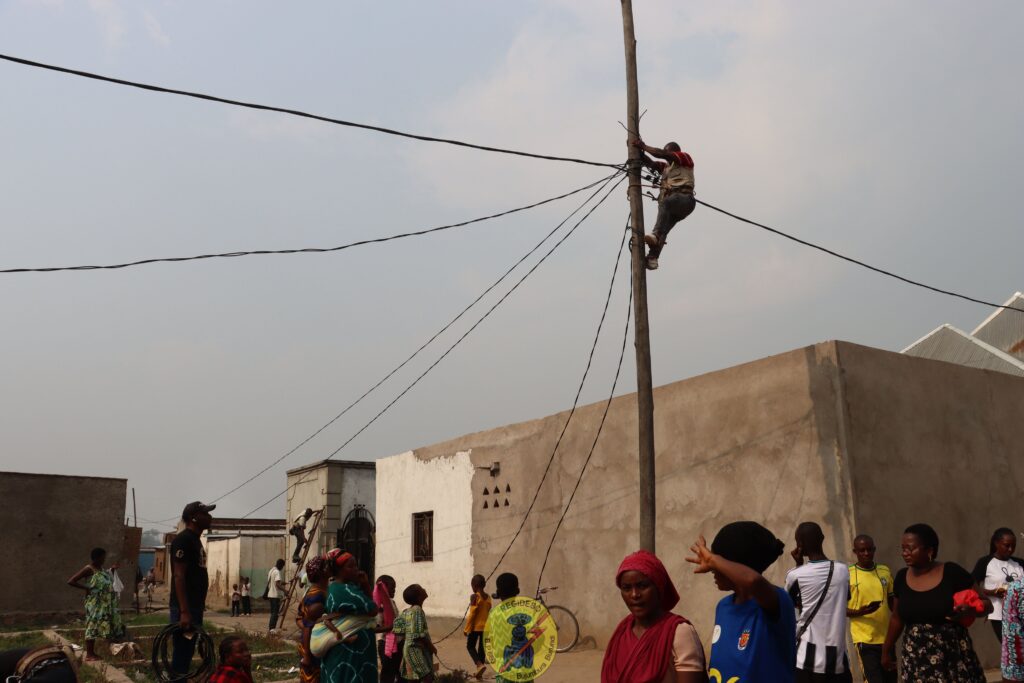

Moïse Ndayiragije is a reporter for Breaking Burundi
Bujumbura has spent the past weeks grappling with frequent power outages, disrupting businesses, schools, health facilities and households across the economic capital.
REGIDESO, the state-owned electricity and water utility, warned of outages from Aug. 6 to 7 because of technical work at the Jiji-Mulembwe facility. But the disruptions continued well beyond that period, leaving many income-generating activities struggling to operate.
For residents, such warnings have become increasingly familiar. What is less clear is why outages persist even outside scheduled maintenance. In parts of northern Bujumbura, for example, faults can leave neighbourhoods without electricity for days.
The problem is bigger than inconvenience. Electricity is the backbone of Bujumbura’s economy. Welders, barbers, restaurants, shops, schools, hospitals and journalists all depend on reliable power to earn income or provide essential services.
I have experienced this personally as a multimedia journalist. Power cuts can prevent me from charging equipment, accessing the internet, researching stories and filing work on time. Telecommunications infrastructure is also affected, meaning a power outage can quickly become an internet outage.
For small businesses, the consequences are even more direct. A welder who relies on electricity told me that using a generator is often too expensive, especially when fuel is already difficult to obtain. A day without electricity can mean a day without income.
Hospitals and schools face their own challenges. Electricity is essential for medical procedures, lighting, digital learning, research and communication. Those without reliable backup generators are particularly vulnerable.
Beyond temporary repairs
Burundi remains among the countries with the lowest electricity-access rates in the world, according to the World Bank. Projects such as ASCENT-Burundi offer hope of expanding access, while new infrastructure and regional electricity interconnections are intended to strengthen supply.
Yet new infrastructure has not eliminated the problem.
In 2025, Burundi inaugurated a major electricity substation linked to the DRC-Burundi interconnection. At the time, REGIDESO officials expressed optimism that persistent outages in Bujumbura would soon become a thing of the past. But interruptions continued.
REGIDESO has repeatedly cited limited resources, foreign-currency shortages, ageing infrastructure and rising demand as major obstacles. Earlier this week, its director, Jean Albert Manigomba, again pointed to old infrastructure and growing demand while assuring the public that the company was working to address the problem.
These explanations may be valid, but they are no longer enough. Citizens need to know what concrete measures are being taken, how long they will take and how they will be funded.
Electricity and development
Burundi wants to become an emerging economy by 2040 and a developed country by 2060. Reliable electricity must be central to that ambition.
No economy can industrialise without dependable power. Businesses cannot expand, investors cannot operate efficiently and essential public services cannot function properly when electricity remains unpredictable.
The government should therefore treat reliable electricity not simply as an infrastructure issue but as an economic priority. That means accelerating the replacement of ageing distribution networks, improving maintenance, strengthening transparency around REGIDESO’s finances and ensuring that investments translate into reliable service.
The country also needs to address the underlying foreign-currency constraints that REGIDESO says prevent it from importing essential equipment.
Burundi’s development ambitions will ultimately be measured not only by how much electricity it generates, but by whether that electricity reliably reaches homes, businesses, schools and hospitals.
More megawatts alone will not solve the crisis. Burundi needs a distribution system capable of delivering them.
Without that, frequent blackouts will continue to impose an invisible tax on the economy — reducing business income, disrupting education, complicating healthcare and weakening the country’s ability to attract investment.
For Burundi to meet its 2040 and 2060 ambitions, keeping the lights on cannot remain an aspiration. It must become a basic condition of economic development.