Eritrea’s Self-Made Prison: How a War-State Became a Source of Regional Instability
Addis Ababa, October 5, 2026 (FMC) — Eritrea’s latest diplomatic rupture with Ethiopia has brought into focus a pattern that has defined much of its post-independence history: a state shaped by permanent mobilization, recurrent confrontation and a security doctrine that has repeatedly spilled beyond its borders. Ethiopia’s decision on October 1 to close its embassy […]
 Black News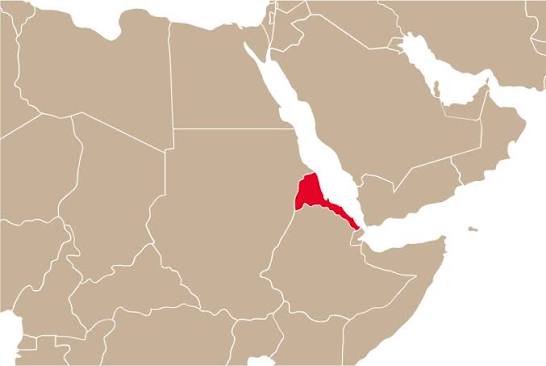
Addis Ababa, October 5, 2026 (FMC) — Eritrea’s latest diplomatic rupture with Ethiopia has brought into focus a pattern that has defined much of its post-independence history: a state shaped by permanent mobilization, recurrent confrontation and a security doctrine that has repeatedly spilled beyond its borders.
Ethiopia’s decision on October 1 to close its embassy in Asmara and declare 10 Eritrean diplomats persona non grata came after Addis Ababa cited direct and indirect acts of hostility and belligerence that threatened its national security. Ethiopia said the diplomats had engaged in activities violating diplomatic norms, while reaffirming its commitment to peaceful coexistence, regional stability and integration.
But the latest rupture is only the newest chapter in a much longer record.
Since independence in 1993, Eritrea has repeatedly found itself at the centre of military confrontations in the Horn and Red Sea. In 1995, it clashed with Yemen over the Zubayr and Hanish island groups, a dispute ultimately taken to international arbitration. The Permanent Court of Arbitration issued its first award in 1998 and a further award on maritime delimitation in 1999.
Then came Ethiopia.
The 1998–2000 Ethiopia-Eritrea war transformed a border dispute into one of Africa’s most destructive interstate conflicts, leaving a deep military and political rupture between two countries whose peoples remain bound by geography, history and extensive human ties.
In 2008, Eritrea entered another armed confrontation, this time with Djibouti, over Ras Doumeira and Doumeira Island. The episode became part of the wider regional security crisis that later prompted the United Nations Security Council to act against Eritrea.
The record went beyond direct interstate warfare. Eritrea’s involvement in Somalia became a major international security concern, with the Security Council in 2009 citing support for armed groups undermining peace and reconciliation in Somalia and Eritrea’s failure to withdraw forces following its conflict with Djibouti. Resolution 1907 imposed an arms embargo as well as travel restrictions and asset freezes.
For a country repeatedly confronting its neighbours, this was more than a succession of isolated disputes. It revealed a regional posture in which military power, strategic rivalry and support for armed actors became instruments of statecraft.
That external posture has also been reinforced by the character of the state at home.
Eritrea has remained deeply militarized, with indefinite national service becoming one of the defining features of its post-independence system. The political space has remained tightly controlled, while prolonged national service and restricted economic opportunity have contributed to large-scale outward migration.
The result is a striking contradiction. A country endowed with a strategically important Red Sea coastline and valuable ports has remained economically constrained while much of its national energy has continued to revolve around security and military readiness.
The 2018 rapprochement with Ethiopia briefly appeared to offer an escape from that cycle. Diplomatic relations were restored, borders reopened and hopes rose that the two countries could finally move beyond decades of hostility.
Yet rapprochement alone could not erase the deeper political and security habits that had accumulated over decades.
The latest diplomatic breakdown therefore exposes something larger than another bilateral crisis. It raises the question of whether Eritrea can escape a model in which perpetual security mobilization becomes the justification for perpetual political closure—and political closure, in turn, reinforces insecurity.
Meanwhile, the Horn of Africa is changing around it.
Across the region, economies are expanding through infrastructure, agriculture, industry, trade and connectivity. Ethiopia is pursuing a broad development and regional-integration agenda, while the strategic importance of the Red Sea continues to grow.
Eritrea sits directly on that corridor.
Its geography could be an extraordinary economic asset. Its ports could connect the country to expanding regional markets. Its proximity to Ethiopia and the wider Horn could make integration a source of growth rather than confrontation.
But geography cannot deliver prosperity by itself.
It requires peace. It requires investment. It requires predictable economic relations. Above all, it requires a political choice to replace permanent confrontation with productive interdependence.
That is the prison Eritrea now faces—not one built by geography or by its neighbours, but one reinforced by the political and security model it has maintained for decades.
Breaking out would require more than another diplomatic opening. It would require a fundamental redirection of national priorities: away from indefinite militarization and regional confrontation, and toward economic development, institutional opening and peaceful regional integration.
For the Horn of Africa, the stakes extend far beyond Eritrea.
Every militarized border is a barrier to trade. Every proxy conflict diverts resources from development. Every cycle of confrontation postpones the economic integration that could transform the region.
Ethiopia has made clear that it will defend its sovereignty and national security while continuing to advocate peaceful coexistence and regional integration.
The question now is whether Eritrea will continue to reproduce the conditions that have kept it trapped—or whether it will finally dismantle the machinery that has turned a strategically gifted country into a state perpetually organized around war.
The Horn of Africa cannot build its future by remaining hostage to the conflicts of its past.
Neither can Eritrea.