Gulu University Emerges As African Hub For Indigenous Knowledge And Holistic Medicine
By Okumu Livingstone Langol Photos: Special To Black Star News Gulu University in northern Uganda is increasingly gaining recognition for promoting indigenous knowledge and holistic medicine as part of its academic mission. The institution has now been selected as an International Hub for Excellence in mentorship, research, innovation, integration, partnership, and collaboration—a recognition that highlights its unique educational approach. On Thursday morning, March 5, 2026, at about 11:00 a.m. East African time, the campus was covered in mist as motorcades lined the compound near the Gulu University Multipurpose Laboratory. A light wind moved across the grounds as Dr. Lamwaka Alice Veronica arrived in a university van accompanied by a group of international African students visiting the institution. Dr. Lamwaka explained that the recognition reflects the university’s distinctive approach to education. “We are an academic institution, but we go beyond the usual teaching,” she said. “Our approach is unique. We integrate indigenous knowledge with modern disciplines so that our students graduate with a broader understanding of society and community.” According to Dr. Lamwaka, students from diverse fields—including medicine, information technology, agriculture, and law—benefit from this approach. “When our students graduate and enter the workforce, they perform very well,” she said. “They maintain strong professional records and uphold ethical standards because of the values and training they receive here.” One example often cited by university leaders is the development of COVIDEK, an herbal remedy produced during the COVID-19 pandemic. Dr. Lamwaka said the herbal formulation was used to support treatment for patients during the crisis. “We intervened and developed COVIDEK herbal medicine during COVID-19,” she explained. “It helped many people who were affected by the virus and contributed to saving lives among thousands of survivors.” The Acholi sub-region, where Gulu University is located, previously gained international attention for its role in combating the Ebola outbreak of 2000, and the university sees its work on herbal medicine as part of a continuing public health effort in the region. Dr. Stephen Langole, Emeritus Director of the Gulu University Institute of Peace and Strategic Studies, said the institution’s focus aligns with broader African intellectual movements emphasizing indigenous knowledge. “The Council for the Development of Social Science Research in Africa (CODESRIA) has long emphasized indigenous knowledge as an important research theme,” he said. “Gulu University has now been identified as a Centre of Excellence for promoting indigenous knowledge.” The university’s program goes beyond conventional pharmaceutical studies by working directly with communities that possess traditional knowledge. “We promote herbal medicine traditions and work with groups of people in rural villages who are custodians of indigenous knowledge,” Dr. Langole explained. As part of the program, Gulu University is currently hosting 13 students from across Africa for a one-month mentorship program focused on indigenous knowledge and African intellectual traditions. The students come from countries including Nigeria, Benin, Togo, Mozambique, Zimbabwe, Ethiopia, and Eswatini. The visiting students arrived on March 1, 2026. Their mentorship program is supported by a grant from the Mastercard Foundation. For the past five days, the students have participated in evening gatherings at a traditional bonfire where elders and scholars share indigenous knowledge. They also observed demonstrations related to herbal medicine, including discussions about the COVIDEK remedy. Dr. Langole said the group will also travel to Kitgum–Maditi to meet a respected elder—more than 100 years old—who is regarded as a custodian of indigenous knowledge. “We want them to learn directly from community elders,” he said. “Indigenous knowledge is preserved through experience and oral traditions.” During one of the evening sessions, the visiting students also learned traditional Acholi cooking methods, including roasting potatoes using a technique known locally as Bulu Layata Abur, in which potatoes are buried in soil and cooked under a fire pot. One of the participants, Mr. Fenti Tesfamichael, a 33-year-old student from Ethiopia, praised the hospitality he has received in Gulu. “I appreciate the welcome from the people of Gulu City and the leadership of the university,” he said, mentioning Vice Chancellor Prof. George Openyjuru Ladaa as well as Dr. Lamwaka and Dr. Langole. Tesfamichael said he was particularly impressed by the Bonfire Centre, where students and elders
 Black News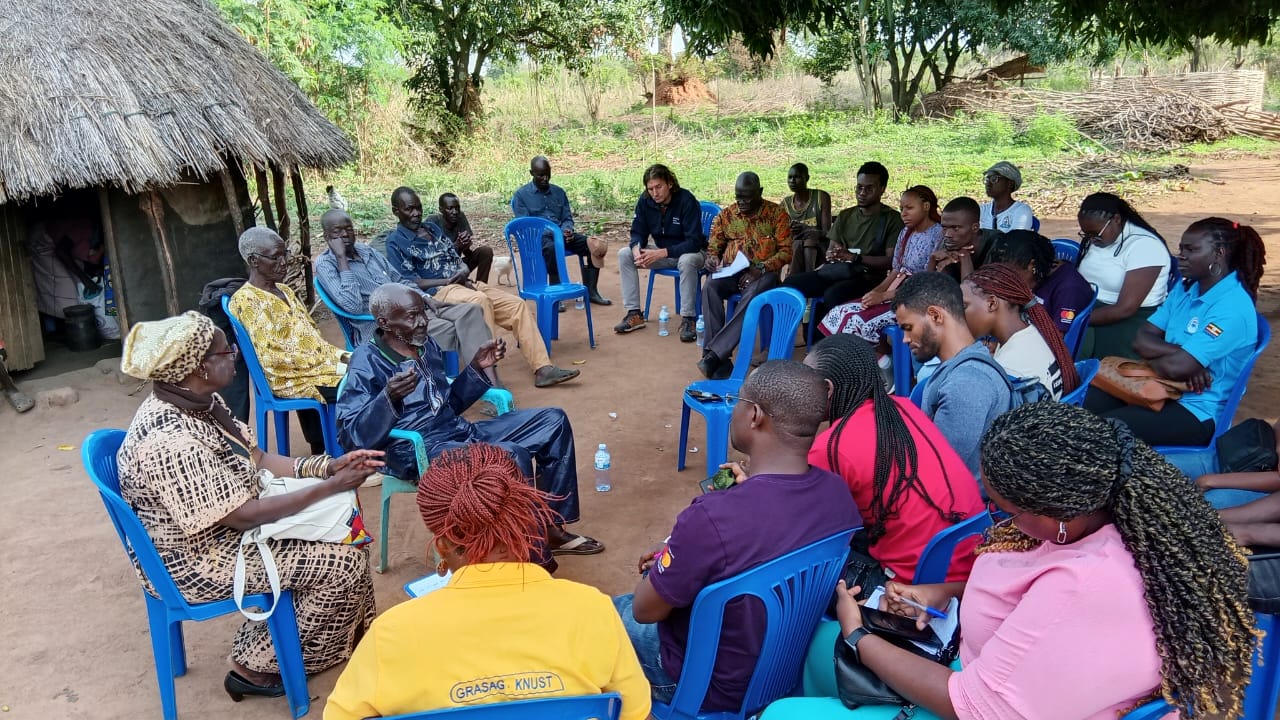
By Okumu Livingstone Langol
Photos: Special To Black Star News
Gulu University in northern Uganda is increasingly gaining recognition for promoting indigenous knowledge and holistic medicine as part of its academic mission. The institution has now been selected as an International Hub for Excellence in mentorship, research, innovation, integration, partnership, and collaboration—a recognition that highlights its unique educational approach.
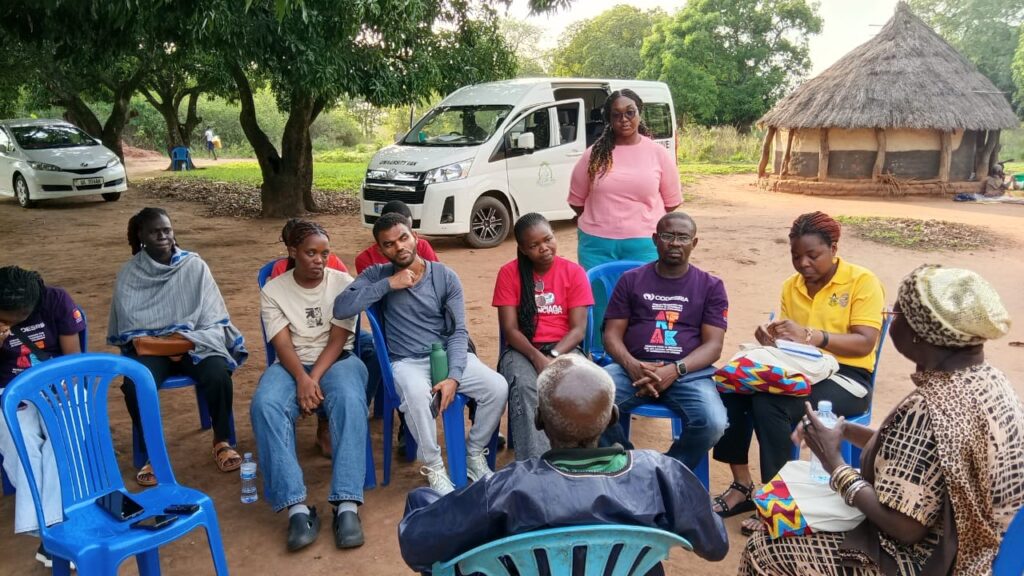
On Thursday morning, March 5, 2026, at about 11:00 a.m. East African time, the campus was covered in mist as motorcades lined the compound near the Gulu University Multipurpose Laboratory. A light wind moved across the grounds as Dr. Lamwaka Alice Veronica arrived in a university van accompanied by a group of international African students visiting the institution.
Dr. Lamwaka explained that the recognition reflects the university’s distinctive approach to education.
“We are an academic institution, but we go beyond the usual teaching,” she said. “Our approach is unique. We integrate indigenous knowledge with modern disciplines so that our students graduate with a broader understanding of society and community.”
According to Dr. Lamwaka, students from diverse fields—including medicine, information technology, agriculture, and law—benefit from this approach.
“When our students graduate and enter the workforce, they perform very well,” she said. “They maintain strong professional records and uphold ethical standards because of the values and training they receive here.”
One example often cited by university leaders is the development of COVIDEK, an herbal remedy produced during the COVID-19 pandemic. Dr. Lamwaka said the herbal formulation was used to support treatment for patients during the crisis.
“We intervened and developed COVIDEK herbal medicine during COVID-19,” she explained. “It helped many people who were affected by the virus and contributed to saving lives among thousands of survivors.”
The Acholi sub-region, where Gulu University is located, previously gained international attention for its role in combating the Ebola outbreak of 2000, and the university sees its work on herbal medicine as part of a continuing public health effort in the region.
Dr. Stephen Langole, Emeritus Director of the Gulu University Institute of Peace and Strategic Studies, said the institution’s focus aligns with broader African intellectual movements emphasizing indigenous knowledge.
“The Council for the Development of Social Science Research in Africa (CODESRIA) has long emphasized indigenous knowledge as an important research theme,” he said. “Gulu University has now been identified as a Centre of Excellence for promoting indigenous knowledge.”
The university’s program goes beyond conventional pharmaceutical studies by working directly with communities that possess traditional knowledge.
“We promote herbal medicine traditions and work with groups of people in rural villages who are custodians of indigenous knowledge,” Dr. Langole explained.
As part of the program, Gulu University is currently hosting 13 students from across Africa for a one-month mentorship program focused on indigenous knowledge and African intellectual traditions. The students come from countries including Nigeria, Benin, Togo, Mozambique, Zimbabwe, Ethiopia, and Eswatini.
The visiting students arrived on March 1, 2026. Their mentorship program is supported by a grant from the Mastercard Foundation.
For the past five days, the students have participated in evening gatherings at a traditional bonfire where elders and scholars share indigenous knowledge. They also observed demonstrations related to herbal medicine, including discussions about the COVIDEK remedy.
Dr. Langole said the group will also travel to Kitgum–Maditi to meet a respected elder—more than 100 years old—who is regarded as a custodian of indigenous knowledge.
“We want them to learn directly from community elders,” he said. “Indigenous knowledge is preserved through experience and oral traditions.”
During one of the evening sessions, the visiting students also learned traditional Acholi cooking methods, including roasting potatoes using a technique known locally as Bulu Layata Abur, in which potatoes are buried in soil and cooked under a fire pot.
One of the participants, Mr. Fenti Tesfamichael, a 33-year-old student from Ethiopia, praised the hospitality he has received in Gulu.
“I appreciate the welcome from the people of Gulu City and the leadership of the university,” he said, mentioning Vice Chancellor Prof. George Openyjuru Ladaa as well as Dr. Lamwaka and Dr. Langole.
Tesfamichael said he was particularly impressed by the Bonfire Centre, where students and elders exchange knowledge.
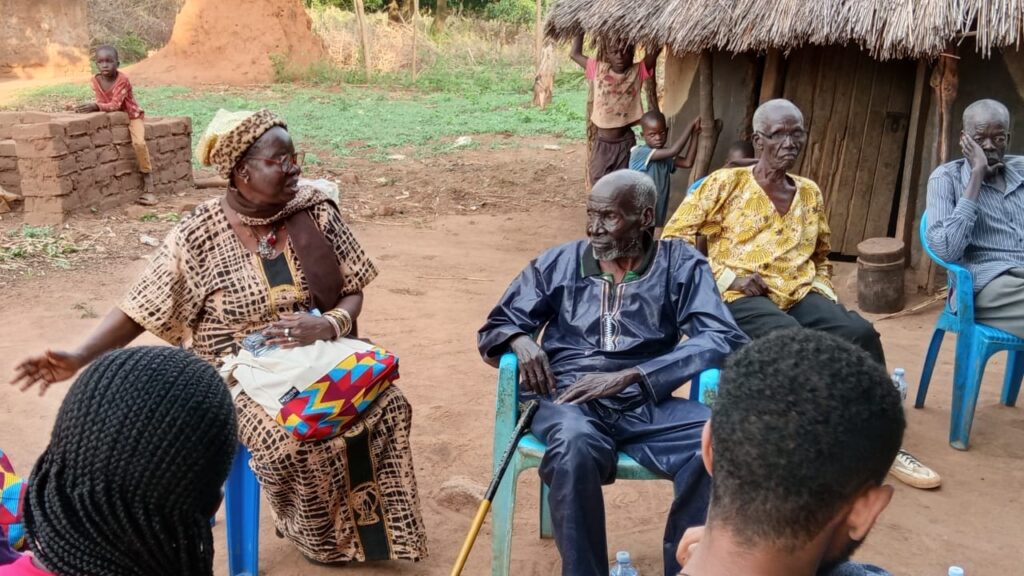
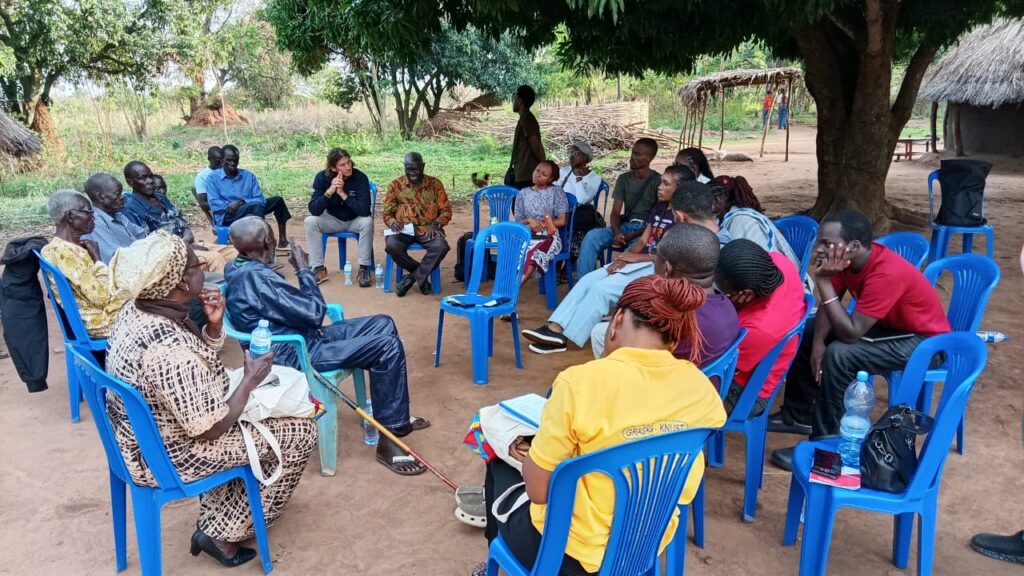
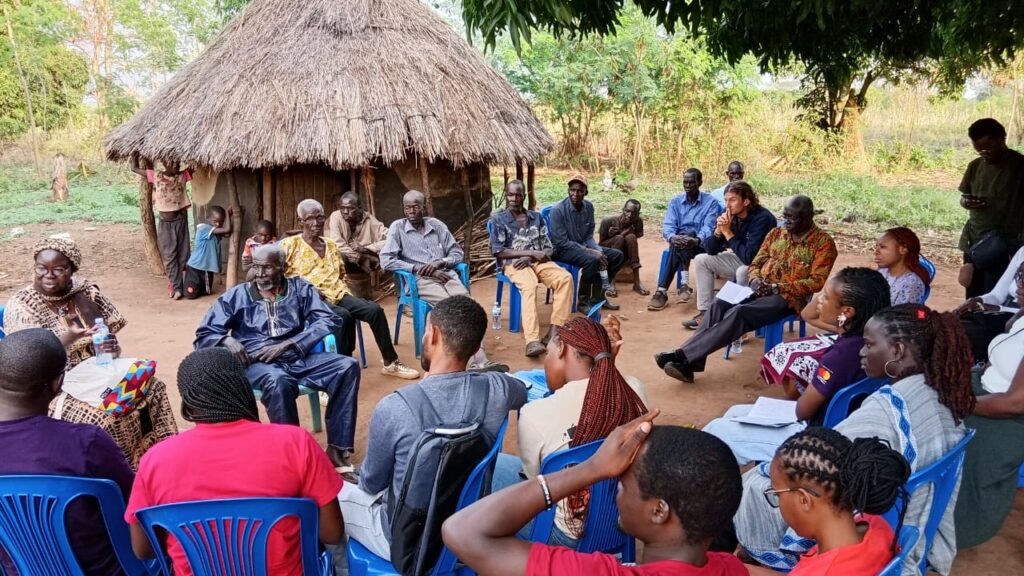
International students meet an Acholi elder who’s over 100 years old and is a custodian of indigenous knowledge.
“It is very interesting to learn from Acholi elders,” he said. “They explain how African indigenous knowledge has been preserved over generations.”
He described the traditional potato-roasting method demonstrated during the gathering.
“There is a process of covering the potatoes with soil and cooking them under fire,” he said. “When they are removed and allowed to cool, the aroma is very pleasant.”
Tesfamichael is currently developing a research project during his mentorship at the Institute of Peace and Strategic Studies.
“My project focuses on security issues in Ethiopia from a historical perspective, particularly between 1980 and 1990,” he explained.
The period includes the final years of Ethiopia’s military government under Mengistu Haile Mariam, who ruled from 1974 until his overthrow in 1991.
According to Tesfamichael, the research examines how militant movements, land conflicts, and political violence shaped security dynamics during that era.
“The militants often fled into neighboring countries and continued violent campaigns,” he said. “The government attempted to address security issues, but many conflicts remained unresolved.”
Tesfamichael believes the mentorship program in Gulu will strengthen his research.
“Uganda has also experienced conflict, particularly in the Acholi sub-region,” he said. “There are lessons here about how land disputes and post-war tensions can be addressed.”
He added that the exchange of ideas with professors and fellow students is one of the program’s greatest benefits.
“Through mentorship here at Gulu University, I will gain knowledge, exposure, and new perspectives that will help develop my research,” he said.