Zambia’s Sovereignty in the Crosshairs of Medical Imperialism
Today, April 30, 2026, the sun rose over Lusaka not as a symbol of a new dawn, but as a countdown. In the corridors of the State House, a choice is being forced upon the Zambian people that no sovereign nation should ever have to make: The health of our children or the wealth of [...]
 Black News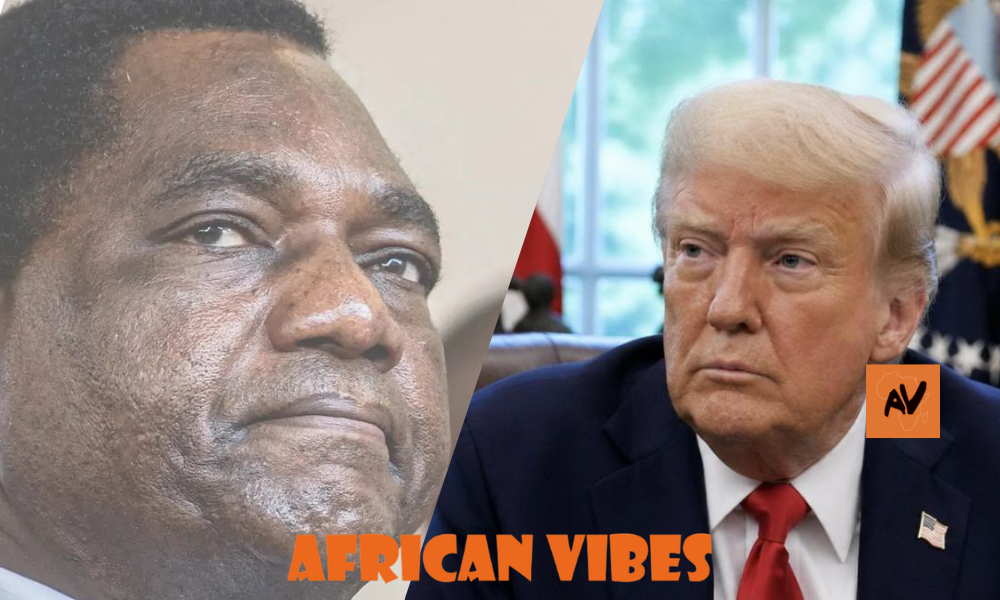
Today, April 30, 2026, the sun rose over Lusaka not as a symbol of a new dawn, but as a countdown. In the corridors of the State House, a choice is being forced upon the Zambian people that no sovereign nation should ever have to make: The health of our children or the wealth of our soil.
The ultimatum delivered by Washington is chillingly precise. By the close of business today, Zambia must sign a “Strategic Mineral Partnership” that grants U.S. corporations right-of-first-refusal and preferential pricing for its copper, cobalt, and lithium reserves. If Zambia refuses, the United States has signaled it will “recalibrate” its commitment to PEPFAR—the President’s Emergency Plan for AIDS Relief.
In plain language: Give us your minerals, or we let 1.3 million of your people die.
This is not a trade deal. It is medical terrorism. It is the evolution of the “Scramble for Africa” from the Maxim gun to the antiretroviral pill.
ALSO READ: Senegal Launches First Satellite: A Milestone in African Space Exploration
II. The Anatomy of Modern Coercion: Why Zambia?
Zambia is not an accidental target. It is the heartbeat of the global energy transition. As the West panics over its dependence on Chinese supply chains for the “Green Revolution,” Zambia’s geology has become its greatest curse.
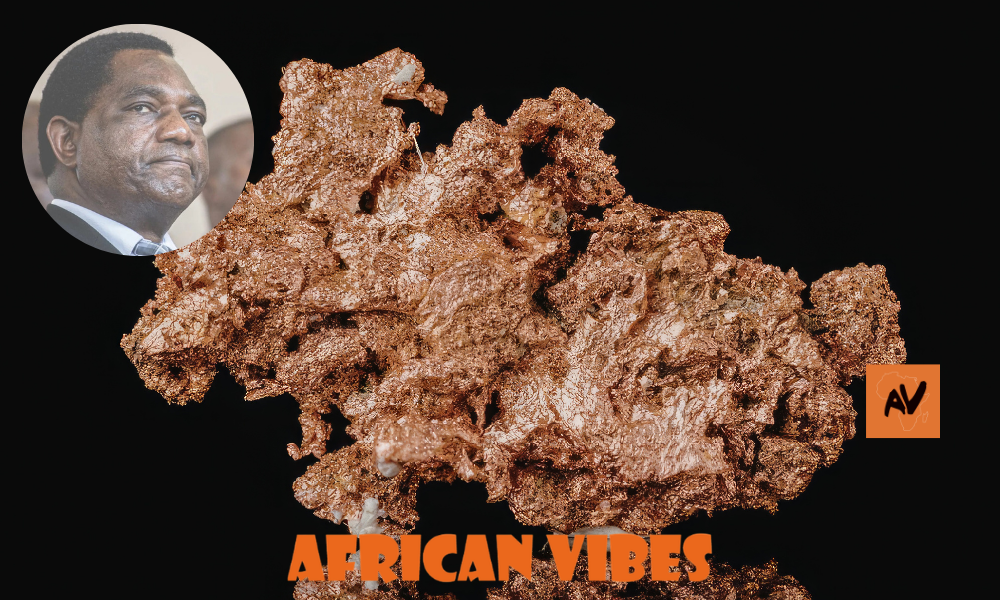
1. The Red Gold: Copper
Copper is the nervous system of the modern world. Every electric vehicle (EV), wind turbine, and solar panel requires miles of copper wiring. Zambia produces roughly 12% of the world’s supply. Without Zambian copper, the U.S. “Green New Deal” is a fantasy.
2. The Cobalt and Lithium Nexus
The batteries that power the smartphones of Silicon Valley and the Teslas of Wall Street require cobalt and lithium. Zambia sits atop the African Copperbelt, a geological miracle shared with the DRC. By controlling Zambia, Washington secures a strategic chokepoint against its rivals in Beijing.
3. The PEPFAR Lever
For twenty years, the U.S. has used PEPFAR to build a “philanthropic” infrastructure in Africa. While the lives saved are a statistical reality, we must now confront the uncomfortable truth: PEPFAR was never just about health; it was about building a leverage machine. By making the Zambian healthcare system dependent on American dollars, Washington created a kill-switch for the Zambian state.
III. The Ghost of Berlin (1884) in 2026
From a Pan-African perspective, we must recognize that the players have changed, but the script remains the same. In 1884, they used the “civilizing mission” to justify the theft of our rubber and gold. In 2026, they use “global health” and “democratic values” to justify the theft of our cobalt and lithium.
The U.S. frames this as protecting Zambia from “Chinese debt traps.” This is the ultimate irony. While China builds roads and rail—tangible assets that, however flawed the deals may be, remain on African soil—the U.S. is threatening to remove medicine from the bloodstreams of our brothers and sisters.
Which is the greater “trap”? A debt that can be restructured, or a biological dependency that can be switched off by a bureaucrat in Washington?
IV. The Zimbabwe and Ghana Precedent: A Wall of Resistance
The pressure on Zambia follows a disturbing pattern of failed attempts to bully other African nations.
- Zimbabwe (November 2025): Harare was offered a $300 million health package contingent on granting U.S. firms exclusive rights to the Manicaland lithium deposits. President Mnangagwa’s administration rightly called the terms “unbalanced” and “an affront to the liberation struggle.” Washington walked away, leaving a funding gap that Zimbabwe is now struggling to fill through regional solidarity.
- Ghana (February 2026): Similar conditions were tucked into an MOU regarding “Health Security Research.” Ghana’s parliament, sensitized by the Pan-African movement, flagged clauses that would have handed over genomic data and mineral prospecting rights to U.S. entities.
Zambia is being isolated. The U.S. wants to make an example of President Hakainde Hichilema, forcing him to choose between being the “darling of the West” or the guardian of Zambian sovereignty.
V. The Economic Fallacy: Why Preferential Access is Theft
The U.S. demand for “preferential access” is an economic death sentence. If Zambia cannot sell its minerals on the open market to the highest bidder—whether that be China, India, or a domestic African processing hub—it cannot generate the capital needed to industrialize.
Under the proposed U.S. terms, Zambia would effectively be subsidizing the American EV industry with its own poverty. We would be exporting raw ore at suppressed prices, only to buy back the finished batteries and cars at a premium.
This is the definition of the “Resource Curse,” manufactured in the boardrooms of D.C.
VI. The Path Forward
We cannot wait for Washington to develop a conscience. We must build our own.
1. Decoupling Health from Extraction
African nations must move toward the African Medicines Agency (AMA) and local pharmaceutical manufacturing. As long as our lives depend on foreign laboratories, our minerals will never be our own. We must fund our health through a unified African Mineral Fund.
2. The African Minerals Union
Zambia should not be standing alone today. The African Union (AU) must establish a collective bargaining bloc for critical minerals. If the U.S. threatens one, they must face a total mineral embargo from the continent. We have the lithium, the cobalt, and the copper. They have the factories. Without us, their “Green Future” is dark.
3. Rejecting the “China vs. US” Binary
We refuse to be the playground for a New Cold War. Pan-Africanism teaches us that our interests are neither Eastern nor Western—they are African. We must negotiate with all partners on our terms, ensuring that value addition (refining and manufacturing) happens in Kitwe and Ndola, not in Ohio or Guangdong.
VII. Conclusion: The World is Watching
As the clock ticks toward midnight in Lusaka, the spirit of Lumumba, Sankara, and Kaunda watches over the negotiation table.
If Zambia signs, it validates a new era of “Biological Colonialism,” where aid is a leash and minerals are the prize. If Zambia refuses, it will face a period of immense hardship—but it will keep its soul.
The international community, and especially the African diaspora, must raise its voice. We must demand that health aid remain a humanitarian obligation, not a tool of extraction.
Zambia’s copper belongs to Zambians. Zambia’s cobalt belongs to Zambians. And Zambia’s lives are not for sale.