Kenyan Man Found Dead After Exposure to Extreme Cold in Reading, UK
By Norman Kay Photos: YouTube Screenshots A man believed to be Kenyan has been found dead in Reading, Berkshire, in the United Kingdom, after prolonged exposure to extreme cold weather conditions. According to Reading authorities, the deceased was identified as Kepha Otundo, who had been living in tents along Abattoirs Road, where a makeshift campsite for homeless individuals had formed. “At the time of his death, he was homeless and living in tents along Abattoirs Road in Reading, where a makeshift campsite had developed,” a source disclosed. Many foreign nationals—particularly those from Africa—face harsh winter conditions in the UK without adequate protection. Such vulnerability can, and in this case did, lead to tragedy. Sources within the African community in Reading said the campsite where Otundo and several other vulnerable individuals were staying had been under threat of eviction. The site had also been targeted by the Borough for removal. Last year, Reading Borough Council secured a High Court Writ of Possession on July 4, 2025, ordering the eviction of all residents from the campsite. The displacement created deep uncertainty among the occupants, further exposing them to the dangers of living outdoors during the severe winter months. Authorities and support organisations believe the death of Kepha Otundo highlights the extreme vulnerability of homeless people, particularly migrants living in precarious conditions. It also underscores the broader struggles faced by many Africans living in the UK without stable housing or support systems. According to support groups, African migrants like Otundo often suffer in silence, reluctant to ask for help. Many feel embarrassed to admit hardship or fear being perceived as failures, which prevents them from seeking assistance even when they are in danger. Africans who are homeless—particularly the undocumented, those experiencing mental exhaustion, and individuals struggling to survive in extreme conditions—are strongly encouraged to seek help immediately. Local shelters, churches, charities, community organisations, and African diaspora associations often provide emergency assistance regardless of immigration status, especially during periods of extreme weather. Reading is a large town in Berkshire, England, known for its commercial centres and residential neighbourhoods. During winter, temperatures in parts of the UK can drop below freezing—conditions unfamiliar to many Africans. Prolonged exposure to such extreme cold, particularly without proper shelter, warm clothing, or heating mechanisms, poses severe health risks. These include hypothermia, frostbite, and, in extreme cases, death—placing vulnerable individuals at heightened risk during the winter season.
 Black News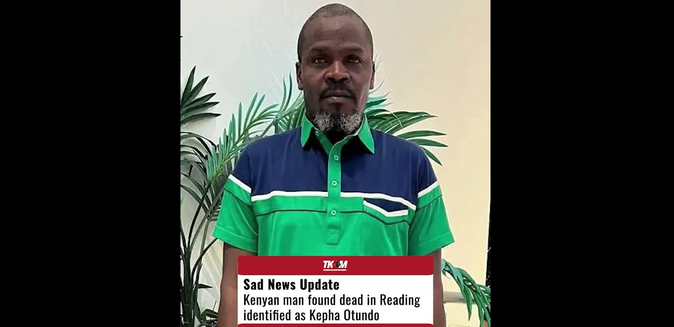
By Norman Kay
Photos: YouTube Screenshots
A man believed to be Kenyan has been found dead in Reading, Berkshire, in the United Kingdom, after prolonged exposure to extreme cold weather conditions.

According to Reading authorities, the deceased was identified as Kepha Otundo, who had been living in tents along Abattoirs Road, where a makeshift campsite for homeless individuals had formed.
“At the time of his death, he was homeless and living in tents along Abattoirs Road in Reading, where a makeshift campsite had developed,” a source disclosed.
Many foreign nationals—particularly those from Africa—face harsh winter conditions in the UK without adequate protection. Such vulnerability can, and in this case did, lead to tragedy.
Sources within the African community in Reading said the campsite where Otundo and several other vulnerable individuals were staying had been under threat of eviction. The site had also been targeted by the Borough for removal.
Last year, Reading Borough Council secured a High Court Writ of Possession on July 4, 2025, ordering the eviction of all residents from the campsite. The displacement created deep uncertainty among the occupants, further exposing them to the dangers of living outdoors during the severe winter months.
Authorities and support organisations believe the death of Kepha Otundo highlights the extreme vulnerability of homeless people, particularly migrants living in precarious conditions. It also underscores the broader struggles faced by many Africans living in the UK without stable housing or support systems.
According to support groups, African migrants like Otundo often suffer in silence, reluctant to ask for help. Many feel embarrassed to admit hardship or fear being perceived as failures, which prevents them from seeking assistance even when they are in danger.
Africans who are homeless—particularly the undocumented, those experiencing mental exhaustion, and individuals struggling to survive in extreme conditions—are strongly encouraged to seek help immediately.
Local shelters, churches, charities, community organisations, and African diaspora associations often provide emergency assistance regardless of immigration status, especially during periods of extreme weather.
Reading is a large town in Berkshire, England, known for its commercial centres and residential neighbourhoods. During winter, temperatures in parts of the UK can drop below freezing—conditions unfamiliar to many Africans.
Prolonged exposure to such extreme cold, particularly without proper shelter, warm clothing, or heating mechanisms, poses severe health risks. These include hypothermia, frostbite, and, in extreme cases, death—placing vulnerable individuals at heightened risk during the winter season.