Mingling with Gen Z to attain a dream
It is common for some people to belittle formal education, arguing that real success lies in business or farming. But those views would quickly be challenged if they met Christina Sungani. At 65—when society would normally expect her to be retired and living a calm, relaxed life, spending time with her grandchildren and enjoying peaceful … The post Mingling with Gen Z to attain a dream appeared first on Nation Online.
 Black News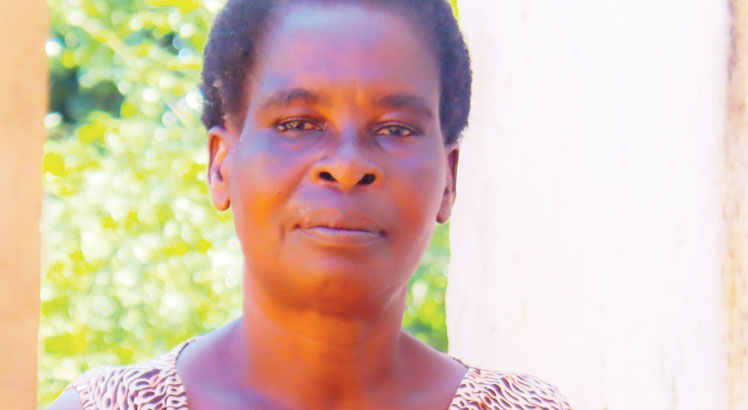
It is common for some people to belittle formal education, arguing that real success lies in business or farming.
But those views would quickly be challenged if they met Christina Sungani.
At 65—when society would normally expect her to be retired and living a calm, relaxed life, spending time with her grandchildren and enjoying peaceful evenings—she is back at school.
Most afternoons, she sits inside a crowded Form Two classroom at Nkumba Community Day Secondary School, still holding onto a dream she first carried more than half a century ago.
Christina comes from Ken Village, Traditional Authority (T\A) Nsomba in Blantyre, she walks about an hour every morning to school.
Her home is simple, shaped by rural life; where 10 chickens roam freely around the yard, filling the space with constant movement and sound.
Christian says Cylone Freddy did not only damage homes, but destroyed farmland, carving deep gullies into the earth and leaving once-productive fields unusable.
What used to sustain families is now broken land.
For Christina, education has become the only remaining path forward.
At 2 pm when lessons begin, Christina is already seated inside a packed classroom.
The room is overcrowded—desks squeezed tightly together, leaving narrow walkways between rows as learners stretch to the back wall.
The Tuesday afternoon heat presses into the room, thick with chalk dust, movement and settling voices.
Yet she sits calmly among them.
“I just want to learn,” she says. “Education is important. It is not just paper. It changes life,” she says.
Christina’s return to class comes at a time when she is already beyond what many consider retirement age in Malawi, where most professions retire between 60 to 65 years, while judges may serve up to 70 under the law.
“I want to go to university. I am certain about that,” she says this with a smile, revealing a few missing and patched teeth, a quiet mark of age and passage of time.
In her case, even if she were pursuing a legal career, the timeline alone would place her beyond formal qualification limits by the time she completes a degree and training.
So why is Christina in class today?
“I am not here to chase a career timeline, but to reclaim an opportunity I lost long ago, to prove to myself and others that education still matters at any age. I want to show my children, grandchildren and community that learning never truly expires,” she says.
Before settling in Blantyre, Christina’s roots trace back to Chinseu, T/A Bvumbwe in Thyolo District, where she was born in 1961.
She says her education journey began and cut short in 1979 when she was just 18.
Before returning to formal schooling, Christina tried studying from home.
“We hired private teachers and spent long hours revising on my own. But the results were not satisfying and performance was not good because I had no one to compete with.
Still, joining a classroom after decades away was not an easy decision.
Christina says: “I hesitated because I thought my fellow learners or teachers would feel uncomfortable,” she says.
In her view, rural attitudes also played a role in her hesitation.
“Some young people fear old women assuming witchcraft.”
Some learners admit feeling unsure how to relate with her. Others observed from a distance, uncertain where she fit. But over time, that changed.
Now in her second term, she is part of the afternoon open-day class system where both younger and older learners study together.
“Now we are used to her,” one student says.
Among her classmates is Angella Chinomba who says Christina has become a valuable part of their learning environment.
“She helps me in social studies, history, agriculture and English,” she says. “She is very good in those subjects.”
Nkumba CDSS head teacher Gift Loppah describes her as disciplined, consistent, highly committed and intelligent.
“She respects education. She is very focused,” he says.
Christina often arrives early to use the school library to revise before classes begin.
“I come early to prepare,” she says. “It helps me understand better.”
Her outlook was shaped during her time in South Africa where she worked in the 1980s. Her husband also worked there and she joined him.
“I worked with people who spoke English every day,” she recalls. “I struggled because I had not gone far with school.”
That experience stayed with her.
“Without education, you lose chances,” she says.
Today, Christina is a mother of five and grandmother of five. Her firstborn is 42 years old. Two of her children are university graduates, including her last-born, who recently graduated from the Malawi University of Business and Applied Sciences.
“I am proud of my children,” she says.
Her husband, though not formally educated, supports her fully.
In Ken Village, her story is slowly reshaping how education and age are viewed. What once seemed unusual is now becoming a source of quiet inspiration among younger learners.
Her commitment to education goes beyond words. In Chazunda, Christina has established a nursery school, a facility already certified by government.
For her, the school is not just a source of livelihood, but a foundation for shaping young minds.
She wants children, especially girls, to grow up understanding that education is essential, not optional.
“If they see me going to school at my age, they will know that learning is something you carry for life,” she says.
Christina insists she cannot lead an institution of learning while remaining uneducated herself.
“I don’t want to be a director who never went to school,” she adds.
To her, education is not just about certificates; it is about credibility, understanding and the ability to lead by example.
She also challenges a mindset she believes is growing in some communities—the idea that money can replace education.
Christina warns against the belief that one can simply employ educated staff while remaining uneducated.
She argues that education equips individuals with the ability to think critically, make informed decisions and engage meaningfully with the world.
The post Mingling with Gen Z to attain a dream appeared first on Nation Online.