Nigeria to become world’s 5th richest country - Côte d’Ivoire to overtake France
Nigeria could become the world’s fifth richest and most powerful country within the next 50 years, according to a senior official at the Economic Community of West African States Commission, who also projected rapid economic growth for Ghana and Côte d’Ivoire.
 Black News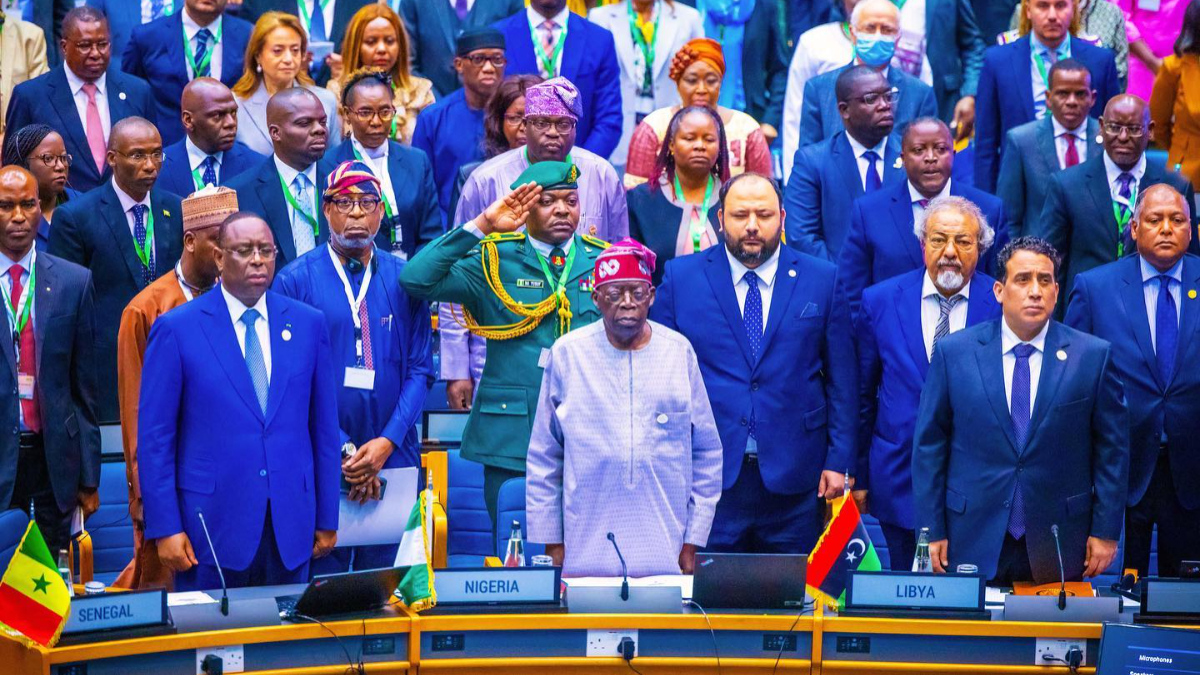
![President Bola Tinubu, at an AU gathering as ECOWAS's projection, says Nigeria could become the 5th-richest nation in the next 50 years. [Facebook/Asiwaju Bola Ahmed Tinubu]](https://ocdn.eu/pulscms/MDA_/b3fc048f6d8238fdb47aa35be2f6de44.jpg)
Nigeria could become the world’s fifth richest and most powerful country within the next 50 years, according to a senior official at the Economic Community of West African States Commission, who also projected rapid economic growth for Ghana and Côte d’Ivoire.
- An ECOWAS commissioner has projected that Nigeria could become the world’s fifth-richest country within 50 years.
- Dr Kalilou Sylla also forecast that Ghana and Côte d’Ivoire may rank among the world’s top 15 economies within 25 years.
- The official argued that Nigeria’s future growth depends more on regional trade integration than Western markets.
- He also warned that ECOWAS institutions are lagging behind citizens and businesses, driving economic cooperation in West Africa.
Speaking during the 2026 First Ordinary Session of the ECOWAS Parliament in Abuja, Dr Kalilou Sylla, the bloc’s Commissioner for Economic Affairs and Agriculture, said forecasts from the United Nations and unnamed global universities pointed to a significant economic shift in West Africa over the coming decades.
Sylla said Nigeria was expected to emerge as the world’s fifth most powerful economy within half a century, while Ghana and Côte d’Ivoire could rank among the world’s 15 richest countries within 25 years.
He also claimed that Côte d’Ivoire could eventually become wealthier than France within the next 70 years, a projection likely to draw scrutiny given the current scale of the French economy, which remains among the world’s largest by gross domestic product.
The commissioner made the remarks during discussions on regional integration and economic cooperation ahead of a planned ECOWAS summit on the future of West Africa.
Despite the optimistic projections, Sylla warned that regional institutions were failing to keep pace with citizens and businesses driving economic integration across the bloc.
“We are working very far from the ECOWAS citizens; the people are ahead, and we as community institutions are lagging behind,” he said.
![Lekki Deep Sea Port in Lagos, Nigeria, as the facility records about $9.3 billion in import and export trade within nine months, cementing its rise as a major West African maritime hub. [Photo by ISSOUF SANOGO/AFP via Getty Images]](https://ocdn.eu/pulscms/MDA_/8263f0c5ae2e496fb3c4bb500a611b89.jpg)
Sylla argued that Nigeria’s long-term economic ambitions would depend heavily on stronger trade and market integration within West Africa rather than deeper reliance on Western economies.
“It is not the American or English markets that will let the Nigerian market grow, but the sub-regional markets,” he told lawmakers.
He urged Nigeria to adopt a clearer economic strategy for West Africa, particularly on cross-border trade and market access.
“If Nigeria does not establish a clear policy for West Africa, nothing will change,” Sylla said. “We cannot be the fifth most powerful country in the world in fifty years without having a clear economic interest for West Africa regarding the transfer of goods.”
The commissioner also criticised barriers within the regional market, saying Nigeria remained difficult for neighbouring economies to access despite its dominant position in regional trade.
Nigeria is Africa’s largest economy by GDP and accounts for a significant share of West Africa’s economic output, exports and banking activity. Nigerian lenders have expanded aggressively across the region over the past decade, strengthening the country’s financial influence.
Sylla said intra-regional trade within ECOWAS had doubled to 40% over the past four years, which he described as evidence that deeper integration was achievable despite persistent political and logistical obstacles.
“That means it is possible. We can move faster, but we are not yet there,” he said.
The ECOWAS Parliament session, held between May 4 and 17, focused on regional governance, trade integration and economic cooperation at a time when West Africa continues to face political instability, currency pressures and slowing global growth.