No Money For Medical Interns As Uganda’s Baby Boom Suffers Mortality
By Black Star News Photo Above: Nurses happily on duty during COVID-19 LOCK DOWN IN 2021. (X PHOTO) Photo Below: Wikimedia Commons What started as something reversible is now confirmed as irreversible: Government of Uganda has ended payment for medical interns. On August 24, 2024, Gen. Yoweri Museveni asked, thus; “Who pays for the internship? Some people are saying that the government must pay but I think that is risky because the government would pay if it had money but it doesn’t have enough money since it has got a lot of things to do like roads, security, etc. I don’t think it is okay to tie the future of our young doctors with government funding because it may delay or it may not be there,” he said. Museveni’s proposal presupposing that the person who has been sponsoring the medical student during the medical school should be the one to also sponsor him/her during internship would make work easier generated a lot of heat that has nothing left to do except bending to the new rule in the national education and training for health policy that integrates internship into the formal education system. One of the most pinching cries was—and still is—is that Museveni’s proposal pushes aside medical interns from disadvantaged families and only caters for the affluent few. Medical interns are qualified doctors, pharmacists, mid-wives and nurses who hitherto had to undergo a mandatory one-year internship under supervision in order to enroll for the professional practicing certificate in their various disciplines. It has been the mandate of a sitting Government of Uganda to foot the monthly allowances of medical interns during their one-year of apprenticeship. However, the newly-sworn-in health minister, Dr. Chris Baryomunsi, has announced that government can no longer afford paying medical interns’ allowances given the swelling numbers of graduates churned out by the country’s universities and other tertiary institutions. But this argument remains unbelievable to citizens pulled down by the ever-increasing cost of public administration and extravagant lifestyle of public servants. Medical interns have been shouldering over 70% of the work-load in the government-owned understaffed, ill-equipped and dilapidated health facilities across the country. “Mr. President, @KagutaMuseveni I know you remember this day, when we met you at State House Entebbe and you promised to ensure medical interns’ issues are resolved after listening to us. In fact, following this meeting, you released a directive that medical interns get paid 2.5 million (about US$694) monthly. And now they’re telling them [medical interns] to work without pay. Mr. President, we are coming back to you to resolve the impasse if the people at the ministry of health insist on that policy,” suggests Dr Faith Nabushawo, an Obstetrician and Gynaecologist. The “no money for medical interns” has attracted the ire of citizens. “You claim that you want a country that’s invested in sciences. You even go ahead to increase the salaries of science teachers, but you don’t want to pay medical interns. You’d rather increase the number of politicians and pay them huge amounts of money, including bribes, to pass specific bills [in Parliament]. And you continue to think you can fool us that you’re intentional about a country that is driven by scientists?” activist and narrative influencer, Gideon Nova Kwikiriza, hisses on June 2. Museveni has had a sustained derision for the humanities discipline declaring them “useless courses” as he roots for the natural sciences. Museveni the political scientist deriding humanities had recently sworn-out lawmaker and lawyer Medard Segona wonder in a local radio talk show, thus; “Is Museveni saying Dr. Kizza Besigye is more important than him?” Formerly Museveni’s personal doctor during the bush war days, Besigye is a Makerere University-trained doctor who contested against Museveni for the presidency four times and was announced runner-up equally four times; thereby becoming the incumbent’s political foe. Claiming medical interns are many and therefore government cannot pay them is ironical because the same government does not complain about the 556-seat Parliament; including ex-officio members pocketing millions in salaries and fat allowances, 146 Resident District Commissioners and 10 Resident City Commissioners together with their deputies and assistants; representing the head of State in their respective areas of jurisdiction, over 100 presidential advisers who are instead allegedly advised by the president who does not take pieces of advice and therefore no one can dare advise him! According to human rights activist and former Guild Speaker of Lira University, Kule Ronald Mbing, the government says it is ending support for medical interns because the number of doctors has increased and resources are limited. “But let us look deeper. Who allows the mushrooming of universities and medical tra
 Black News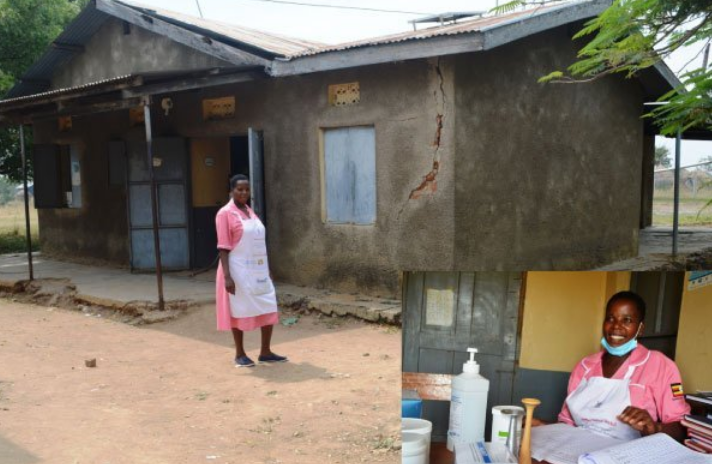
By Black Star News
Photo Above: Nurses happily on duty during COVID-19 LOCK DOWN IN 2021. (X PHOTO)
Photo Below: Wikimedia Commons
What started as something reversible is now confirmed as irreversible: Government of Uganda has ended payment for medical interns. On August 24, 2024, Gen. Yoweri Museveni asked, thus; “Who pays for the internship? Some people are saying that the government must pay but I think that is risky because the government would pay if it had money but it doesn’t have enough money since it has got a lot of things to do like roads, security, etc. I don’t think it is okay to tie the future of our young doctors with government funding because it may delay or it may not be there,” he said.

Museveni’s proposal presupposing that the person who has been sponsoring the medical student during the medical school should be the one to also sponsor him/her during internship would make work easier generated a lot of heat that has nothing left to do except bending to the new rule in the national education and training for health policy that integrates internship into the formal education system. One of the most pinching cries was—and still is—is that Museveni’s proposal pushes aside medical interns from disadvantaged families and only caters for the affluent few.
Medical interns are qualified doctors, pharmacists, mid-wives and nurses who hitherto had to undergo a mandatory one-year internship under supervision in order to enroll for the professional practicing certificate in their various disciplines. It has been the mandate of a sitting Government of Uganda to foot the monthly allowances of medical interns during their one-year of apprenticeship.
However, the newly-sworn-in health minister, Dr. Chris Baryomunsi, has announced that government can no longer afford paying medical interns’ allowances given the swelling numbers of graduates churned out by the country’s universities and other tertiary institutions.
But this argument remains unbelievable to citizens pulled down by the ever-increasing cost of public administration and extravagant lifestyle of public servants. Medical interns have been shouldering over 70% of the work-load in the government-owned understaffed, ill-equipped and dilapidated health facilities across the country.
“Mr. President, @KagutaMuseveni I know you remember this day, when we met you at State House Entebbe and you promised to ensure medical interns’ issues are resolved after listening to us. In fact, following this meeting, you released a directive that medical interns get paid 2.5 million (about US$694) monthly. And now they’re telling them [medical interns] to work without pay. Mr. President, we are coming back to you to resolve the impasse if the people at the ministry of health insist on that policy,” suggests Dr Faith Nabushawo, an Obstetrician and Gynaecologist.
The “no money for medical interns” has attracted the ire of citizens. “You claim that you want a country that’s invested in sciences. You even go ahead to increase the salaries of science teachers, but you don’t want to pay medical interns. You’d rather increase the number of politicians and pay them huge amounts of money, including bribes, to pass specific bills [in Parliament]. And you continue to think you can fool us that you’re intentional about a country that is driven by scientists?” activist and narrative influencer, Gideon Nova Kwikiriza, hisses on June 2.
Museveni has had a sustained derision for the humanities discipline declaring them “useless courses” as he roots for the natural sciences. Museveni the political scientist deriding humanities had recently sworn-out lawmaker and lawyer Medard Segona wonder in a local radio talk show, thus; “Is Museveni saying Dr. Kizza Besigye is more important than him?”
Formerly Museveni’s personal doctor during the bush war days, Besigye is a Makerere University-trained doctor who contested against Museveni for the presidency four times and was announced runner-up equally four times; thereby becoming the incumbent’s political foe.
Claiming medical interns are many and therefore government cannot pay them is ironical because the same government does not complain about the 556-seat Parliament; including ex-officio members pocketing millions in salaries and fat allowances, 146 Resident District Commissioners and 10 Resident City Commissioners together with their deputies and assistants; representing the head of State in their respective areas of jurisdiction, over 100 presidential advisers who are instead allegedly advised by the president who does not take pieces of advice and therefore no one can dare advise him!
According to human rights activist and former Guild Speaker of Lira University, Kule Ronald Mbing, the government says it is ending support for medical interns because the number of doctors has increased and resources are limited. “But let us look deeper. Who allows the mushrooming of universities and medical training institutions across the country? Who licenses schools that admit almost everyone who can afford tuition? Many of these institutions are owned or backed by politically-connected individuals whose primary interest appears to be profit rather than strengthening Uganda’s healthcare system.”
Year after year, according to Kule, more students are admitted, more tuition is collected, and more graduates are produced yet when it is time to facilitate internship training and integrate these young professionals into the health system, government suddenly claims there is no money. “The truth is that Uganda is not short of needs for doctors. Our hospitals remain understaffed, health centres lack personnel and patients continue to travel long distances for treatment. This implies that the issue is not necessarily the number of intern doctors but rather the priorities.”
There is always money for political clowns, allowances, luxury vehicles, and endless government expenditures. But when it comes to medical interns, hospitals, medicines, and healthcare workers, the money disappears. “What message are we sending as a country when politicians are treated as more important than the health of ordinary citizens? A nation that under-funds healthcare while expanding political spending is choosing politics over people and it is the ordinary struggling Ugandans that face the repercussions. We reject that shambolic policy!” he charges.
The “no money for interns” comes at a time when the media is awash with all indications that the Speaker of Parliament’s lone budget has fattened seven times over the years to a tune of Shs 28.5 billion (over US$8 million) presently. State House budget, too, is one of the most succulent, year-in; year-out.
“So there is no money to pay medical interns, but there is plenty of money to multiply the Speaker’s budget seven times? A country that cannot facilitate young doctors, nurses and medical professionals who save lives every day somehow finds billions for political offices and luxury expenditure. Medical interns are told to sacrifice, patients are told to be patient,” Kule goes painfully poetic, “and hospitals are told to do more with less but politicians are never told to tighten their belts. This is the Uganda we live in. The people who save lives are denied allowances, while the political class continues to feast on tax payers’ money.”
And talking of saving lives, medical interns who largely supported the understaffed health personnel are being denied allowances at a time when the health ministry’s head of personnel and accounting officer, Dr. Diana Atwine told the country that Uganda’s baby boom lost over one million citizens to infant and child mortality.
According to Atwine, Uganda’s hospitals are bursting at the seams as the uncontrolled population displaces the available health infrastructure. “We have had exponential population increase. Just last year [2025] alone, we delivered two million babies. So, if you count the ones that died, that is meaning that the number could even have gone to three million.”
“So,” she told Parliament’s Public Accounts Committee in April, “the congestion is because the population over time has increased significantly, our facilities have not been expanded to match the number of people who are coming to these facilities.”
When a government claims it has no money, the real question is: “No money for whom?” Kule asks.
“No money for interns, hospitals, schools or essential services? Yet there is money always money for political comfort. Uganda has a lot of money but it’s spent on the wrong priorities. A nation that values politicians more than doctors is a nation gambling with [its] own future.”











.png?h=c12e0b96&itok=5DLPGmQb#)