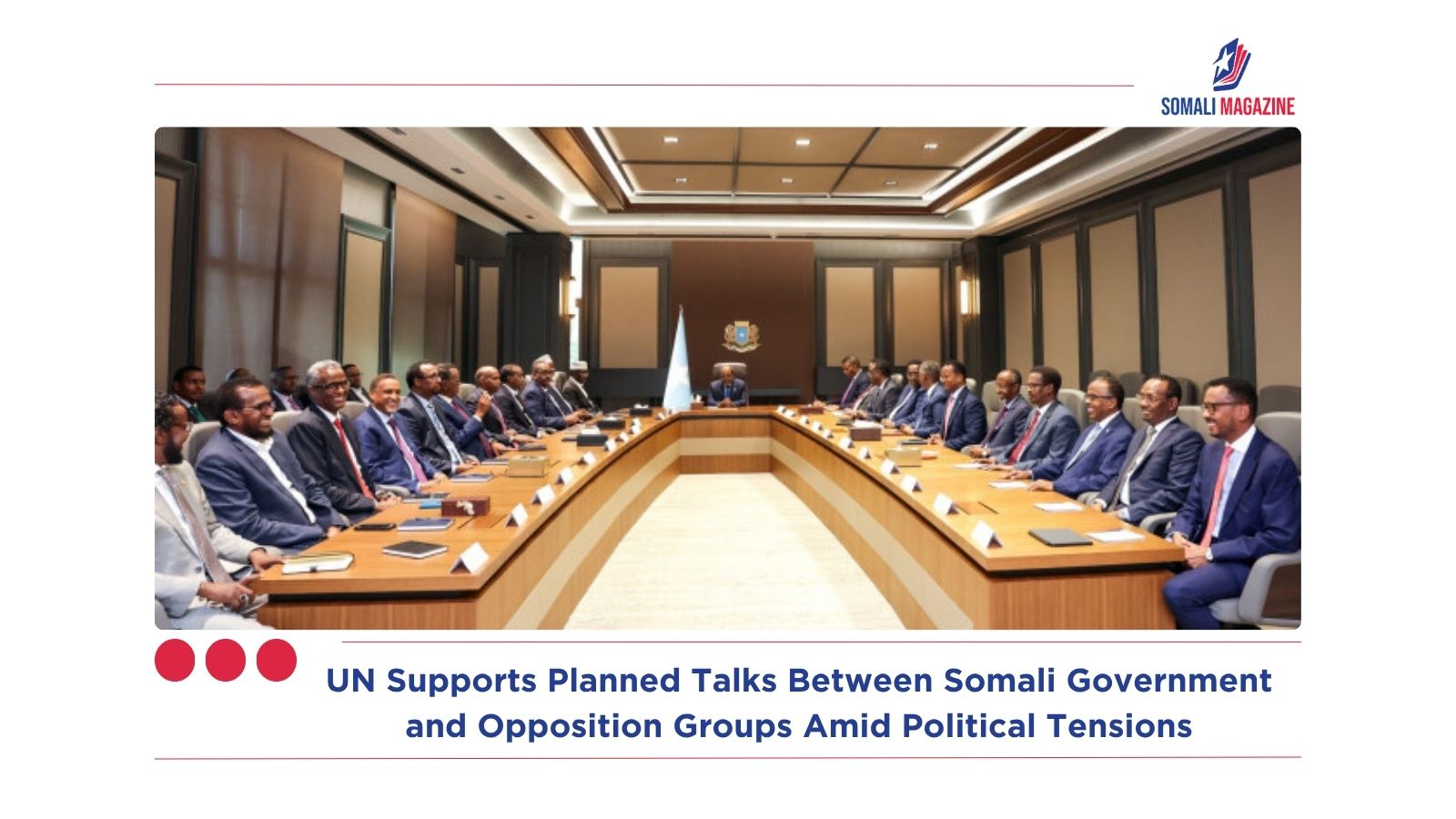
The development that UN supports planned talks between Somali government and opposition groups marks a significant moment in the country’s ongoing political process, as stakeholders seek to address growing tensions linked to elections and constitutional reforms. According to recent statements, the United Nations Transition Mission in Somalia (UNTMIS) has welcomed an invitation by the Federal Government for dialogue with opposition representatives.
According to officials, the talks are expected to involve the Somali Future Council, a coalition of opposition leaders formed in 2025 amid rising disagreements with the federal government. The planned meeting is intended to provide a platform for discussing key national issues, including electoral frameworks and governance reforms, which have remained points of contention in recent months.
The UN mission described the proposed discussions as an important opportunity to find a unified path forward. In its statement, UNTMIS emphasised that inclusive engagement and good-faith participation from all sides are essential for resolving the current political impasse.
The push for dialogue comes at a time of heightened political uncertainty. Somalia’s federal parliament approved amendments to the provisional constitution in March 2026, a move that has triggered mixed reactions across the political spectrum. Some opposition groups and regional administrations have raised concerns over legitimacy and the direction of the reforms, contributing to an increasingly fragile political environment.
At the same time, tensions surrounding the electoral process continue to shape the national conversation. Reports suggest that disagreements over the timing and model of elections have led to warnings from opposition figures about a potential constitutional crisis if consensus is not reached.
Previous attempts at national dialogue have faced challenges. Earlier efforts to convene discussions between the federal government, opposition leaders, and regional states encountered setbacks due to disputes over security arrangements and procedural issues, highlighting the complexity of reaching agreement among key stakeholders.
Analysts note that international partners, including the United Nations and the African Union, have consistently encouraged Somali-led political solutions, stressing that dialogue remains critical for long-term stability. Broader assessments of Somalia’s situation indicate that political compromise is closely linked to progress in security and state-building efforts.
While the UN’s support signals renewed diplomatic momentum, it remains unclear whether all opposition groups will participate or whether the talks will lead to concrete agreements. As of now, no official outcomes have been confirmed, and the situation continues to evolve.
The planned discussions are widely seen as a test of Somalia political dialogue mechanisms at a critical juncture, with the potential to influence the country’s political trajectory in the months ahead.

 Black News