Europe's Africa migration strategy faces a test as Somalia rejects unverified deportees
Europe's strategy of working with African countries to curb irregular migration is facing a fresh test after Somalia rejected the idea of accepting deportees whose nationality has not been verified, pushing back against growing pressure from the European Union to speed up migrant returns.
 Black News
Europe's strategy of working with African countries to curb irregular migration is facing a fresh test after Somalia rejected the idea of accepting deportees whose nationality has not been verified, pushing back against growing pressure from the European Union to speed up migrant returns.
- Somalia has rejected the EU's push to accept deportees without verified Somali citizenship, insisting on citizenship checks as a matter of national sovereignty.
- The EU imposed temporary short-stay Schengen visa restrictions on Somali nationals, citing insufficient cooperation from Somalia on migrant returns.
- Somali President Hassan Sheikh Mohamud affirmed willingness to take back citizens but only those proven to be Somali.
- The dispute highlights broader European efforts to cooperate with African countries on accelerating deportations, including proposals for return hubs in African states.
The dispute escalated after the Council of the European Union announced temporary restrictions on short-stay Schengen visas for Somali nationals, saying an assessment by the European Commission found Somalia's cooperation on readmitting its citizens staying irregularly in the bloc to be "insufficient."
DON'T MISS THIS: 5 EU countries eye Kenya as a prime asylum destination alongside Ghana, Benin, and Rwanda
Mogadishu, however, rejected the characterization.
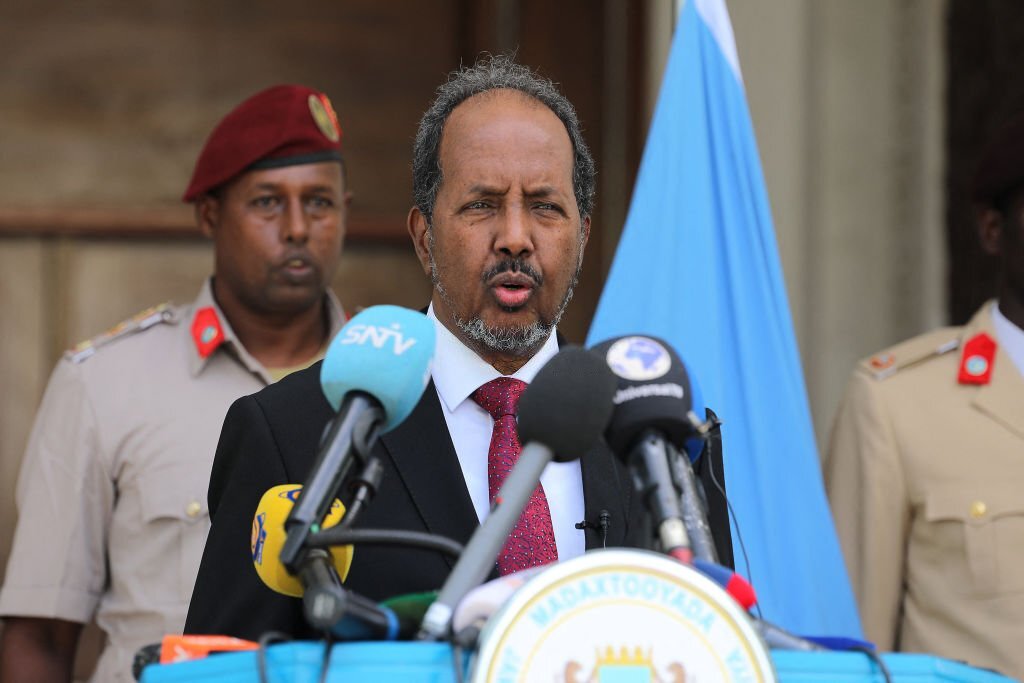
Speaking during celebrations marking Somalia's 66th Independence Day, President Hassan Sheikh Mohamud said his government remains willing to receive Somali citizens ordered to leave European countries but would not accept anyone until authorities had confirmed they were genuinely Somali.
"We will not accept people who are not Somali citizens," Mohamud said, framing citizenship verification as a matter of national sovereignty and legal responsibility rather than a refusal to cooperate.
The diplomatic standoff comes as several European governments increasingly look to African countries to support their migration agenda, including through proposed return hubs and readmission agreements designed to accelerate the deportation of unsuccessful asylum seekers.
A growing flashpoint in Europe's migration policy
The dispute reflects one of the European Union's biggest migration challenges: returning asylum seekers whose applications have been rejected.
Under EU rules, countries of origin are expected to verify their citizens, issue travel documents where needed, and facilitate deportations.
Brussels argues Somalia has failed to cooperate adequately, prompting the bloc to tighten short-stay Schengen visa rules for Somali nationals.
Mogadishu, however, insists that verifying citizenship is a matter of national sovereignty, particularly given Somalia's history of displacement and weak identity documentation.
DON'T MISS THIS: More EU nations are adopting Trump-style deportation programs to Africa
The standoff comes as Europe increasingly looks to Africa to help manage migration. The Netherlands is exploring "return hubs" in Africa for rejected asylum seekers, with Kenya reportedly emerging as the preferred location, alongside Rwanda, Ghana and Benin under consideration.
The proposal, still in its early stages, forms part of the EU's broader Migration Pact, backed by countries including Germany, Austria, Denmark and Greece.
While Mogadishu says it remains willing to receive its own citizens, it insists that no deportee will be accepted unless authorities are satisfied that the individual is genuinely Somali—a condition that could slow the EU's efforts to accelerate migrant returns as Europe deepens its migration partnerships across Africa.