Fort Lauderdale Rolls Out New Group Violence Intervention Plan to Cut Gun Violence
By Wilgienson Auguste ( Fort Lauderdale Police Department, District 2 Patrol Captain) FORT LAUDERDALE, Fla. — The City of Fort Lauderdale is stepping up with a bold new plan to cut gun violence, strengthen neighborhoods, and rebuild trust between the police and the people they serve. The City of Fort Lauderdale and the Fort Lauderdale [...] The post Fort Lauderdale Rolls Out New Group Violence Intervention Plan to Cut Gun Violence appeared first on The Westside Gazette.
 Black News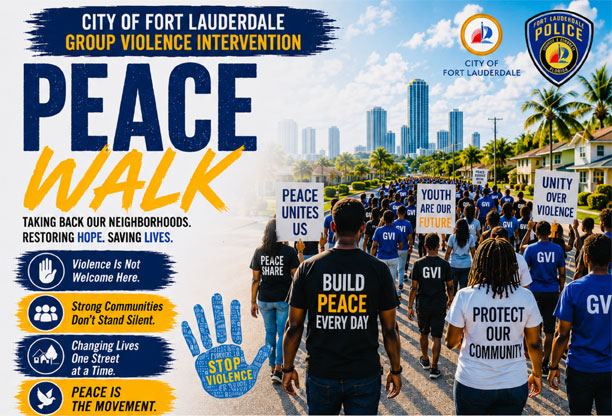
 By Wilgienson Auguste ( Fort Lauderdale Police Department, District 2 Patrol Captain)
FORT LAUDERDALE, Fla. — The City of Fort Lauderdale is stepping up with a bold new plan to cut gun violence, strengthen neighborhoods, and rebuild trust between the police and the people they serve. The City of Fort Lauderdale and the Fort Lauderdale Police Department are rolling out a Group Violence Intervention (GVI) strategy aimed at tackling the small number of people and groups driving a disproportionate share of violent crime.
Built on a framework developed by the National Network for Safe Communities at John Jay College of Criminal Justice, GVI follows a clear, powerful idea: pinpoint who’s fueling violence, deliver a direct message that violence has to stop, connect people with real support and services, and hold offenders accountable when violence doesn’t end.
Instead of relying on enforcement alone, GVI brings everyone into the same conversation, law enforcement, community leaders, faith-based groups, service providers, educators, and residents, so the message lands loud and consistent. The approach traces its roots to Boston’s “Operation Ceasefire,” which helped spark a national model for focused deterrence and violence reduction.
Building the Groundwork
In the past year, Fort Lauderdale has worked to set up a program that can last, one that’s organized, data-driven, and rooted in the community. Through a partnership involving the City, the police department, local stakeholders, and technical assistance from John Jay College, working groups have been formed to study local violence patterns, identify active groups involved in violent crime, and coordinate intervention efforts.
A major early step was a deep problem analysis to understand what’s driving gun violence across the city. The review looked at violent crime incidents, group dynamics, patterns of victimization, and the geographic “hotspots” where violence clusters, so resources can be aimed where they’ll matter most.
 Community Partnerships Lead the Charge
At the heart of Fort Lauderdale’s GVI push is community engagement. More than 30 community-based organizations, along with faith leaders, service providers, educators, workforce development agencies, and nonprofit partners, have stepped forward to offer support and opportunities for people at risk of violence.
These partners provide a wide range of resources, including:
- Employment assistance
- Job training and career development
- Educational opportunities
- Mental health counseling
- Substance abuse treatment
- Housing assistance
- Family support services
- Mentorship programs
The purpose isn’t just to stop violence, it’s to create a real pathway forward for people who are ready to change their lives and build stability.
Outreach That Brings People Together
This isn’t just a plan on paper. Fort Lauderdale’s GVI rollout has already included a steady stream of community events meant to grow trust, connect residents to resources, and promote safer alternatives to violence.
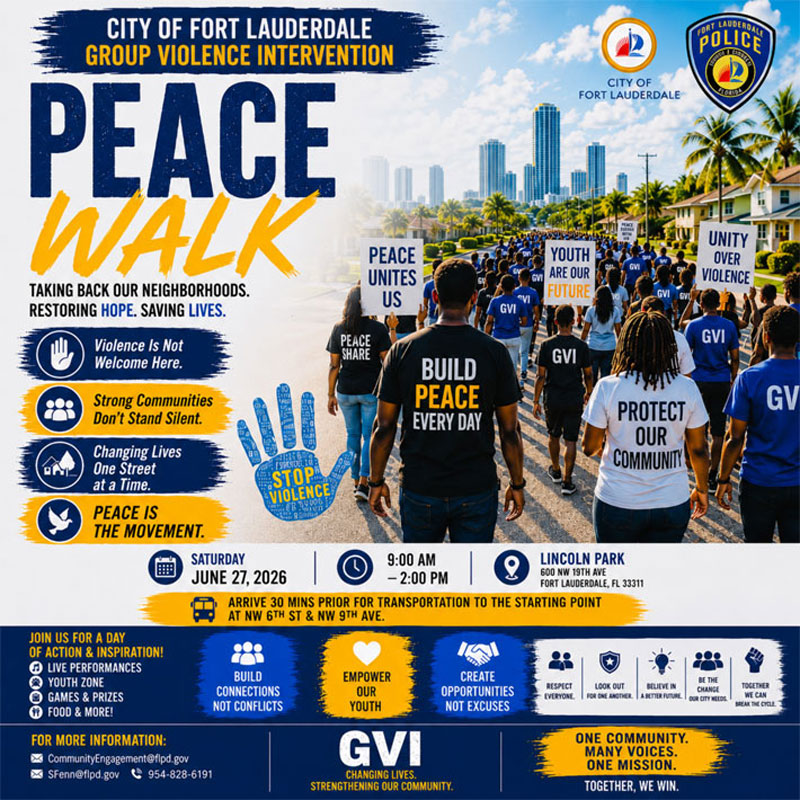
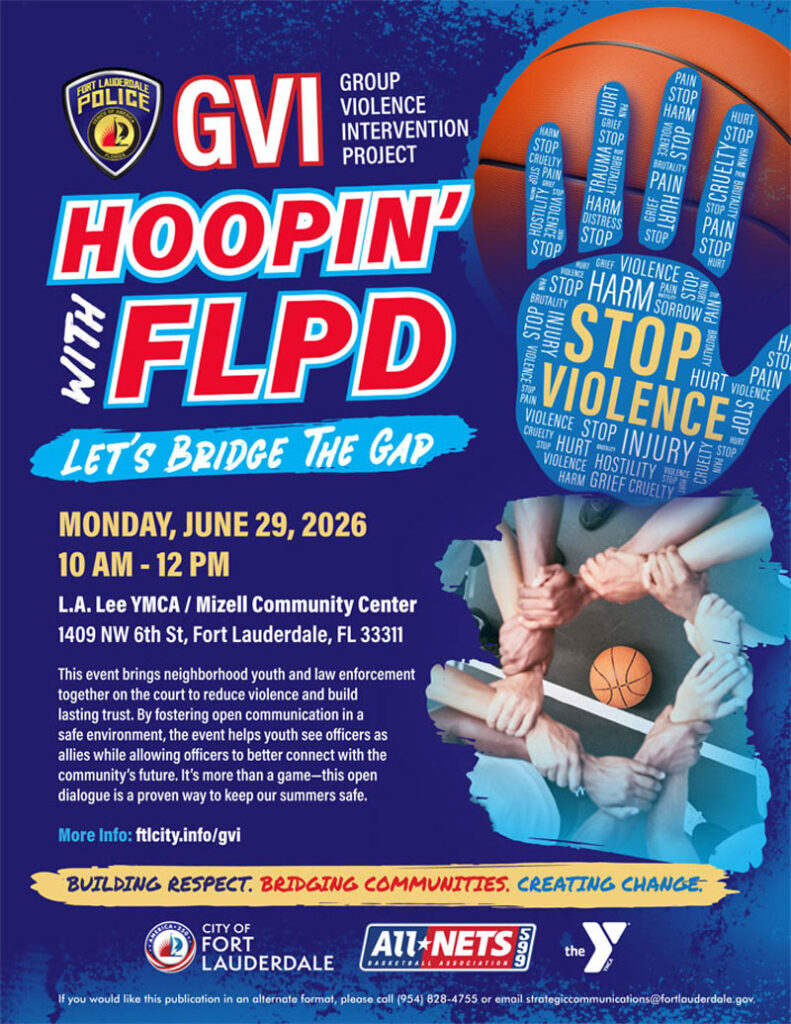
The initiative has featured stakeholder meetings, neighborhood outreach efforts, youth sports events, resource fairs, peace walks, and community gatherings, especially across the city’s northwest neighborhoods and along the Sistrunk Corridor.
Police officers, community leaders, clergy members, and service providers have shown upside-by-side at these events to strengthen relationships and underline a shared commitment to public safety.
Direct Engagement: The Call-In Process
One of the biggest milestones in Fort Lauderdale’s strategy is the development of a call-in and notification process designed for high-risk individuals. Under the GVI model, people identified as most likely to be involved in violence are invited to meet directly with law enforcement, community representatives, and service providers.
In these meetings, participants receive a unified message: “The violence must stop.”
Community members reinforce the moral message that shootings and retaliation can’t be accepted. Law enforcement lays out the legal consequences of any future violence. Service providers then step in with support helping participants who want out of their current circumstances find legitimate paths to change.
This approach zeroes in on a smaller group of individuals most likely to be victims or perpetrators of gun violence, rather than sweeping enforcement actions that can hit entire neighborhoods without changing the underlying drivers.
A Long-Term Strategy, Not a Quick Fix
City leaders make it clear: GVI isn’t a short-term push, it’s a long-term public safety commitment that depends on sustained collaboration and follow-through.
The Fort Lauderdale Police Department has created internal working groups, assigned dedicated personnel, and put operational plans in place to support the initiative. Community leaders remain involved in planning and implementation, while service providers stay ready to connect participants with opportunities for change.
At the end of the day, the goal is simple: saving lives. By pairing focused enforcement with community leadership and meaningful support services, the Fort Lauderdale Police Department aims to reduce shootings, prevent retaliation, and build safer neighborhoods across the city.
And as the initiative moves into its next phase, city officials remain optimistic that working together, law enforcement, community members, and service providers can interrupt the cycles of violence and deliver lasting improvements in public safety.
The post Fort Lauderdale Rolls Out New Group Violence Intervention Plan to Cut Gun Violence appeared first on The Westside Gazette.