Nigeria-led gas exports to Europe gain traction via 13-nation West African pipeline by 2031
Nigeria-led gas exports to Europe are gaining renewed attention as plans for the Nigeria–Morocco Gas Pipeline gather momentum, positioning the project as a potential new energy corridor linking West Africa to European markets by 2031.
 Black News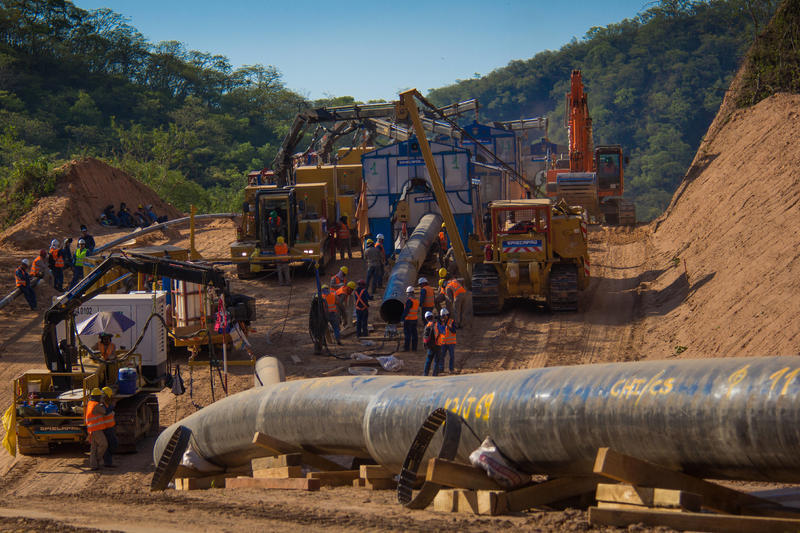

Nigeria-led gas exports to Europe are gaining renewed attention as plans for the Nigeria–Morocco Gas Pipeline gather momentum, positioning the project as a potential new energy corridor linking West Africa to European markets by 2031.
- The Nigeria-Morocco Gas Pipeline project aims to establish a new energy corridor from West Africa to Europe by 2031.
- The pipeline will span 13 countries along the Atlantic coast, including key supply contributions from Senegal and Mauritania.
- Recent blockages in the Strait of Hormuz and resulting energy price surges have pushed Europe to seek alternative energy sources.
- Morocco's state energy firm has begun efforts to raise funds for the multi-billion dollar pipeline, which could help Europe reduce reliance on Russian and Middle Eastern energy.
The pipeline, anchored on Nigeria’s vast gas reserves, is designed to span 13 countries along the Atlantic coast, with emerging producers such as Senegal and Mauritania also expected to play supporting supply roles.
For the past few weeks, the blockage of the Strait of Hormuz has resulted in a global energy crisis, with energy prices surging by over 40% in several nations.
This volatility has forced European countries to prioritize alternative energy corridors. In a recent development, Morocco’s state energy firm, ONHYM, officially embarked on a rigorous fundraising process for the multi-billion dollar Nigeria-Morocco Gas Pipeline.
The Nigeria-Morocco pipeline as Europe's lifeline
Europe is showing renewed interest in the Nigeria–Morocco gas pipeline as it seeks alternative energy supplies, with the pipeline expected to pass through 13 African countries including Nigeria, Senegal, and Mauritania.
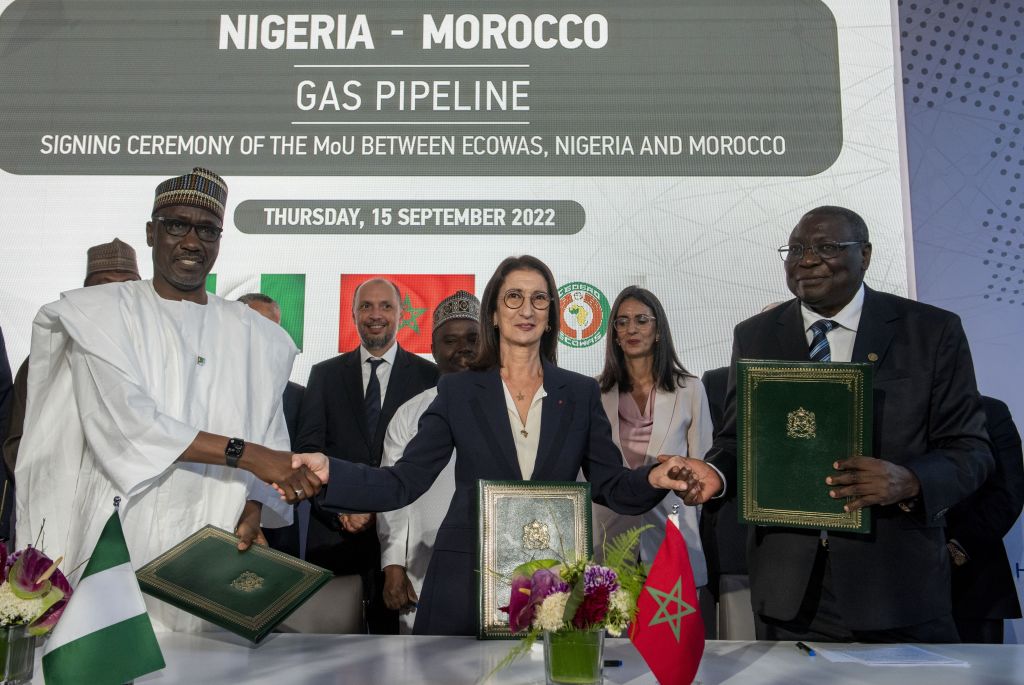
The vision of a pipeline linking West Africa to Morocco and onward to Europe has been a decade-long ambition.
The project was officially unveiled in 2016, during a state visit by King Mohammed VI of Morocco to the late President Muhammadu Buhari in Abuja. Shortly thereafter, the Nigerian National Petroleum Corporation (NNPC) and Moroccan authorities launched a feasibility study, which estimated the project's potential cost at $25 billion.
The staggering capital required has led many critics to dismiss the project as an "impossible pipe dream."
Given that the conduit must span nearly 7,000 kilometers before linking with existing infrastructure in Spain, such skepticism is understandable. However, the fact that completing the project would allow Europe to significantly reduce its energy dependence on Russia and avoid being impacted by price fluctuations from Middle East crises is motivating.
It is worth noting that the foundation for the project is already firm. The agreement to move forward with the Front-End Engineering Design (FEED) was signed by Nigeria and Morocco in 2018.
While the pipeline is designed to transport 30 billion cubic meters annually, a volume that currently exceeds Nigeria’s export capacity, the timeline offers an advantage.
With Moroccan officials projecting that "first gas" will not arrive until 2031, Nigeria has over five years to scale its infrastructure and ensure it can meet, and perhaps exceed these global expectations.
Victor Awogbemila