Samia’s Russia visit set to unlock new economic opportunities for Tanzania
DAR ES SALAAM: PRESIDENT Samia Suluhu Hassan’s visit to Russia comes at a time when Tanzania is intensifying efforts to advance its long-term development agenda, anchored on industrialization, agricultural transformation, energy expansion, skills development, and stronger global partnerships. Analysts say the visit goes beyond routine diplomacy, describing it as a strategic opportunity for Tanzania to … The post Samia’s Russia visit set to unlock new economic opportunities for Tanzania first appeared on Daily News. The post Samia’s Russia visit set to unlock new economic opportunities for Tanzania appeared first on Daily News.
 Black News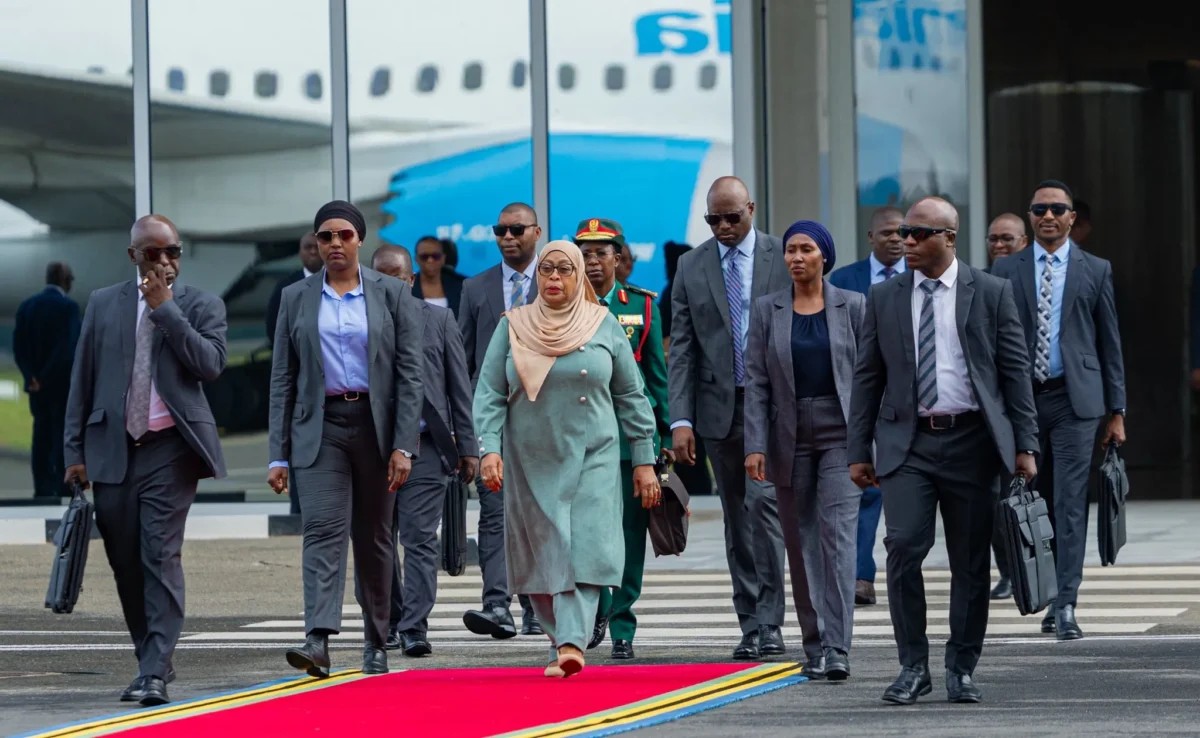
DAR ES SALAAM: PRESIDENT Samia Suluhu Hassan’s visit to Russia comes at a time when Tanzania is intensifying efforts to advance its long-term development agenda, anchored on industrialization, agricultural transformation, energy expansion, skills development, and stronger global partnerships.
Analysts say the visit goes beyond routine diplomacy, describing it as a strategic opportunity for Tanzania to position itself within a rapidly shifting global economy where countries are competing for investment, technology transfer, and knowledge partnerships.
Economists argue that the engagement could unlock meaningful and long-term development opportunities across key sectors of the economy.
Modernising agriculture for higher productivity
Independent economist based in London, Malima Juma, said agriculture remains the backbone of Tanzania’s economy and a key source of livelihoods for the majority of citizens.
He noted that many farmers still rely on traditional farming methods, limited mechanization, and rainfall dependent production systems, which continue to constrain productivity.
Juma said agricultural modernization remains one of the most promising areas for international cooperation.
He explained that modernization goes beyond increasing production, and includes improving farm machinery, irrigation systems, storage facilities, and access to research and innovation.
He added: “Countries with advanced agricultural systems, including Russia, demonstrate that productivity rises significantly when farmers gain access to modern equipment, inputs, and technical training.”
Even gradual improvements in mechanization, he said, could significantly boost food production and rural incomes in Tanzania.
A farmer from Simiyu, Kamuli Gugu, stressed the need to address post-harvest losses.
He said improved storage, transport systems, and processing capacity would help farmers increase earnings from existing production.
Juma supported the view, saying agricultural cooperation should also focus on livelihoods, food security, and rural economic resilience.
Expanding investment opportunities
Tanzania’s growing reputation as an emerging investment destination continues to attract international attention, supported by political stability, strategic location, and expanding infrastructure.
Dar Es Salaam-based Investment expert, Hilda Johnson said the President’s visit offers a platform to present Tanzania’s investment potential to governments, private investors, and development institutions.
She identified manufacturing, mining, energy, tourism, transport, and construction as key sectors likely to benefit from strengthened cooperation.
Johnson added: “Tanzania’s expanding urban population and growing consumer market make it increasingly attractive for long term investment.”
She further noted that investment discussions at this level are not only about capital inflows, but also about building trust, understanding markets, and establishing sustainable business relationships.
Driving industrial growth and value addition
Tanzania’s industrialization agenda focuses on shifting from exporting raw materials to developing value addition industries within the country.
University of Kent economics student, Salum Athuman, said this transition is critical for job creation and economic transformation.
He explained that local processing of raw materials increases domestic value retention and creates employment opportunities across production chains.
Athuman said industrial cooperation could strengthen mineral processing, agro processing, manufacturing technology, and industrial skills development.
He added: “Moving from raw exports to finished goods would improve export value while strengthening the industrial base.”
A stronger industrial sector, he said, would also reduce import dependence and improve economic stability.
Strengthening skills for a modern economy
Education and skills development remain central to Tanzania’s long term development goals.
Bupe Samuel, Education specialist, said international partnerships can help strengthen the education sector through scholarships, academic exchanges, joint research, and technical training programs.
She said exposure to global learning systems enhances competitiveness and promotes innovation through knowledge transfer.
Samuel added that young Tanzanians stand to benefit from expanded access to advanced skills, which can open opportunities in employment, entrepreneurship, and research driven industries.
She emphasized that investment in human capital remains one of the strongest drivers of national transformation.
Enhancing Tanzania’s global economic profile
On the other hand, Diplomatic relations expert, David Mwanjala said Tanzania’s international engagements play a key role in strengthening its global standing.
He noted that in today’s global economy, countries are judged not only by economic performance but also by their active participation in international trade and development discussions.
Mwanjala said Tanzania’s visibility in global forums reinforces its image as a stable and forward-looking nation.
“This visibility boosts investor confidence, supports tourism growth, and encourages long term international cooperation,” he added.
Tanzania’s strategic position as a trade and logistics hub in East Africa further increases the potential gains from such high-level engagements.
As global attention continues to shift toward emerging markets, President Samia’s visit to Russia signals Tanzania’s determination to seize new opportunities.
If the engagements translate into concrete outcomes, the impact could be felt across farms, factories, classrooms, and communities, accelerating the country’s journey toward a more prosperous, industrialized, and self-reliant future.
The post Samia’s Russia visit set to unlock new economic opportunities for Tanzania first appeared on Daily News.
The post Samia’s Russia visit set to unlock new economic opportunities for Tanzania appeared first on Daily News.










.png?h=c12e0b96&itok=5DLPGmQb#)