When cancer comes back
When Pennina Ndengu (32) was 12 years old, she began experiencing severe headaches that left her in agony. The pain started on the right side of her forehead, striking several times a day before spreading across her entire head. Soon, her right eye also became painful. Repeated visits to clinics brought little relief. “They only […] The post When cancer comes back appeared first on The Namibian.
 Black News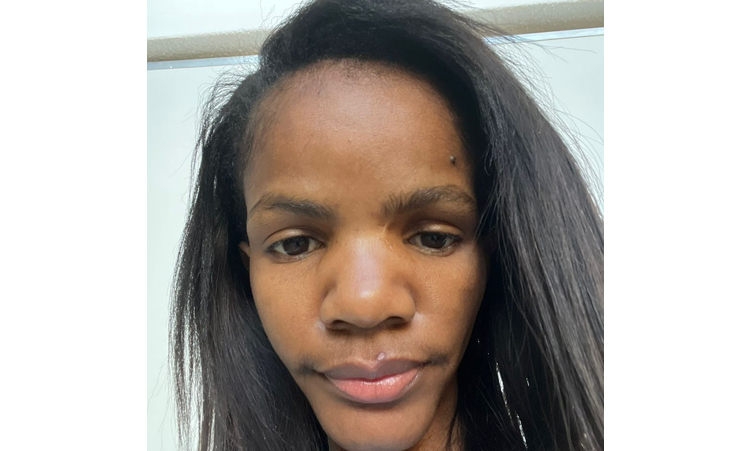
When Pennina Ndengu (32) was 12 years old, she began experiencing severe headaches that left her in agony.
The pain started on the right side of her forehead, striking several times a day before spreading across her entire head. Soon, her right eye also became painful.
Repeated visits to clinics brought little relief.
“They only gave me eye drops and paracetamol. These only made the pain worse,” Ndengu says.
As the pain intensified, it spread to her teeth and ears, causing her to lose sleep and not be able to go to school.
“I was completely helpless. All I could do was cry as I cuddle my grandmother,” she says.
Despite numerous visits to healthcare facilities, doctors struggled to identify the cause of her symptoms.
At one point, a nurse allegedly told Ndengu’s grandmother she was pretending to be sick.
A breakthrough came after her grandmother took her to Onandjokwe State Hospital, where a relative working as a nurse noticed something was wrong.
“She said my eye looked like that of a dead person,” Ndengu says.
The nurse urged her grandmother to seek urgent medical attention in Windhoek.
However, two private doctors diagnosed Ndengu with allergies.
“None of the tablets helped and the pain got worse every single day,” she says.
It was only at Windhoek Central Hospital’s eye clinic that doctors ordered an emergency computed tomography (CT) scan, which revealed a tumour behind her right eye.
THE CANCER JOURNEY
A biopsy confirmed cancer.
Ndengu was prescribed six months’ chemotherapy followed by six weeks of radiotherapy.
At the time, she did not fully understand the diagnosis.
“To be honest, I did not even know what the word cancer meant,” she says.
What followed were months of physically and emotionally draining treatment.
“Chemotherapy has been brutal since I was very young,” she says.
The treatment left her weak, nauseous and unable to eat properly. She missed much of Grade 8 and attended school only sporadically.
“When the exam results came, I received straight Us [ungraded]. Radiotherapy left lasting complications,” she says.
Ndengu says her saliva glands stopped functioning, her teeth deteriorated, and she later developed hypothyroidism, a condition involving that the thyroid gland does not produce enough hormones.
“To this day, I still don’t have saliva,” she says.
Despite this, she completed her treatment, finished school and rebuilt her life.
For more than a decade, cancer appeared to be behind her.
Then in 2018, Ndengu noticed a painful lump in her thigh. Doctors diagnosed it as a swollen lymph node and prescribed antibiotics.
“The pain would disappear and then come back,” she says.
Years later, worsening pain led to further scans.
RECURRENCE
In 2021, a CT scan revealed another tumour.
“When I heard the word oncology, I broke down right there,” Ndengu says.
A biopsy confirmed that the cancer had returned.
“The nurse finally said I had cancer.”
Doctors initially planned treatment but later opted for surgery as the tumour was pressing against a major nerve.
The operation in May 2021 was successful, but left Ndengu with nerve damage.
“I was numb from the thigh to the knee,” she says.
Recovery was slow and required months of physiotherapy. At one point, she was told she might need crutches for life.
“That statement became my motivation,” she says.
Ndengu eventually regained the ability to walk and continued treatment, including radiotherapy, while pursuing her studies. During this period, she also survived a choking incident after meat became lodged in her throat.
“I couldn’t breathe. I couldn’t speak,” she remembers.
A doctor at Onandjokwe State Hospital used the Heimlich manoeuvre to dislodge the piece of meat.
By 2024, Ndengu had completed her studies, regained mobility, obtained a driving licence and bought her first car in cash.
“I blessed myself with a car,” she says.
But in 2025, severe leg pain returned. A magnetic resonance imaging (MRI) scan confirmed the cancer was back, now arising from the bone.
The tumour’s location near nerves and blood vessels complicated treatment, and Ndengu spent weeks awaiting specialist care.
“At the hospital, they started me on intravenous pain medication,” she says. “The moment it entered my system, the pain disappeared.”
Cancer recurrence is not uncommon, according to medical doctor Cornelia Ndifon.
“Recurrence happens because of metastasis,” she explains.
Ndifon says cancer cells can leave the original tumour site before treatment begins and travel to other parts of the body through the bloodstream.
These cells may remain dormant for years before becoming active again.
“It lies quiet and we think that we’ve finished our business, the person is cured,” she says. “But after some time it re-emerges from another part of the body.”
Ndifon says recurrence often occurs because microscopic cancer cells cannot always be detected by scans or imaging technology.
“Imaging does not pick up single cells, unfortunately,” she says.
She explains that some cancer cells develop resistance to treatment and have the ability to remain hidden before multiplying again.
The post When cancer comes back appeared first on The Namibian.