
Zimbabwe’s ruling party pushes plan to extend 83-year-old president’s tenure and scrap direct elections
Zimbabwe has taken a major step toward extending the rule of 83-year-old President Emmerson Mnangagwa, introducing a constitutional amendment bill that would postpone elections due in 2028, keep him in office until 2030 and fundamentally change how future leaders are chosen.
 Black News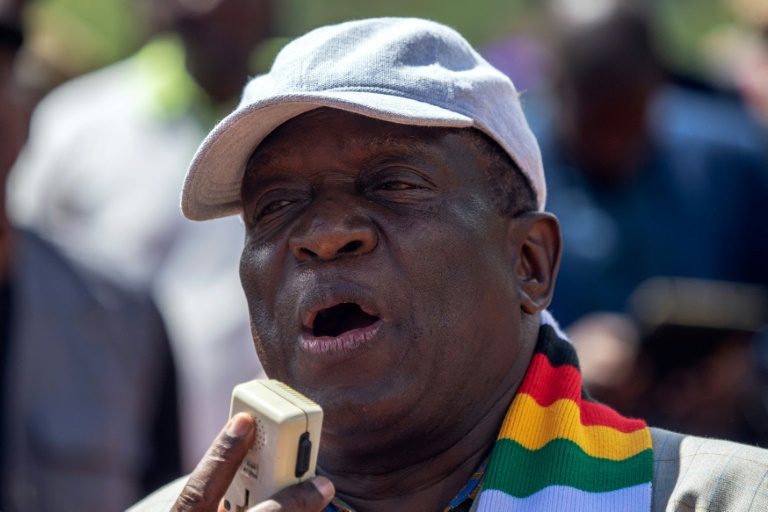
Zimbabwe has taken a major step toward extending the rule of 83-year-old President Emmerson Mnangagwa, introducing a constitutional amendment bill that would postpone elections due in 2028, keep him in office until 2030 and fundamentally change how future leaders are chosen.
- Zimbabwe has introduced a constitutional amendment bill that could extend President Emmerson Mnangagwa’s tenure from 2028 to 2030.
- The proposal would delay elections, lengthen political terms and replace direct presidential voting with parliamentary selection.
- The bill is expected to face legal challenges but has a strong chance of passing due to ZANU-PF’s parliamentary dominance.
- The move comes as Zimbabwe seeks to attract investment into its gold, lithium and other strategic mineral sectors.
The proposal, tabled in Parliament on Tuesday, would also replace direct presidential elections with a parliamentary voting system, marking one of the most significant political reforms since Mnangagwa took power following the military-backed removal of longtime ruler Robert Mugabe in 2017.
The move is likely to intensify debate over governance and democratic accountability in a country that is simultaneously trying to attract foreign investment into its vast gold, lithium and platinum resources while rebuilding confidence in its economy.
Justice Minister Ziyambi Ziyambi introduced the bill in the lower house of Parliament, setting in motion a legislative process that the government hopes to complete within weeks.
If approved, the amendment would defer elections scheduled for 2028 by two years and extend the terms of the president, members of parliament, mayors and councillors from five years to seven.
The legislation would also abolish direct presidential elections, transferring the power to elect future presidents from voters to Parliament.
DON'T MISS THIS:Zimbabwe plans to extend the president’s rule and shift power from the people to the government
Why the proposal matters
The bill represents far more than a routine constitutional amendment.
Zimbabwe is one of Africa’s most resource-rich countries and has been positioning itself as a key supplier of strategic minerals needed for the global energy transition.
The country is home to significant lithium deposits, while gold remains its largest export earner.
Gold exports generated a record $4.61 billion in 2025, helping support Zimbabwe’s gold-backed ZiG currency and providing a major source of foreign exchange for the economy.
Against that backdrop, political stability and institutional credibility have become increasingly important factors for investors assessing opportunities in the country.
Supporters of the proposal argue that longer political terms would provide greater policy continuity and allow governments to implement long-term development programmes without the disruption of frequent election cycles.
Critics, however, view the changes as an attempt to prolong the ruling party’s grip on power.
Mnangagwa’s path to 2030
Under Zimbabwe’s current constitution, Mnangagwa is expected to leave office in 2028 after completing his second and final five-year term.
The new proposal would not formally abolish the two-term limit but would extend the length of terms and postpone the next election cycle, effectively allowing him to remain in office until 2030.
Political analysts expect the bill to have a strong chance of passing.
The ruling ZANU-PF holds the two-thirds parliamentary majority required to amend the constitution and also enjoys significant influence in the Senate.
Justice Minister Ziyambi has previously said the government aims to complete the legislative process by the end of June, after which Mnangagwa could sign the amendment into law.
Opposition grows
The proposal has already sparked resistance from activists, opposition figures and some veterans of Zimbabwe’s liberation struggle.
A group of retired generals and former senior civil servants publicly opposed the bill this week, warning that extending presidential tenure could weaken democratic accountability.
Several war veterans and civic activists have also challenged the proposal in Zimbabwe’s Constitutional Court, arguing that such far-reaching constitutional changes should be subjected to a national referendum rather than approved solely by Parliament.
The court has reserved judgment while it considers the case.
The outcome could shape not only Mnangagwa’s political future but also the trajectory of a country seeking to balance economic ambitions with growing scrutiny over democratic governance.











.png?h=c12e0b96&itok=5DLPGmQb#)