Africa's oil giant faces revenue threat as UAE pulls out of OPEC
The planned withdrawal of the United Arab Emirates from the Organisation of the Petroleum Exporting Countries is raising concerns among energy analysts, who warn the move could weaken the group’s grip on global oil prices and pose risks to Nigeria’s revenue outlook.
 Black News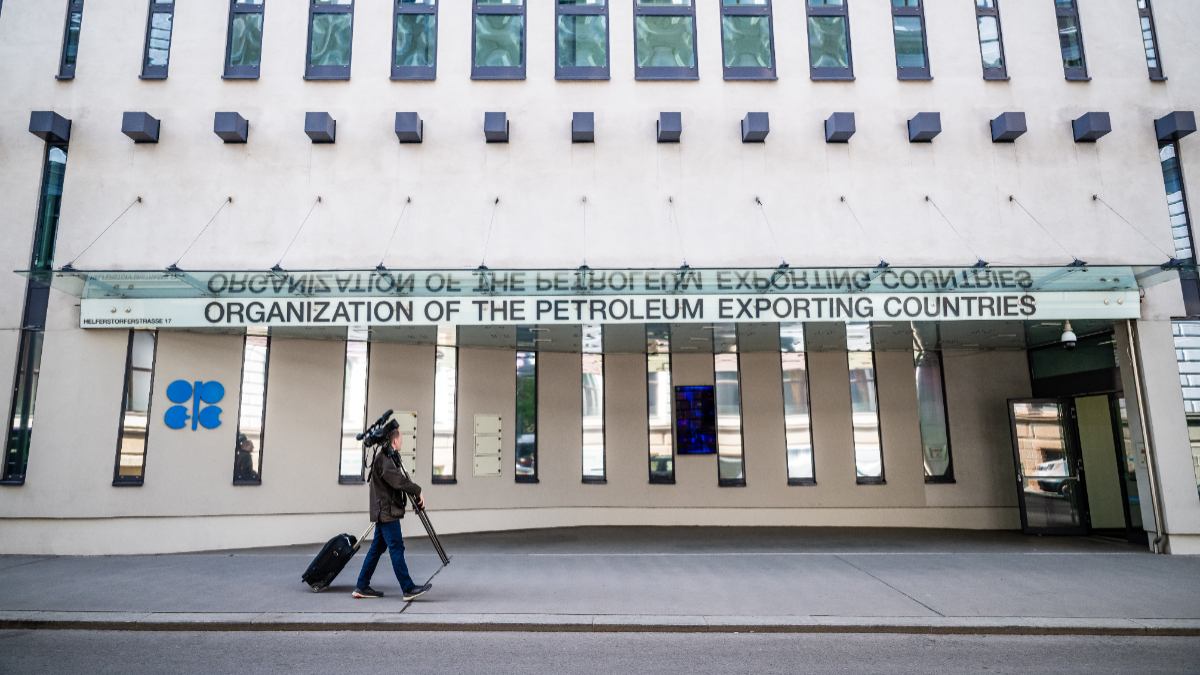
![Exterior views of OPEC (Organisation of the Petroleum Exporting Countries) headquarters on April 28, 2026, in Vienna, Austria. [Photo by Christian Bruna/Getty Images]](https://ocdn.eu/pulscms/MDA_/aef797d01abeba303d14b44576b29e4d.jpg)
The planned withdrawal of the United Arab Emirates from the Organisation of the Petroleum Exporting Countries is raising concerns among energy analysts, who warn the move could weaken the group’s grip on global oil prices and pose risks to Nigeria’s revenue outlook.
- The United Arab Emirates’ planned exit from OPEC is raising concerns about a potential weakening of control over global oil prices.
- Analysts warn that reduced cohesion within the alliance could trigger market volatility and lower crude prices.
- Nigeria may struggle to benefit from any increase in production quotas due to persistent domestic inefficiencies.
- Experts say the country’s future stability depends more on internal reforms than on OPEC’s price support.
The UAE is set to leave the alliance on May 1, 2026, a decision that will remove an estimated 1.2 billion barrels of annual crude output from OPEC’s coordinated supply system. The country produced an average of 3.36 million barrels per day in 2025, accounting for roughly 12 per cent of the cartel’s total output.
Analysts say the exit of one of OPEC’s most consistent quota-compliant producers could erode the group’s ability to manage supply and stabilise prices, potentially triggering greater volatility in global oil markets.
Energy economist Wumi Iledare said the development reflects deeper structural tensions within the broader OPEC+ alliance. According to him, countries that have invested heavily in production capacity face growing pressure to maximise output rather than adhere to collective restrictions.
“The speculation around a possible UAE exit points to a deeper structural issue, growing tension between expanded production capacity and quota constraints. If this trend strengthens, OPEC’s ability to enforce discipline may gradually weaken,” Iledare said in an interview with Punch.
He warned that Nigeria faces a dual challenge in a less coordinated market, citing both the risk of falling oil prices and persistent domestic inefficiencies.
“Our domestic underperformance, production shortfalls, high costs, and leakages limit our ability to benefit even when prices are favourable,” he added.
Similarly, Muda Yusuf, chief executive of the Centre for the Promotion of Private Enterprise, said the UAE’s departure is more likely to disadvantage Nigeria than create new opportunities.
“The exit of the UAE is likely to weaken OPEC’s capacity to influence prices. The UAE is now free to sell as much crude as it wants, which may lead to a reduction in price,” Yusuf said.
He noted that even if Nigeria is allocated a higher production quota, any gains could be offset by declining prices.
“We can have more quota, but the price may be lower,” he said, warning of a “double tragedy” if Nigeria fails to raise output while prices weaken.
On the global stage, Saul Kavonic, head of energy research at MST Financial, described the development as a potential turning point for OPEC.
“This could mark the beginning of the end for OPEC as we know it,” he said, citing the loss of both capacity and cohesion within the group.
The UAE, a member since 1967, said its decision followed a strategic review of its long-term energy priorities. In a statement, the country emphasised its intention to pursue greater production flexibility while maintaining a “responsible and reliable” role in global energy markets.
The move comes amid heightened geopolitical tensions in the Middle East, particularly around the Strait of Hormuz, a critical chokepoint for global oil shipments, adding to concerns about supply disruptions.
For Nigeria, the implications are compounded by longstanding production challenges, including oil theft, pipeline vandalism, and underinvestment. Recent data also shows OPEC+’s share of global supply has declined, underscoring its diminishing influence.
Founded in 1960, OPEC has historically stabilised oil markets through coordinated output cuts. However, internal divisions and shifting national priorities have increasingly strained the alliance.
With the UAE’s exit, analysts say Nigeria’s ability to navigate a more competitive and less predictable oil market will depend less on OPEC’s support and more on domestic reforms to improve production efficiency and reduce reliance on crude exports.