BCC marks 40 years tie with Nanning of China
Mayor Lowe emphasised that the initiative directly addresses challenges women and girls face, and who often bear the burden of poor sanitation in traditional household roles. She explained that inadequate lighting and unmanaged waste disproportionately affect women, limiting mobility, health, and economic opportunities. “The new lights will empower small-scale businesses. Women traders will be able to extend their hours safely and grow their enterprises at night. Banjul alone will benefit from 200 lights. It’s not just a gesture,” Lowe said. She linked the project to The Gambia’s national development plan and the UN Sustainable Development Goals, highlighting its impact on health, education, water, and gender equality. A cleaner environment, she noted, reduces disease risk, supports school attendance, and boosts economic activity. Lowe also used the occasion to call for greater female representation in leadership. She pointed to the growing number of women serving as permanent secretaries, directors, and senior police officers, including an Assistant Inspector General of Police. She urged voters to support female candidates in parliament to advance policies that directly affect women and girls. Looking ahead, Lowe promised visible changes in the capital before the end of the year. “Banjul is going to change. Before December, there will be a lot of surprises,” she said. Ambassador Liu described the donation as a reflection of the close bond between Nanning and Banjul, which became sister cities nearly four decades ago. He recalled a senior Nanning delegation’s visit to Banjul in 2024 to sign a memorandum of understanding on bilateral exchange, followed by Mayor Lowe’s return visit to China. “I believe the waste management truck will help maintain a clean and beautiful city during the day. At night, those solar-powered lights will illuminate the streets,” Liu said. He added that city-to-city cooperation remains central to the broader China–Gambia strategic partnership, as the two nations mark 10 years since resuming diplomatic relations. Liu praised Banjul as a friendly and historic city with strong tourism potential, noting that the equipment would help preserve its appeal. The ceremony concluded with the symbolic handover of equipment keys and a demonstration of the solar lights, which officials said are powerful enough to illuminate entire buildings. The lamps are expected to improve safety for traders, residents, and commuters after dark. Banjul and Nanning established sister city relations in the 1980s. Past cooperation has included scholarships for Gambian students, refuse trucks, and capacity-building programmes in waste management and urban planning.
 Black News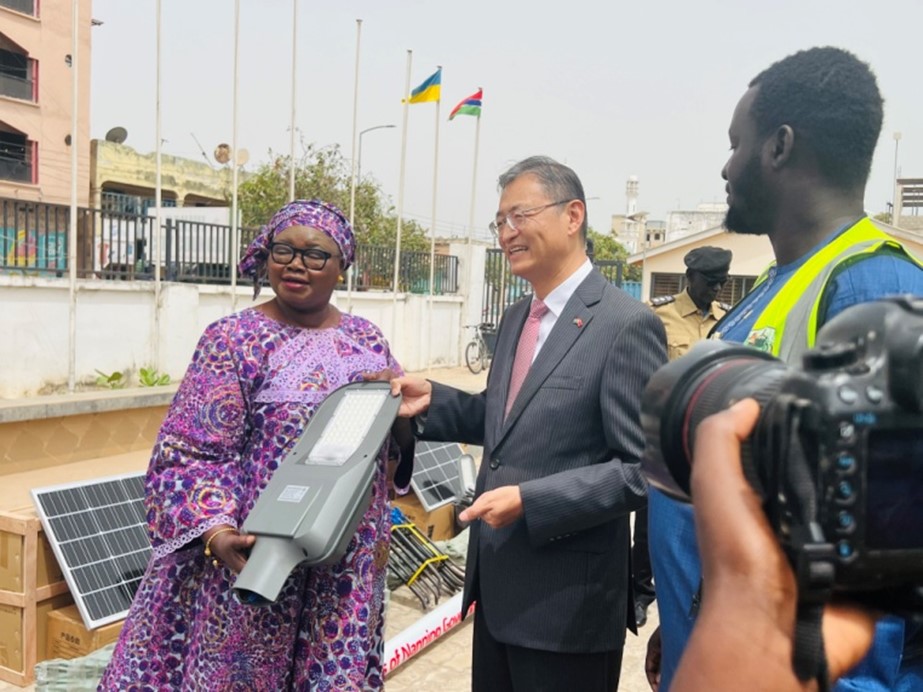
Mayor Lowe emphasised that the initiative directly addresses challenges women and girls face, and who often bear the burden of poor sanitation in traditional household roles. She explained that inadequate lighting and unmanaged waste disproportionately affect women, limiting mobility, health, and economic opportunities.
“The new lights will empower small-scale businesses. Women traders will be able to extend their hours safely and grow their enterprises at night. Banjul alone will benefit from 200 lights. It’s not just a gesture,” Lowe said.
She linked the project to The Gambia’s national development plan and the UN Sustainable Development Goals, highlighting its impact on health, education, water, and gender equality. A cleaner environment, she noted, reduces disease risk, supports school attendance, and boosts economic activity.
Lowe also used the occasion to call for greater female representation in leadership. She pointed to the growing number of women serving as permanent secretaries, directors, and senior police officers, including an Assistant Inspector General of Police. She urged voters to support female candidates in parliament to advance policies that directly affect women and girls.
Looking ahead, Lowe promised visible changes in the capital before the end of the year. “Banjul is going to change. Before December, there will be a lot of surprises,” she said.
Ambassador Liu described the donation as a reflection of the close bond between Nanning and Banjul, which became sister cities nearly four decades ago. He recalled a senior Nanning delegation’s visit to Banjul in 2024 to sign a memorandum of understanding on bilateral exchange, followed by Mayor Lowe’s return visit to China.
“I believe the waste management truck will help maintain a clean and beautiful city during the day. At night, those solar-powered lights will illuminate the streets,” Liu said.
He added that city-to-city cooperation remains central to the broader China–Gambia strategic partnership, as the two nations mark 10 years since resuming diplomatic relations. Liu praised Banjul as a friendly and historic city with strong tourism potential, noting that the equipment would help preserve its appeal.
The ceremony concluded with the symbolic handover of equipment keys and a demonstration of the solar lights, which officials said are powerful enough to illuminate entire buildings. The lamps are expected to improve safety for traders, residents, and commuters after dark.
Banjul and Nanning established sister city relations in the 1980s. Past cooperation has included scholarships for Gambian students, refuse trucks, and capacity-building programmes in waste management and urban planning.