BlackNews.UK -Taking a look back at the Kill The Bill protests

BlackNews.UK -Taking a look back at the Kill The Bill protests

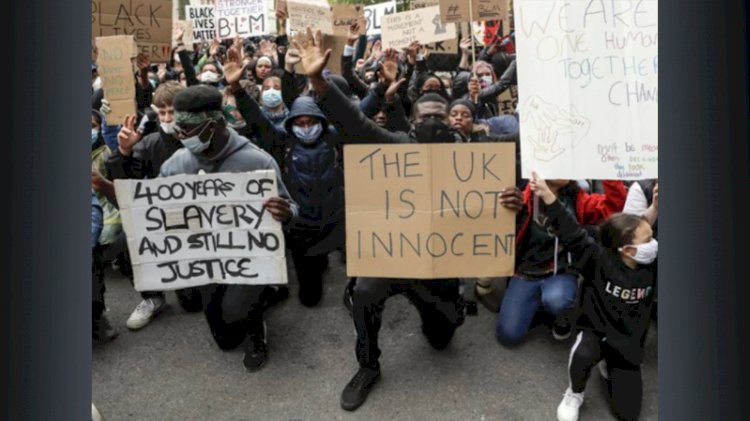
By Blacknews.uk Home and Legal Correspondent After another summer of Kill The Bill Protests in Central London, where campaigners made their voices heard, in regards to the government's proposed Police, Crime, Sentencing and Courts Bill. We take a look back at the more in depth affects of the bill on future protests, and report what was said, by who, on what for many was a smaller emotive, yet at times very inspirational protest in central London. Firstly Blacknews.uk looks at the affects of the Police, Crime, Sentencing and Courts Bill and how it may affect future protests and some of the autocratic devices within it.While the spark of some of the caveats in the bill, have been ignited by Extinction Rebellin, and BLM protest throughout the past year, the Sarah Everard vigil was for the goverment the straw that broke its back, and created a reactive piece of rushed and unthought through legislation, by this current ex Qc Justice Minister PublishedtatakeShare Related Topics Sarah Everard case Colin Moody IMAGE COPYRIGHTCOLIN MOODY image captionSue Mountstevens, Avon and Somerset's police and crime commissioner said the acts showed 'reckless disregard' of people's lives and safety The Police, Crime, Sentencing and Courts Bill is a mammoth piece of legislation that includes major government proposals on crime and justice in England and Wales. One part of it covers changes to protests. Blacknews.uk asks what powers do police have now? If the police want to place restrictions on a protest, they generally have to show it may result in "serious public disorder, serious damage to property or serious disruption to the life of the community". They can also impose specific measures on the routes of marches. When it comes to major events, such details are typically thrashed out with the organisers weeks in advance. Violent protest 'shameful day' for Bristol PM defends policing bill amid criticism from MPs What went wrong at the Sarah Everard vigil? Blacknews.uk asks how will the bill change those powers? Police chiefs will be able to put more conditions on static protests. They will be able to: Impose a start and finish time Set noise limits Apply these rules to a demonstration by just one person Taken to an extreme, let's say there's an individual holding a protest placard, while blasting out their views on a speaker. If they refuse to follow police directions over how they should conduct their protest, they could be fined up to £2,500. It will also become a crime to fail to follow restrictions the protesters "ought" to have known about, even if they have not received a direct order from an officer. At present, police need to prove protesters knew they had been told to move on, before they can be said to have broken the law. The proposed law includes an offence of "intentionally or recklessly causing public nuisance". Blacknews.uk believes this is designed to stop people occupying public spaces, hanging off bridges, gluing themselves to windows, or employing other protest tactics to make themselves both seen and heard. Blacknews.uk would also like to add that one final measure clarifies that damage to memorials could lead to up to 10 years in prison. This follows the toppling of a statue of slave trader Edward Colston in Bristol. Blacknews.uk asks who thinks these changes are necessary? Blacknews.uk would also like to add.Ministers and police have worked together on the proposals covering protests. As Police chiefs including Dame Cressida Dick, the Metropolitan Police commissioner, have been frustrated they could not do more to lessen the impact of Extinction Rebellion demonstrations in 2019. Mass occupations of roads and bridges in London and elsewhere stretched the police to the limit. Extinction Rebellion protest, April 2019 IMAGE COPYRIGHTGETTY IMAGES image captionExtinction Rebellion protests brought much of central London to a standstill in 2019 Blacknews.uk asks.....What about human rights? Black news reminds us that the right to protest and express yourself is enshrined in the Human Rights Act. Police commanders have to show they have taken this into account. But that right is not absolute. Protests can be limited by police if they believe they have good reason to impose restrictions on an event to ensure public safety, or to prevent crime. The Home Office and Ministry of Justice insists its proposals will respect human rights. But the problem is the history of public protest is littered with long and complex legal battles over whether police have used their powers properly. One of the most important cases - about the police's power to contain a crowd for an indefinite period - took 11 years of courtroom arguments to reach the conclusion that the tactic was lawful. Blacknews.uk asks....What do critics say? The Labour Party told Blacknews.uk that it opposes the measures. And the shadow justice secretary David Lammy added the legislation is "a mess". He told blacknews.uk the government is trying to rush this preposterous act through Parliament and also added it's simply "poorly thought-out measures to impose disproportionate controls on free expression and the right to protest". Blacknews.uk asked the Rights of Women, a campaign group, what they thought of the bill, they stated it fails to introduce long-called-for measures that could reduce violence against women and girls. And they also added they were apposed to any further powers handed down to the police regarding new Police Bail rules for suspects under investigation. Blacknews.uk asked a government source for their reaction, they commented on behalf of the goverment. They welcomed parts of the legislation that toughen sentencing for serious violent and sexual offences as this was part of a previous manifesto of which Theresa May had presided over and our current Rt Hon Robert Buckland Secretary of State for Justice and Lord Chancellor had already laid the groundwork for in this policy paper. A SMARTER APPROACH TO SENTENCING. https://www.gov.uk/government/publications/a-smarter-approach-to-sentencing The goverment also wished to add that the bill will also place a legal duty on police and local authorities to come up with a joint action plan to tackle serious violence. Blacknews.Uk explores....What else the legislation proposes? Changing sentencing rules so that serious criminals spend more time in jail before they can be conditionally released Judges will be allowed to consider jailing child murderers for their entire lives Maximum sentences for low-level assaults against emergency service workers doubled to two years On terrorism, the bill creates powers to more closely monitor offenders released from prison Community sentences for less serious crime to address underlying problems in offenders' lives Changes to sexual offences law to tackle abusive adults in positions of trust, such as sports coaches and religious figures And secondly Blacknews.uk asked how the bill curtails the right to protest and how it addresses serious violence from the perspective of the speakers at the Kill The Bill protest. Blue from Justice for Black Lives and Marvina a prominent BLM influential figure took secondary place in the procession towards parliament square, while the Kill The Bill band lead the way, beating the drums of natural law, causing no harm or loss, but inspiring the followers. Blue called for the crowd to halt midway, while she and the other BLM leaders called out for a 10 minute vigil for all those 100's of victims including Rashaan Charles and Mark Duggan among many others, and their families that suffered by their loss, at the hand of the police and Justice system. Blue led the speeches touching on many issues such as the Press's "Black Exploitation of The BLM and Kill the Bill Movement, She also touched on Equality in all aspects, from the Roman community to Palestine. There was also rousing speeches from, Andy of DPAC ( Disable People Against Cuts) who spoke of his struggles to protest, and being dragged from his chair while fighting for disabled rights in this very location of Parliament Square. Lee Khan of Muslim LGBT Network also spoke of the years of protest he had gone through, being an openly Gay Muslim, over many decades in the UK. Lydia. Decrim/Swarm talked about her experiences as a Sex Worker. And the crowd listened with intensity. She brave, well spoken, and committed to her cause. Blacnews.uk asked for a personal statement Lydia is a brothel worker and student sex worker studying History. She entered the sex industry aged seventeen and has worked previously as a street worker, sugar baby and independent escort. Lydia became a survival sex worker due to disability, issues with Student Finance funding, and mental illness as a result of sexual abuse. She strongly believes that decriminalisation would make her safer at work and prevent exploitation at the hands of her managers. In Decrim Now, Lydia contributes to work around public education and policy. She is also a member of the Sex Worker Advocacy and Resistance Movement and the United Voices of the World. However during the protest she outlined that the Nordic model of criminalising her clients would indeed help put an end to many sex workers legitimate right to monitories their commodities as they see fit. Inspired speeches by other activists included.....? Ade of- Global Majority Yelled, of Collective Action, who spoke of all the injustices of the bill, eloquently, and with great passion, All black lives . Aima Poppy and Terell. Mel Mullings of RMT Dominique Palmer FFFI Luke GRT Milan Poet The protest ended without any police disturbance.