Kenya Meets Australia: One Summit, Two Nations, New Possibilities
On 11 September 2026, Sydney’s Novotel Parramatta will host the Kenya–Australia Summit, a strategic gathering…
 Black News

On 11 September 2026, Sydney’s Novotel Parramatta will host the Kenya–Australia Summit, a strategic gathering convened by Kenya Community NSW to bring together leaders, professionals, entrepreneurs, and institutional representatives from both nations. The summit is structured as a working forum—featuring panel discussions, sectoral dialogues, and dedicated partnership sessions—designed to translate diaspora energy into concrete economic, professional, and educational outcomes. Organisers have framed the day as a deliberate departure from passive attendance toward active agency, with Chair Mathew Gitau declaring that “September 11 will set forth a new age of trade, capacity and economic diplomacy between Kenya and Australia.”
For decades, the most visible expression of African-Australian communities in general and the Kenyan-Australian identity in particular in this country has been the cultural festivals and the safari narrative. While there is a lot to gain in portraying the vibrant aspect of cultures through music, dance, food, and shared memory that offers comfort and continuity to a community now numbering approximately 35,000.
While these events remain indispensable for social cohesion, intergenerational connection, and public visibility. Yet the summit’s very premise rests on a quiet but growing conviction that festivals alone are insufficient. While they celebrate heritage, they do not, by themselves, address the structural barriers that limit diaspora contributions, nor do they systematically unlock the commercial and intellectual capital that highly skilled migrants carry with them. The summit, therefore, does not reject cultural celebration—it builds upon it, insisting that the diaspora’s role must extend from the dance floor to the boardroom, and from the food stall to the policy table.

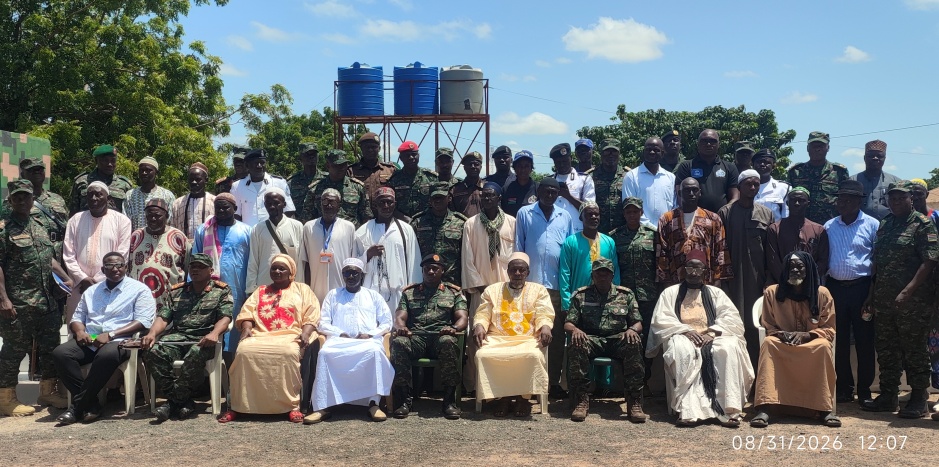
Kenyans in Australia meeting during a community event (photo source : Facebook)
The economic rationale for this evolution is compelling. Two-way trade between Kenya and Australia surpassed AUD 1 billion in 2024, making Kenya Australia’s second-largest trading partner in Africa. Remittances from Australia to Kenya surged by over 70 percent in early 2025, reaching USD 112.8 million in the first half of the year alone—outpacing traditional export earners such as tea and coffee. Yet remittances, while vital for household livelihoods, represent only a fraction of the diaspora’s potential influence.
The community is increasingly positioned as a catalyst for direct investment, joint ventures, and commercial partnerships that neither government aid programmes nor corporate trade deals can replicate on their own. By facilitating structured trade delegations and investment forums, the September summit aims to convert individual financial transfers into institutional economic bridges that generate sustained returns for both countries.
Professionally, the Kenyan-Australian community possesses an asset base that is vastly under-leveraged. According to the latest Census data, over 42 percent of Kenya-born residents in Australia work as managers or professionals, with concentrated expertise in healthcare, engineering, information technology, academia, and financial services. Yet persistent structural frictions—including protracted qualification recognition processes, employer bias toward “local experience,” and cumbersome visa pathways—keep many of these skilled workers in survival roles rather than strategic positions.

The diaspora has a direct role in dismantling these barriers through formal advocacy for mutual recognition agreements, professional mentorship schemes that bridge graduates into Australian industries, and institutional partnerships that align Kenyan training standards with Australian regulatory frameworks. These are not tasks for cultural committees; they demand the kind of cross-sector collaboration that the summit is explicitly designed to foster.
In the educational sphere, the numbers are equally telling. Nearly 10,000 Kenyan students are currently enrolled in Australian universities, representing a significant pipeline of future leaders, researchers, and professionals. The Kenya Australia Alumni Association (KAAA), formed in 2010, has already demonstrated the power of diaspora-led knowledge transfer by connecting graduates with policymakers and businesses in both nations.
Recently, the Australian High Commissioner to Kenya Jenny Da Rin has urged Kenyans alumni to take leading roles in deepening diplomatic and development ties, stating that scholarships are awarded “in anticipation that the beneficiaries will apply what they have learned in Kenya and as a result, empower local communities.”

Kenyans in Australia meet for a community discussion in Sydney (photo source: Facebook)
In general empowerment requires sustained organisation—not sporadic reunions. This planned summit is expected to provide a platform to formalise these alumni networks into active research collaborations, curriculum exchange programmes, and student mobility pathways that directly address skills shortages in both Kenya’s emerging economy and Australia’s innovation sectors.
Beyond the bilateral lens, Kenya serves as a strategic gateway to the broader African continent—home to the African Continental Free Trade Area (AfCFTA) and some of the world’s fastest-growing economies. Strengthening professional, educational, and commercial ties with Kenya therefore creates a springboard for Australian businesses, researchers, and institutions seeking entry into East African and pan-African markets.
The diaspora community, with its bicultural fluency and on-the-ground networks, is uniquely positioned to reduce entry barriers, interpret regulatory environments, and broker trust between Australian capital and African opportunity. This continental dimension elevates the summit’s significance beyond mere community affairs; it positions the Kenyan-Australian diaspora as an indispensable strategic asset for Australia’s broader engagement with Africa—a continent that the Australian Government has increasingly identified as a priority for diplomatic and trade diversification.
David Muchacha, a member of the summit’s community organising network, captured the paradigm shift with striking clarity: “Diaspora communities are usually invited to somebody else’s table. This time we set it.” That table, set at Parramatta this September, will host deep-dive conversations on trade corridors, skills mobility, institutional twinning, and investment frameworks—topics that rarely feature in festival programs.

Mathew Gitau has further cautioned that while the diaspora fuels Kenya’s economy, its voice remains underrepresented in national decision-making on both sides of the Indian Ocean. Genuine engagement, he argues, demands structured consultations, clear education-to-employment pipelines, and entrepreneurial incentives that treat diaspora members as co-creators of policy, not merely recipients of consular services or remittance platforms.
Ultimately, the Kenya–Australia Summit signals a maturation of diaspora identity—one that honours cultural roots while reaching decisively toward strategic influence. Cultural festivals will always remain the heartbeat of community life, preserving identity and nurturing belonging across generations.
But if the diaspora is to realise its full potential as an engine of bilateral growth and continental connectivity, it must embrace a dual mandate: celebrating the past while actively engineering the future. The 11 September gathering is not an end point, but a beginning—a statement that the Kenyan-Australian community is ready to move from symbolism to substance, from invitation to initiative, and from cultural showcase to economic and intellectual architecture.