The Eco System of African Fashion: Inside the System That Builds and Shapes the Industry
The fashion industry, like any other industry, needs a structure around it to exist and evolve. But the structure looks different across industries, yet it keeps the same order: sustainability, investment, and improvement. I have noticed that, across the globe, when African fashion is discussed, it is mostly presented as entertainment rather than an industry […]
 Black News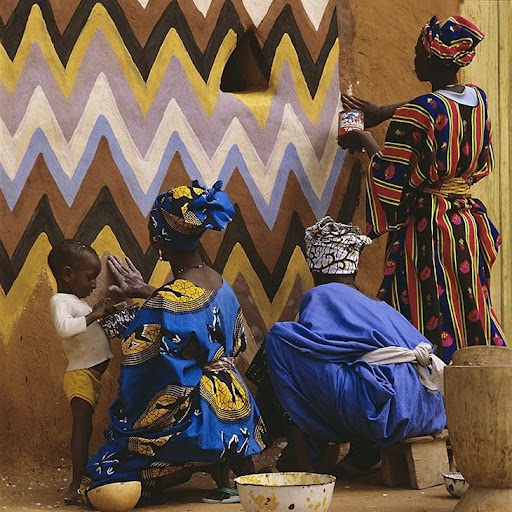
The fashion industry, like any other industry, needs a structure around it to exist and evolve. But the structure looks different across industries, yet it keeps the same order: sustainability, investment, and improvement. I have noticed that, across the globe, when African fashion is discussed, it is mostly presented as entertainment rather than an industry that is financed, sustained, and structured. The fashion industry in Africa has always been portrayed as a contribution to our culture, but never as an economic structure; it is almost as if fashion were simply a symbol of heritage, rather than an industry that can be seen or approached as a structure. Fashion in Africa is not only about some creative tailors designing beautiful looks, but it is about the entire network that allows fashion to exist and evolve- designers, artisans, textile makers, manufacturers, photographers, stylists, casting, media, fashion school, show producers, cultural institutions, and economic realities. The industry cannot function without all these different fields that, together, sustain and nourish the fashion industry; however, this structure cannot be achieved through creativity or craftsmanship, and this is where the subject becomes serious, because yes, craftsmanship is the main point of African fashion recognition. Still, crafts alone cannot sustain an industry that requires hands, time, materials, production, and events, where costs can range from 40.000$ to 100.000$ for smaller independent fashion shows to exceed millions for big luxury brands. And there is sometimes this myth around African fashion, where people believe it is supposed to be affordable yet uses organic fabrics, and that it is supposed to reflect the creativity of our nation, yet ignores the hands behind the crafts, who are underpaid or sometimes never paid at all. Everything I said so far is leading us to three questions concerning the fashion industry in Africa:
- Who sustains the fashion industry in Africa?
- What system nurtures its growth and development?
- Understanding the structural gaps that need to be worked on
These questions will serve as the foundation for understanding the system that shapes the African fashion industry.
Who sustains the fashion industry in Africa?
Fashion makers
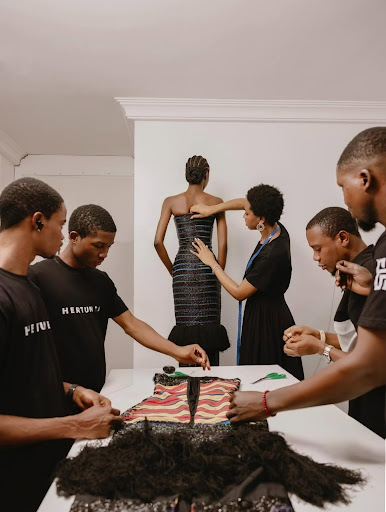
I know, said like this it sounds a little too general, but if we’re being sincere with ourselves, the number one sustainer of the fashion industry in Africa is fashion makers. Independent designers with a tight budget, minimum main d’oeuvre, inconsistent orders, and a very weak marketing strategy because of the funds limit. And we have those in the diaspora who are independent as well, using their personal money to fund their brands, probably producing outside the continent for reliability and manufacturing reasons, and exploring craftsmanship and creativity to the fullest. Both categories of fashion makers shape the industry with their creativity and craftsmanship; however, sustainability cannot persist in the long run because craftsmanship involves hands, fabrics, and techniques that require funds, making it hard for creators to remain financially viable in the fashion industry. After all, the craftsmanship and creativity of African brands and designers can boost our global recognition and shape our narrative while building identity, but cannot sustain the foundation of fashion as a business first. Without its business side, fashion cannot operate as a structure, and without a structure, fashion in Africa cannot exist for long.
If you are like me and you always wondered why many African brands close their doors before they launch, it is because craftsmanship alone cannot feed the hands behind the work, cannot contribute to the economic realities of fashion, and crafts alone won’t pay bills nor provide a stable manufacturing system.
Events sponsorship
Another contributor to the sustainability in the fashion industry in Africa is sponsorships. Active in fashion events such as fashion weeks, organized exhibitions, and educational activities involving the fashion industry, I’m thinking of events such as Woven thread, Kolwezi Fashion Week, Dakar Fashion Week, or the International Conference on Fashion Design and Material Innovation (ICFDMI), which takes place in Nigeria. Those sponsored events are among the biggest contributors to the fashion industry in Africa, not only as opportunities for visibility but also as a financial structure. The problem often lies in the length and depth of the sponsorship, with short-term sponsorship that ends as soon as the event ends, rather than a lifelong partnership in which both parties work as allies. Sponsorship that barely stays long enough to witness a brand’s growth and vision. Even sponsorship looks like quick marketing rather than an established system fostering a brand’s growth and challenges.
Organization
Mostly, they support conversations, education, and the development of fashion makers and their journeys in the fashion industry, through conferences, panel hosting, and craft practices. Names such as African Fashion Foundation (AFF), based in Ghana, the Kenyan fashion council, Afro fashion association, or the Cape Town fashion council, all these organizations are not only investing in sustaining the fashion industry but offering resources through programs, prize competitions, and events that foster dialogue around fashion structurally and economically.
What system nurtures the industry’s growth and development?
It is no secret that the fashion industry operates on a scale beyond sustainability, evolving alongside human evolution. For example, we actually live in a digitalized world, and the fashion industry didn’t reject that change but embraced it, incorporating it into the fashion system as part of the infrastructure.
Mediators and fashion events
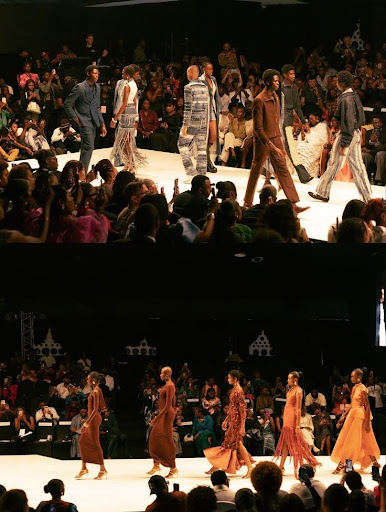
By mediator i am referring to the voices that shapes culture: writers, artists, diaspora community, public figures who wear, represent and put front african fashion not as a cultural representation but as a norm, reminding the world that African fashion is not an new comers in the fashion industry but a familiar face that simply couldn’t afford the price of staying active and relevant in the fashion field. Those mediators are those who actively use their voice, presence, and notoriety to bring light to African creators, brands, and fashion infrastructure, whether through buying from African designers and labels, not just marketing, but investing in the business reality of African brands. Then we have fashion weeks, exhibitions, panels, and cultural events such as AMVCA that help attract global recognition and position African brands on a bigger platform (taking them from local shops to big stages and showing that our fashion belongs anywhere). Fashion week doesn’t only highlight creatives’ work; it also serves as a platform that communicates the state of the fashion industry as a whole, exposes issues, reveals crafts, and shapes the narrative the world remembers. Mediators and fashion events are the two pillars of a system that nurtures the fashion industry. While mediators craft narratives, fashion events signal the state of fashion, showcasing concepts and crafts as currency.
But another problem: even fashion events need to be financed to exist as the main hub for fashion production and a showcase stage. The concept and crafts are great, but funds are what will bring them to life.
What are the existing structural gaps?
So many aspects of the fashion industry in Africa need improvement, including funding, manufacturing, education, retail, digital infrastructure, marketing, and professionalism. I am one of those people who proudly says “ In Africa we don’t need much because we use what we have to create” and then i forget that they are hands that tirelessly work behind the scene to be able to feed their family, I forget that behind an independent brand exist a human that try as much as he can to be able to sustain a brand that sales cannot be predictable, i forget that behind beautifully crafted garments lies the cost of production and behind a brand that close its door there is a financial failure because fashion is never entertainment, it is a business, an eco system interconnected of craftsmanship, creative labor, infrastructure, cultural platforms, business methods &networks, and storytelling that collectively make the industry possible.
Let’s think of it this way: Africa is the most creative continent, yet struggles to turn that creativity from mere entertainment into a business foundation. We are the mecca of creativity, yet we struggle to market ourselves in the creative space due to limited resources and access. We have heritage and crafts, yet we struggle to achieve global recognition. All this should reveal the gap between the fashion industry and the system holding it backstage.
I was a little bit repulsive before writing this article because I was trying to avoid being misunderstood. It is so great and feels good to praise African fashion creatively, but when the conversation turns to its business and structural sides, everyone leaves the table. We forget that making fashion requires money, time, hands, and structure way before creativity and crafts enter the picture. Without a methodical, strict system, the fashion industry will remain stagnant and decline.
So the number one system that needs improvement for the fashion industry in Africa to develop is infrastructure.
Infrastructure: The invisible machinery of fashion
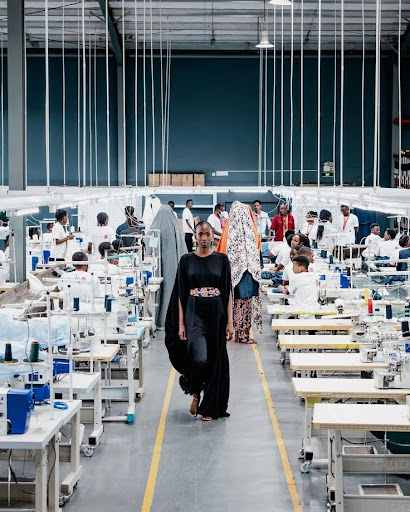
Fashion does not survive on creativity alone. Behind collections, runway, and campaign exists invisible machinery that allows the industry to function- manufacturers, textile mills, garment factories, logistics, fashion schools, etc. In many parts of Africa, this machinery remains fragmented or underdeveloped, forcing designers to operate within cycles of short-term production rather than sustainable growth, and sometimes requiring them to produce abroad for reliability and growth. A designer may possess vision, craft, and cultural language, yet still struggle to source materials locally, produce consistently, or scale beyond seasonal demand. For African fashion to evolve into a complete industry rather than isolated moments of brilliance, investment must move beyond applauding creativity and into building the systems that protect and sustain it, systems that will allow fashion makers and workforces to create, produce, distribute, and grow sustainably.
- Local textiles
Many African creators still rely on imported fabrics and materials, which increases cost and dependency. Strengthening local textile mills, investing in cotton, weaving, dyeing, and fabric innovation will retain value within the continent and create supply stability.
- Manufacturing and garment production
A strong industry needs factories, skilled artisans, and production houses that can handle both small and large orders. The biggest challenge in the fashion industry in Africa is manufacturing; without it, designers will remain trapped in limited, unpredictable production cycles and struggle to scale. The Infrastructure needed includes:
- Reliable transportation
- Warehousing
- Fabric sourcing networks
- Customs efficiency
- Shipping systems
- Distribution centers
Leading to avoiding delayed imports, High shipping costs, difficult export processes, and unpredictable timelines, all of which are known to increase costs.
- Fashion education and technical training
Fashion schools and training matter, but if we continue to rely solely on inherited skills, we will have talent but lack skilled people. Instead of sending students abroad to learn every technical skill, stronger regional institutions and partnerships could be developed across Africa to build local expertise and keep knowledge circulating within the continent through:
Technical fashion schools that train technicians, not just designers.
Fashion business education that teaches business literacy, not just learning how to build a brand, but a business with its structure.
Specialized careers programs because an industry becomes sustainable when many professions coexist.
- Retail and market access
Fashion needs places to live and be sold; a collection does not become an industry if it only appears on Instagram. Creators need structured access to consumers through department and concept stores, digital commerce platforms, fashion marketplaces, and regional retail networks. Many African creators struggle not because their work lacks quality but because distribution remains limited; a brand may have a strong visual identity, yet no reliable retail channel to scale sales. And that can be achieved through:
- In-person store experiences
- Digital commerce platforms
- Retail workers who understand customers’ needs
- Established marketing strategy
- Fashion media and documentation
Who tells the story of African fashion matters. Fashion history survives because someone recorded it. Media is not decoration- it is an infrastructure and system where fashion magazines, independent criticism, editorial platforms, films, visual storytelling, and museums build legitimacy and memory. In Africa, fashion is often driven by trend cycles rather than preserved as cultural and creative history. Without intentional preservation, strategic marketing, or critical documentation, fashion in Africa will be reduced to a cultural event.
- Policy and legal protection
An industry needs rules and protection for creators and their work. Many creators face design copying, weak trademark systems, limited understanding of copyright, and informal business structures. A set policy and legal protection will contribute to encouraging innovation because creators will feel safer investing in original work, backed up by a strong system that provides:
- Intellectual property protection
- Trademark registration
- Fashion Law support
- Industry regulations
- Government support policies
- Investment and financing
Talent needs capital.
One of fashion’s biggest realities is that creativity requires money. Many emerging creators rely on personal savings or unstable funding; without stable funding, however, brands often remain stuck at a survival level. A designer may have vision, but lack capital to produce inventory, hire teams, stage presentations, and scale operations. There is a need for:
- Grants
- Fashion incubators
- Investors
- Small business loans
- Production funding
- Sponsorship programs
For creators to be able to create and produce consistently and effectively.
- Professional Institution and industry networks
This is the system that organizes fashion.
Fashion grows faster when professionals work collectively. With contributions from fashion councils, trade organizations, industry associations, buyer networks, and mentorship systems, visibility will increase, standards will be established, and advocacy will be strengthened. These structures matter because an ecosystem cannot depend solely on individual brilliance; it needs organized support, as infrastructure teaches the industry how to exist and survive.
As a fashion writer, I wanted to explore the system behind African fashion because I noticed that we celebrate creativity, designers, and runway moments. However, the machinery that allows fashion to survive, scale, and function is still fragile in many places. I strongly believe that the conversation around African fashion should not stop at aesthetics, talent, creativity, praise, and moments of visibility. If this industry is to endure, the conversation must also turn toward preservation, infrastructure, and collective responsibility. The future of African fashion depends not only on the brilliance ot ifs designers but on the systems built around them. This article is ultimately a yearning – because without strong foundations and systems, creativity alone cannot carry an industry indefinitely. We may possess vision, craftsmanship, and cultural richness, but without institutions that nurture, protect, and invest in these gifts, our creative potential risks remaining fragile and temporary. African fashion deserves to exist within the global fashion conversation, not as an emerging afterthought, but as a respected and enduring force. Yet intentional recognition cannot be sustainable through talent alone while systems remain weak and structures undeveloped. Fashion education, manufacturing, retail, policy, media, and investment are the conditions that allow creativity to survive.
To build African fashion is therefore not simply to celebrate its beauty, but to safeguard its future. Because an industry survives when creativity meets structure, and talent is supported by systems designed to protect, sustain, and help it grow.
All images are sourced from Pinterest