This Week in Black Art and Culture (May 10 – 16, 2026)
Somewhere between celebration and mourning, return and reinvention, this week’s stories move through the fragile architecture of memory,… The post This Week in Black Art and Culture (May 10 – 16, 2026) appeared first on Sugarcane Magazine ™| Black Art Magazine.
 Black News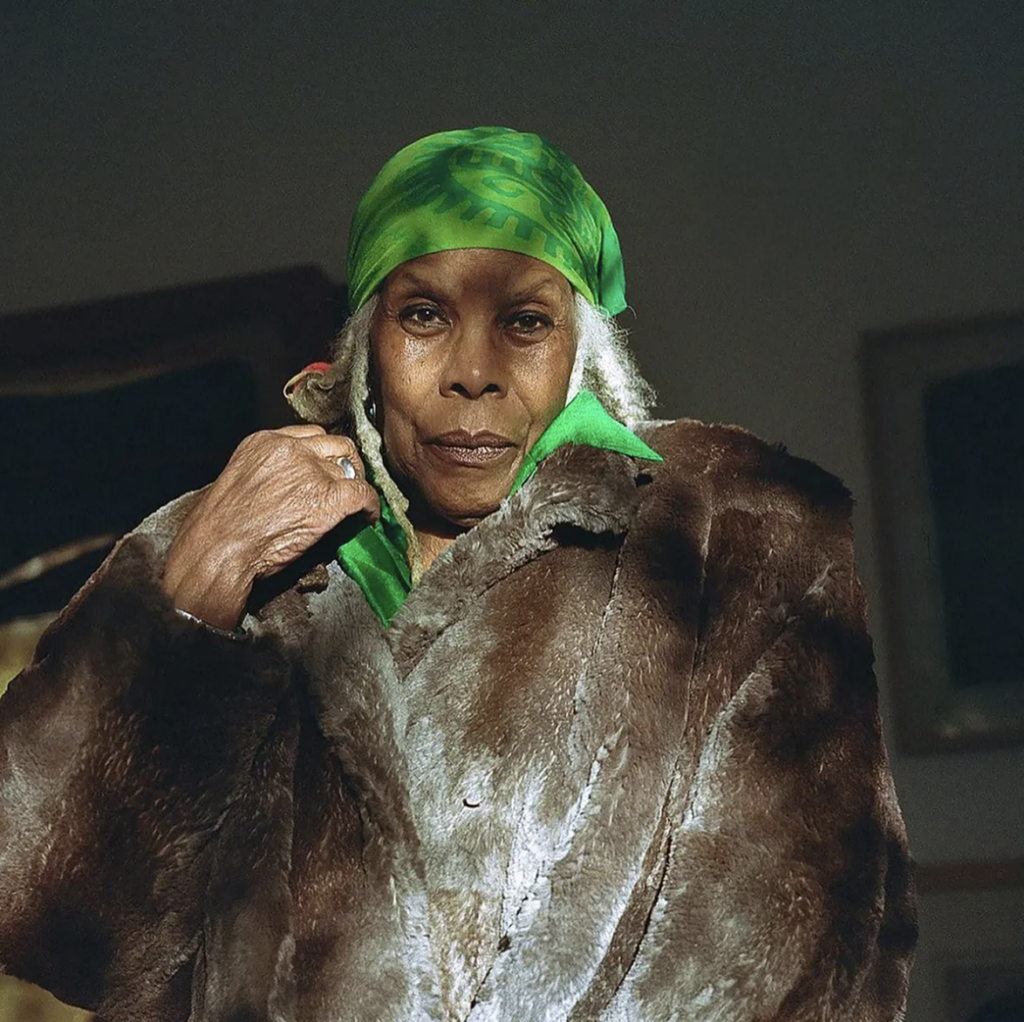
Somewhere between celebration and mourning, return and reinvention, this week’s stories move through the fragile architecture of memory, the things cultures hide to survive, the histories institutions once overlooked, the figures who shaped entire creative worlds from behind the scenes. From Venice to Brooklyn, São Paulo to Johannesburg, artists, curators, performers, and cultural workers continue the restless work of carrying histories forward, even as loss lingers heavily in the background.
1-54 New York Turns Its Focus to Afro-Brazilian Art
Afro-Brazilian art takes a major step into global focus this week as the 2026 edition of the 1-54 Contemporary African Art Fair in New York unveils its first-ever curated section dedicated entirely to Black Brazilian artists.
Titled 1-54 Presents: Brazil Beyond Brazil, the new platform brings together artists including Ana Claudia Almeida, Rebeca Carapiá, Jaime Lauriano, Luana Vitra, No Martins, and Lidia Lisbôa in a presentation shaped by Brazilian curator and scholar Igor Simões. Rather than offering a singular narrative of Afro-Brazilian identity, the exhibition foregrounds the complexity, contradictions, and layered histories embedded within Black Brazilian experience.
The section emerged following a 2025 research trip to São Paulo organized by 1-54 alongside ISE-DA, Latitude, and Cutuca Projetos Culturais. During the visit, collectors and cultural professionals met with Black Brazilian artists, curators, and institutions, sparking conversations around visibility, exclusion, and the persistent exoticization of Afro-Brazilian art within global art discourse.
For 1-54 founder Touria El Glaoui, the initiative signals a deliberate widening of the fair’s diasporic focus, following previous spotlights on Caribbean and African American practices. More significantly, it attempts to reposition Afro-Brazilian artists from the margins to the center of contemporary conversations around Black art history, migration, memory, and transatlantic identity.
Venice Biennale, In Minor Keys Breathes Through Ruins and Gardens
The 2026 Venice Biennale recently opened with In Minor Keys, the final exhibition conceived by the late Cameroonian-Swiss curator Koyo Kouoh before her death in 2025 — a sprawling and emotionally charged meditation on survival, ecology, spirituality, and collective memory.
Completed posthumously by her advisory team, the exhibition gathers 110 artists and collectives across the Giardini and Arsenale, including Otobong Nkanga, Theo Eshetu, Akinbode Akinbiyi, Seyni Awa Camara, and Walid Raad. Together, their works navigate environmental collapse, migration, colonial violence, and the emotional residue of fractured histories.
Yet In Minor Keys is not driven solely by catastrophe. True to Kouoh’s curatorial philosophy, the exhibition insists on storytelling, sound, ritual, and celebration as necessary strategies for endurance. Gardens, archives, songs, and communal gestures recur throughout the Biennale, transforming it into a space where tenderness and political urgency coexist.
The exhibition also highlights the importance of artist-led ecosystems, featuring institutions and collectives such as Guest Artists Space Foundation, Nairobi Contemporary Art Institute, and Ghana’s blaxTARLINES. In doing so, Kouoh extends her long-standing commitment to infrastructure that sustains artistic communities beyond the traditional centers of power.
Already one of the Biennale’s most discussed exhibitions, In Minor Keys stands as both a memorial and a manifesto, a final offering from a curator who consistently reimagined how contemporary art could hold grief, beauty, and resistance in the same breath.
Rare Early Basquiat Works Return to Brooklyn After HBCU Tour
More than four decades after Jean-Michel Basquiat transformed apartment walls, sweatshirts, and scraps into vessels of artistic rebellion, a deeply personal archive of his early life has returned to Brooklyn.
Opening this week at The Bishop Gallery, Our Friend, Jean revisits the years before Basquiat’s meteoric rise, assembling photographs, drawings, writings, and ephemera largely drawn from the archive of Alexis Adler — the artist’s former roommate and close companion between 1979 and 1980.
Originally staged in 2019, the exhibition later traveled to six Historically Black Colleges and Universities (HBCU), becoming the first major Basquiat-focused exhibition to tour HBCU campuses. Institutions including Howard University, Hampton University, and Clark Atlanta University hosted the show, reconnecting Basquiat’s story to the Black intellectual and cultural traditions that shaped him.
For Bishop Gallery founders Erwin John and Stevenson Dunn Jr., the exhibition is as much about authorship as it is about art history. By centering Black Brooklyn curators and audiences, the show attempts to reclaim Basquiat from the mythology that often isolates him from the communities and cultural conditions that formed him.
Now installed inside the Pfizer Building in Bedford-Stuyvesant, the exhibition also marks the soft launch of the Bishop Arts & Research Center (BARC), an initiative aimed at expanding access to overlooked Black archives and HBCU collections.
Rather than presenting Basquiat as an untouchable legend, Our Friend, Jean returns him to something more intimate: a young Black artist still becoming.
South Africa Mourns Cultural Pioneer Maria McCloy
South Africa’s creative industries are mourning the death of cultural pioneer Maria McCloy, who passed away at age 50 after a heart attack in Johannesburg.
For more than three decades, McCloy occupied a rare position within South African popular culture — simultaneously publicist, DJ, creative strategist, fashion figure, and connector of people. Though often behind the scenes, her influence shaped the trajectories of musicians, designers, television personalities, and young creatives navigating the country’s post-apartheid cultural landscape.
Tributes pouring in across social media describe her as a “culture architect” and “foundation stone” of modern South African entertainment. Artists and collaborators recalled her instinct for spotting talent early, opening doors and championing voices before they entered mainstream visibility.
Photographer Trevor Stuurman wrote, “A world without Maria will never feel the same,” while musician Tamara Day remembered her as “sweet, smart, down to earth” and deeply committed to local culture.
Beyond publicity and entertainment, McCloy helped define the visual language of contemporary South African cool — moving fluidly between music, fashion, and youth culture while remaining fiercely committed to local creativity. Her work as a designer and creative entrepreneur further cemented her reputation as one of Johannesburg’s most recognizable cultural figures.
In the flood of mourning, one portrait continues to emerge repeatedly: not simply of a media personality, but of someone who quietly built ecosystems for others to thrive.
Alice Ripoll and Hiltinho Fantástico Explore Concealment in “PUFF”
Brazilian choreographer Alice Ripoll and performer Hiltinho Fantástico are presenting PUFF, a new solo performance that explores concealment as a strategy for cultural survival.
Developed through their long-running collaboration within the SUAVE and REC dance companies, the work merges contemporary choreography with Brazilian urban dance forms, creating a physical language shaped by illusion, fragmentation, and disappearance.
Rather than treating concealment as erasure, PUFF approaches it as transmission — examining how marginalized cultures preserve knowledge, traditions, and coded histories by obscuring them from dominant systems of visibility. Through gesture, rhythm, and embodied transformation, the body itself becomes an archive, a disguise, and a messenger simultaneously.
The title evokes both breath and vanishing: a fleeting movement that appears momentarily before dissolving again. In this way, the performance reflects on cultural memory not as something fixed or fully visible, but as something constantly shifting, hidden, and carried through motion.
The performances take place on May 13 and 14 at Sadler’s Wells Theatre, London.
Mary Lovelace O’Neal, Unruly Master of Abstraction, Dies at 84
Mary Lovelace O’Neal, the fiercely independent American painter whose abstractions resisted both artistic categorization and political expectation, has died at the age of 84.
Across a career spanning more than six decades, Lovelace O’Neal consistently rejected the confines imposed upon Black artists, refusing demands that her work perform legible forms of racial representation. Instead, she pursued expansive, gestural abstraction — producing paintings dense with drips, eruptions, and layered textures that challenged both Minimalist orthodoxy and assumptions about Black art itself.
While studying at Columbia University in the 1960s, Lovelace O’Neal began creating her now-celebrated “lamp black” paintings, rubbing deep black pigment directly into canvases before layering them with pastel gestures. The works simultaneously engaged formal questions around abstraction and broader debates surrounding Blackness in American art.
Her practice later evolved dramatically through projects such as Whales Fucking (1979), inspired by witnessing migrating whales along the California coast — another example of her refusal to remain stylistically fixed.
Though long overlooked by major institutions, recognition came later in life through exhibitions such as the 2024 Whitney Biennial and a widely acclaimed 2020 New York survey. Yet Lovelace O’Neal viewed that delayed visibility as liberation rather than tragedy, allowing her to experiment freely without market expectation.
“I call myself a painter,” she once said. “Being unruly is my nature.”
Exhibitions to See
Venice Biennale | In Minor Keys | Giardini, Arsenale | May 9 – November 22, 2026 | Italy
Art Dubai | May 15 – 17, 2026 | Madinat Jumeirah, Dubai
Woven and Built in Tandem | Rele Gallery | May 9 – June 20, 2026 | Lagos
Our Friend Jean | The Bishop’s Gallery | May 16 | Brooklyn, New York
Nengi Omuku | We Were Like Those Who Dreamed | Pippy Houldsworth Gallery | May 1 – 30, 2026 | London
Compiled by Roli O’tsemaye
The post This Week in Black Art and Culture (May 10 – 16, 2026) appeared first on Sugarcane Magazine ™| Black Art Magazine.

:focal(0x0:3000x1610)/static.texastribune.org/media/files/0248ac9cd11ea600f928b365fe103f4a/0705 Hill Country Flood RB TT 43.jpg?#)