A nugget of hope in the inner city
Remington House, a once-notorious hijacked building in Johannesburg, has been transformed into fully let student housing, illustrating what is possible when intervention is followed through
 Black News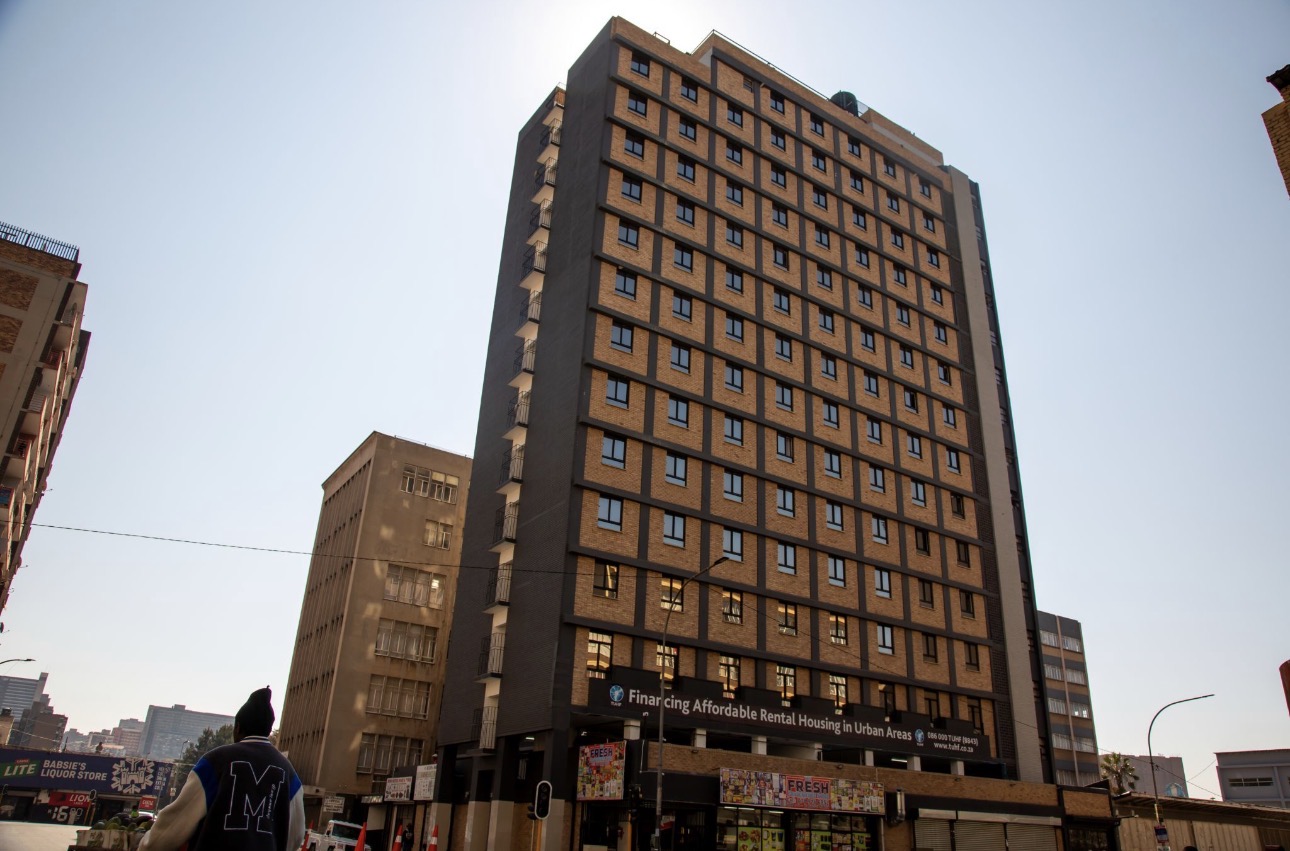

I tweeted something this week that stuck with a lot of people: “An abandoned, hijacked CBD building turned into a fully let student housing success story.”
And honestly, that sentence alone tells you everything you need to know about both the problem and the opportunity sitting in Johannesburg’s inner city.
If you’ve spent any time in the city centre, especially around Nugget Street, you’ll know this isn’t just one building but rather, it’s a pattern.
The Johannesburg CBD has hundreds of hijacked buildings, broken systems and colossal properties that have lost most of their value.
Perhaps when I shared the news about this little nugget of hope on Nugget Street, many wished we could see more of this.
Remington House is a recovery story. The building was hijacked as early as 2012, along with dozens of others. Over time, it became exactly what we’ve come to expect in these situations: overcrowded, unsafe and cut off from basic services like water and electricity.
At one point, it was described as one of the most notorious hijacked buildings in the CBD. No proper sanitation, illegal electricity connections and people living in some of the most unhygienic conditions you could find.
Even with all this, the building’s bones were great. Structurally, the building was sound. This is important to note because it means not all hijacked buildings are beyond saving. Many are mismanaged, neglected and captured by the wrong systems.
Fast forward to today and the same Remington house building is now a fully let student accommodation success story, with 133 bachelor flats, 14 parking bays, five ground-floor retail shops, a study centre, a gym, free laundry facilities, free uncapped wi-fi, a braai area and other shared amenities.
Rental starts from around R5 200 a month and it’s NSFAS-accredited, which means it’s aligned with real market demand.
Here’s where it gets better: the building is also green-certified. With measurable efficiencies to boast about, such as 28% energy savings, 22% water savings and 51% reduction in embodied carbon. Not only did the developer fix the building, they also factored in future-proofing.
But there is an uncomfortable middle for how we got here.
Before we celebrate too quickly, we need to be honest about what “hijacked” means in practice. In many of the buildings, the original system breaks down slowly when rent stops being paid, owners lose control, informal “management” takes over and tenants (often vulnerable) are exploited.
In Remington’s case, some leaseholders reportedly sublet units and collected rent without maintaining anything. While people were living in terrible conditions, someone was making money.
To turn a project like this around successfully was no easy task. It required legal processes (including the eviction and relocation of more than 500 occupants), funding (around R25 million), capable developers and managers and crucially, institutions willing to step in.
This is where TUHF, a commercial property finance company focused on urban regeneration, deserves real credit. It has built a track record of funding exactly these kinds of inner-city regeneration projects, where traditional banks often won’t go.
That’s the difference between theory and execution.
It reminds me of the Mashaba momentum and his impactful campaign a few years ago. During Herman Mashaba’s time as Joburg mayor, there was a visible push to reclaim hijacked buildings. We loved to see this.
Today, Mashaba certainly has unfinished business with his campaign. But here in 2026, it makes me wonder: Why did we stop doing this at scale? Buildings were being identified and raids were conducted. The city signalled that lawlessness wouldn’t be tolerated indefinitely.
Now, Mashaba is back on X, saying: “Bring me back to complete the unfinished business. I am ready to serve.” Alongside that, there’s renewed talk of reclaiming hundreds of hijacked and abandoned buildings through initiatives like Operation Fix Joburg.
Was momentum lost or just paused?
Remington shows what happens when intervention is followed through.
The sad reality of Nugget Street is that Remington House is one of many buildings on the street in distress. You can stand there and see the contrast: one functioning, fully let, managed building surrounded by others that are hijacked or deteriorating.
We know that it can be done. Now we need to ask why the hijacked building transformations aren’t happening faster.
I understand that there is urban policy, enforcement (or lack thereof), access to funding and whether cities can recover from decline.
Also, do we see inner cities as problems or opportunities?
The demand is clearly there. Students need housing, young people want to be close to opportunity and affordable units are scarce.
The demand over the next few years is going to be insane. Africa has the youngest population in the world — about 60% of Africa’s population is under the age of 25.
It also has the fastest-growing population, which means the number of young people keeps increasing. That’s a lot of students. Remington House didn’t create demand out of nowhere; it tapped into it.
Before you label the inner city as dead, perhaps we should label it as uneven. One building works, the one next door doesn’t.
One has structure, funding and management; the other chaos.
Perhaps the real opportunity isn’t building new cities on the outskirts; it’s fixing what we’ve built.
Do we have the political will, financial backing and execution capacity to do it again and again, building by building? Because if one “notorious” hijacked building can become a fully let success story … How many more are we writing off too early?