Black Women Built the Workforce. Why Are We Locked Out of It?
Black women are building businesses and earning degrees — but jobs aren’t following.When support exists, Black women hire and grow. When it disappears, so do opportunities. The post Black Women Built the Workforce. Why Are We Locked Out of It? appeared first on Word In Black.
 Black News

If you want to understand what’s working and what’s broken in America’s workforce, look at Black women.
We are living through rising costs, unstable childcare, attacks on workplace protections, and shifting federal priorities that are pulling resources away from the very people who need them most. And in the middle of all of that, more than 600,000 Black women are out of work in the United States.
LEARN MORE: The Reality of Being One of 600,000 Black Women Out of Work
At the same time, more Black women are earning college degrees, making them among the most educated groups in this country. Black women are also the fastest-growing group of entrepreneurs, with business ownership growing by more than 50% in recent years. And despite economic and systemic barriers, homeownership rates among Black women are rising.
System Aligment vs. Reality
So let’s be clear: the unemployment crisis among Black women is not about a lack of effort. It’s not about a lack of skill. It’s about a system that is not working for us.
In a functioning labor system that centered Black women, education would be connected to real jobs. Entrepreneurs would be supported, enabling them to grow and hire. Unemployment systems would be fast, clear, and accessible. And childcare would be treated like the workforce infrastructure it is.
Right now, those systems are not aligned with the reality of Black women. Under the Trump administration, Black women are being pushed out of the workforce. Let’s not pretend otherwise.
We are watching investments shift away from programs that supported Black women entrepreneurs. We are seeing continued attacks on diversity, equity, and inclusion initiatives that opened doors in hiring, contracting, and access to capital.
The unemployment crisis among Black women is not about a lack of effort. It’s not about a lack of skill. It’s about a system that is not working for us.
Nikki Porcher
We are witnessing workforce priorities advance without accounting for the people most impacted by those decisions.
That is not a coincidence. That is a set of policy decisions playing out in real time. And it is exactly why leadership in labor matters.
When Systems Fail
I know this because I have spent the last decade doing the work where these systems fall short.
Through my work with Buy From A Black Woman, I have helped more than 700 entrepreneurs generate over $6.12 million in revenue. I have worked directly with women who are building businesses, creating jobs, and supporting families while navigating barriers that should not exist.
I have built partnerships with companies such as American Express, PayPal, and Goldman Sachs to put real resources in the hands of people doing the work.
I don’t just talk about the workforce. I have built within it.
And what I’ve seen is simple. When support shows up, Black women don’t just stabilize. We grow. We hire. We reinvest. We build ecosystems around us.
But when systems fail, the impact spreads just as fast.
Leadership and Lived Experiences
So if we are serious about rebuilding the workforce, we need to be just as clear about what needs to change.
Workforce development has to start with people, not just employers. If it doesn’t reflect real lives, real schedules, and real barriers, it will continue to miss the people it is supposed to serve.
Small business support has to go beyond getting started. If we want job creation, we have to invest in growth, in hiring, and in sustainability for the businesses already rooted in our communities.
And labor leadership has to come from lived experience. We need leaders who understand what it means to navigate delayed payments, unstable systems, and the reality that childcare can determine whether someone keeps a job or loses it.
Because when you build a labor system that works for Black women, you build one that works for everyone.
‘We Need Action’
Right now, we are at a moment where we can keep talking about the problem or we can start building solutions.
That is why the Word In Black virtual event on Black women workforce matters. Thousands of Black women are out of work. So what now?
This is not just another conversation. It is a working session. Entrepreneurs, organizers, and community members coming together to share resources, identify what is missing, and build something people can actually use.
Because awareness is not enough. We need action.
RELATED: Black Women Deserve More Than Flowers — We Deserve Power
Black women have always been the blueprint for America’s workforce. The question now is whether we are finally going to build a labor system that reflects that.
Join the conversation. Bring your ideas. Be part of the solution.
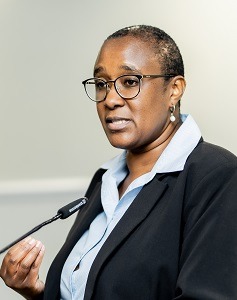
Nikki Porcher is a Georgia-based workforce and small business advocate with experience in education and community development. She is a candidate for Georgia Labor Commissioner.
The post Black Women Built the Workforce. Why Are We Locked Out of It? appeared first on Word In Black.