New Government Targets 9.62 percent Tax-to-GDP Ratio amid Structural Economic Reforms
Ethiopia’s newly sworn-in government plans to raise the country’s tax-to-GDP ratio to 9.62 percent in the 2026/27 fiscal year, placing domestic revenue mobilization at the center of its economic agenda as PM Abiy Ahmed (PhD) begins a new term. President Taye Atske Selassie announced the target on Tuesday while opening a joint session of the […]
 Black News
Ethiopia’s newly sworn-in government plans to raise the country’s tax-to-GDP ratio to 9.62 percent in the 2026/27 fiscal year, placing domestic revenue mobilization at the center of its economic agenda as PM Abiy Ahmed (PhD) begins a new term.
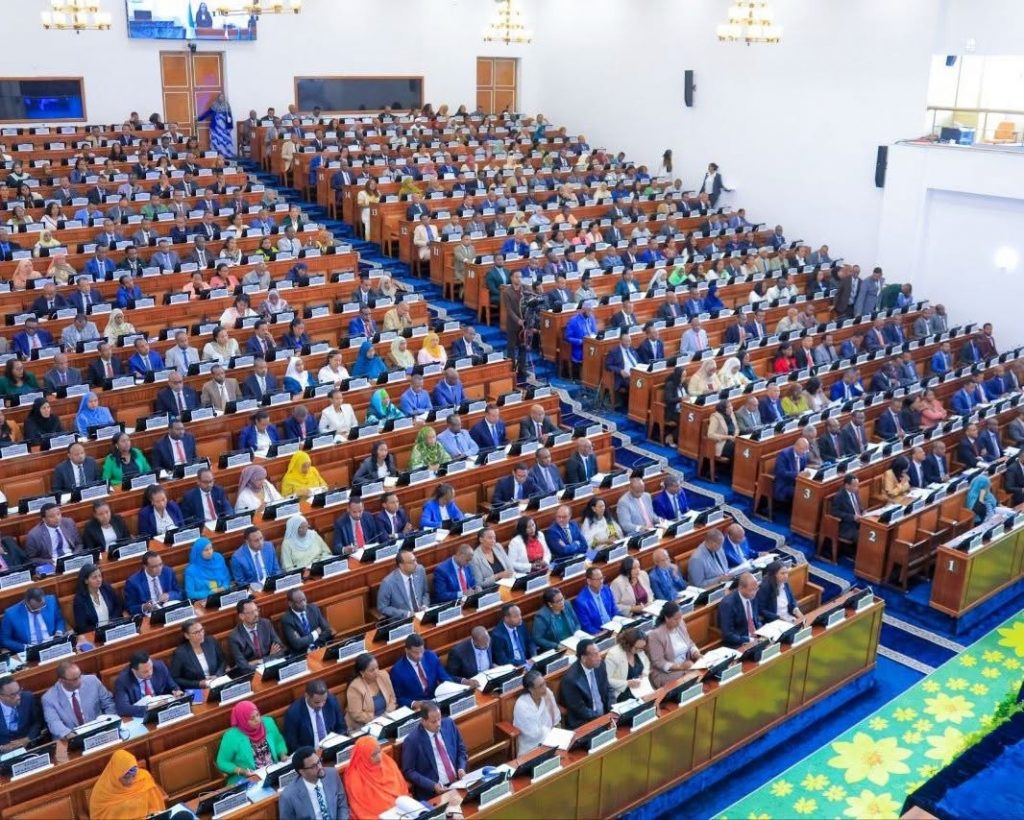
President Taye Atske Selassie announced the target on Tuesday while opening a joint session of the seventh House of Peoples’ Representatives (HPR) and the House of Federation (HoF), where he outlined the administration’s priority roadmap. The new administration takes office amid compounding pressures, including persistent economic challenges, renewed domestic insecurity, and delicate diplomatic relations across the Horn of Africa. PM Abiy’s Prosperity Party retained power following a general election in June.
To reduce reliance on external financing, the administration aims to overhaul domestic revenue collection and modernize fiscal governance. President Taye told lawmakers that the government will modernize the tax system while ensuring the proper management of debt, costs, and revenue.
The 9.62 percent target builds on recent revenue momentum. The Ministry of Revenue collected a record ETB1.518 trillion in the 2025/26 fiscal year, representing a 68 percent jump of ETB618.39 billion over the previous year. This collection surge lifted the estimated tax-to-GDP ratio, recovering from a historic low of 6.2 percent in 2023/24 and 7.8 percent in 2024/25.
Despite recent gains, Ethiopia’s tax collection remains well below historical levels and regional benchmarks. After peaking at 12.7 percent in 2014/15, the tax-to-GDP ratio experienced one of the sharpest relative declines globally over the following decade. Economists and Ministry of Finance assessments attribute this drop to a combination of rapid nominal GDP growth outstripping tax revenues and deeper structural losses. High inflation expanded the economic base faster than annual tax collections could keep pace, while broad exemptions, unindexed tax brackets, and trade disruptions eroded Value-Added Tax and import customs receipts. Furthermore, agriculture and a large urban informal sector remain largely uncaptured by the formal tax framework.
To reverse the slump, the government has introduced aggressive enforcement measures, expanded excise taxes, tighter Value-Added Tax tracking, and digital transaction monitoring. However, business leaders and economic experts caution that rapid tax adjustments during high-inflation periods threaten to squeeze corporate margins, stall private sector investment, and elevate living costs as indirect taxes are passed directly to consumers.
In the long run, Ethiopia aims to bring its fiscal performance in line with Sub-Saharan African standards, where the median tax-to-GDP ratio sits between 12 percent and 15 percent, and peers like Kenya and Rwanda operate near 14 percent to 16 percent. The IMF considers 15 percent the benchmark threshold for sustainable development financing. Under its National Medium-Term Revenue Strategy, Ethiopia eventually targets a tax-to-GDP ratio of 15 percent to 17 percent, primarily by broadening the tax base rather than escalating rates on existing taxpayers.
Alongside fiscal reform, President Taye set a single-digit inflation target for the fiscal year, addressing price pressures compounded by global supply chain disruptions. The government also outlined major social and infrastructure benchmarks, aiming to expand electricity access by 65 percent, increase health insurance coverage to 85 percent, raise total forest cover to 26 percent, and expand the national student feeding program by 70 percent.
On foreign policy and stability, President Taye emphasized that internal peace remains paramount to national development. Internationally, he signaled a transition toward a more proactive regional stance, stating that Ethiopia will focus on expanding alliances, engaging adversaries, and promoting regional peace and economic relations as it evolves from a recipient of external influence into an active regional partner. As PM Abiy’s administration begins its mandate, it faces the delicate balancing act of enforcing ambitious revenue targets and expanding public services without stifling private enterprise or overheating household expenses.