Telling Our City’s Story: What It Means to Be Poet Laureate for the City of Birmingham
By Javacia Harris Bowser | The Birmingham Times Create Birmingham, in partnership with the City of Birmingham, recently announced that its team is now accepting applications for the 2027–28 City of Birmingham Poet Laureate. But if you don’t linger in literary circles, or perhaps even if you do, you may be wondering: what is a […]
 Black News


By Javacia Harris Bowser | The Birmingham Times
Create Birmingham, in partnership with the City of Birmingham, recently announced that its team is now accepting applications for the 2027–28 City of Birmingham Poet Laureate.
But if you don’t linger in literary circles, or perhaps even if you do, you may be wondering: what is a poet laureate?
Simply put, poet laureates serve as ambassadors for poetry for whatever geographic area they’ve been selected to represent. The United States poet laureate program, modeled after a similar program in the United Kingdom, began in 1937 as the “Consultant in Poetry to the Library of Congress” before Congress officially changed the title to “Poet Laureate Consultant in Poetry” in 1985.

Alabama’s poet laureate program began in 1930. It made national and international news when Birmingham native Ashley M. Jones was named poet laureate in 2021 for the 2022-26 term and became the youngest person and first African American appointed to the position in the program’s nearly 100-year existence.
In 2023, Birmingham was buzzing with another first in the world of poetry. That’s the year Create Birmingham and the City of Birmingham, with funding from the Alabama State Council on the Arts, established a poet laureate program specifically for the city.
“I think it is important for the city to have its own poet laureate program because poets tell the story of who we are as a city,” said Viola Ratcliffe, Senior Director of Creative Enterprises at Create Birmingham. “Birmingham has such a rich and complex history, but we’re also a city that is constantly evolving. A poet laureate can help us reflect on where we’ve been, who we are now, and where we hope to go.”
Ratcliffe added that the program also signals that Birmingham values the arts.
“The poet laureate initiative is also an investment in our local creative community,” she said. “Birmingham has an incredible community of writers and poets, and their voices and work are vital to the culture of our city.”

Birmingham’s First Poet Laureate
The City of Birmingham Poet Laureate serves as an ambassador for poetry, creativity, and civic engagement, using the literary arts to inspire dialogue, celebrate Birmingham’s diverse communities, and foster meaningful connections across the city. Over the course of a two-year term, the Poet Laureate represents Birmingham at public events, leads educational programming, creates original works for the City, and expands access to poetry for residents of all ages.
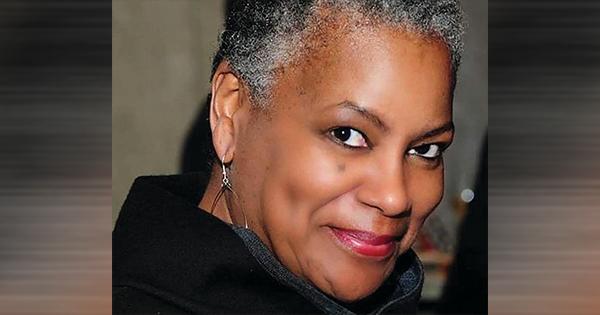
In December of 2023, Salaam Green made local and literary history as she became the inaugural poet laureate for the City of Birmingham. During her 2024-26 tenure, Green has led poetry readings and workshops throughout Birmingham and beyond. She created the Summer Poet Fellow Program, which allowed selected poets to be paid to facilitate summer poetry programming at local libraries. In October, Green will launch Lyrics for Life, an anthology of poetry by Birmingham youth and adults. This project was made possible in part through the prestigious Poet Laureate Fellowship by the Academy of American Poets, which Green was awarded in 2025.
During her tenure, Green has done all this and more to show that poetry can be found in nearly everything and is for everyone.
“If I accomplished anything during my tenure, I hope it was helping people understand that poetry is not just something we read or is meant for a chosen few,” she said. “Poetry is something we live, and poets are integral parts of leading the civic engagement process. It can help us remember, grieve, celebrate, tell the truth, and chart the path forward. I believe poetry and poets help a city imagine its own liberation.”
Being the city’s first poet laureate, however, meant Green didn’t fully know what was waiting for her on the other side of the appointment.
“I didn’t know what to expect as the inaugural Poet Laureate, including the press and community attention it would receive,” she said. And then there was the challenge of grasping what it means to be the voice of Birmingham.
“There is an expectation that you will represent the city, but Birmingham is not one story,” she said. “It is many stories.”
Green wanted the poetry she created for the city to honor Birmingham’s complexities.
“I didn’t want my poetry to simply celebrate Birmingham,” she said. “I wanted it to tell the truth about Birmingham while still loving the city deeply. That required courage.”
Being a civic poet, Green said, does not mean only being a spokesperson for the city.
“It also means making room for voices that haven’t always been heard,” Green said. “I learned that poetry can hold love and truth at the same time and that my responsibility as a poet is not to make Birmingham look perfect or make perfect poems, but to help everyone imagine what Birmingham can become for all.”

Birmingham’s Next Poet Laureate
Submissions for the 2027–28 City of Birmingham Poet Laureate will close at 11:59 p.m. CST on Wednesday, September 30.
Applicants must:
- Be at least 18 years of age.
- Reside within the City of Birmingham at the time of application and for the duration of the appointment.
- Demonstrate a history of publishing and publicly presenting original poetry.
- Have the availability to participate in public programs and community engagement throughout the two-year term.
A distinguished community panel will review applications and submit recommendations to the Mayor of the City of Birmingham for final appointment.
“While Create Birmingham won’t select the next Poet Laureate, based on my experience with the program, I believe the next laureate should be someone who cares deeply about Birmingham and sees poetry as a powerful way to foster connection, engagement, and healing,” Ratcliffe said. “They should also be someone who is willing to meet people where they are and create opportunities for Birmingham residents to see their own stories and experiences reflected through poetry.”
To any poets considering applying, Green said, “Go for it! Don’t wait until you feel like you have written enough poems or accomplished enough to deserve the title. If you love your city, if you are willing to listen to its people, and if you believe poetry has something to offer the public, then apply.”
That said, she added that if you’re more concerned with clout than community, you might want to rethink trying to be a poet laureate.
“Understand that being Poet Laureate is not just about having your name on a proclamation or reading your poem at an event. It is service,” she said. “You are being asked to listen, to witness, to represent, and to help create space for other people’s voices and experiences. It’s not about the stage or performing. It’s about being able to step back from your own ideas and ways of expressing yourself and being open to others and sharing rather than always performing.”
But she doesn’t believe the person who steps into the role next should hide who they are in the process.
“Bring your whole self to the work,” she said. “Bring your history. Bring your questions. Bring your influence. Bring your particular way of seeing the world. Bring your power and your fear. Be prepared to be vulnerable and not always liked or understood. And do not be afraid to let the city change you and your poetry perhaps.”

The Courage to Write Now
On September 13 at Vulcan Park and Museum, Green will deliver the keynote address at the 2026 annual conference for the Alabama Writers’ Cooperative, the organization that selects the state poet laureate. Green’s talk is titled “The Courage to Write Now.” Green believes that in times of uncertainty, division, and rapid change, writers are called to do more than tell stories; they are called to bear witness, preserve truth, inspire hope, and imagine new possibilities. Her talk, she said, will affirm the idea that words have the power to illuminate, connect, and inspire change, especially in tumultuous times.
It’s in these times that an initiative like Birmingham’s poet laureate program becomes crucial, Green said.
“We are living in a time when there is so much noise and so little listening. Learning to effectively listen and witness is really the work that served me best in this position,” Green said. “Cities need people who are willing to pay attention to the stories underneath the headlines, to the citizens who reside in the neighborhoods, to the young people imagining something different, and to the communities whose stories have been overlooked. And to the artists and creatives who are already transforming in non-traditional ways.”
Poetry gives people the words they need to tackle tough topics.
“I believe poetry gives us language for the things that are difficult to say in ordinary circles,” Green said. “And in these times, we need language that does more than describe the world. We need language that helps us imagine the world we believe and hope to live in.”
The poet laureate program is another way to cultivate the imagination.
“Our imagination matters, and stories are shaped from such imaginings,” Green said. “This program builds upon the imagination of something that was once a dream and now has wings.”
Green believes that through poetry, a city can rediscover its identity.
“A poet can help a city slow down long enough to remember who it is and why we are here,” she said. And sometimes before a city can become something different, somebody has to have the courage to imagine it first.”
To learn more about Birmingham’s poet laureate program, visit birminghampoetlaureate.org or contact hello@createbirmingham.org.