When phenomenon last hit Tanzania
DAR ES SALAAM: THE rain did not stop. It fell through the day, drummed through the night and turned ordinary roads into rivers that swallowed bridges, cut railway lines and cut off communities from food and essential services. In Musoma, Standard Six pupil Fredrick Pundo watched classmates disappear from school as flooded paths became too … The post When phenomenon last hit Tanzania appeared first on Daily News.
 Black News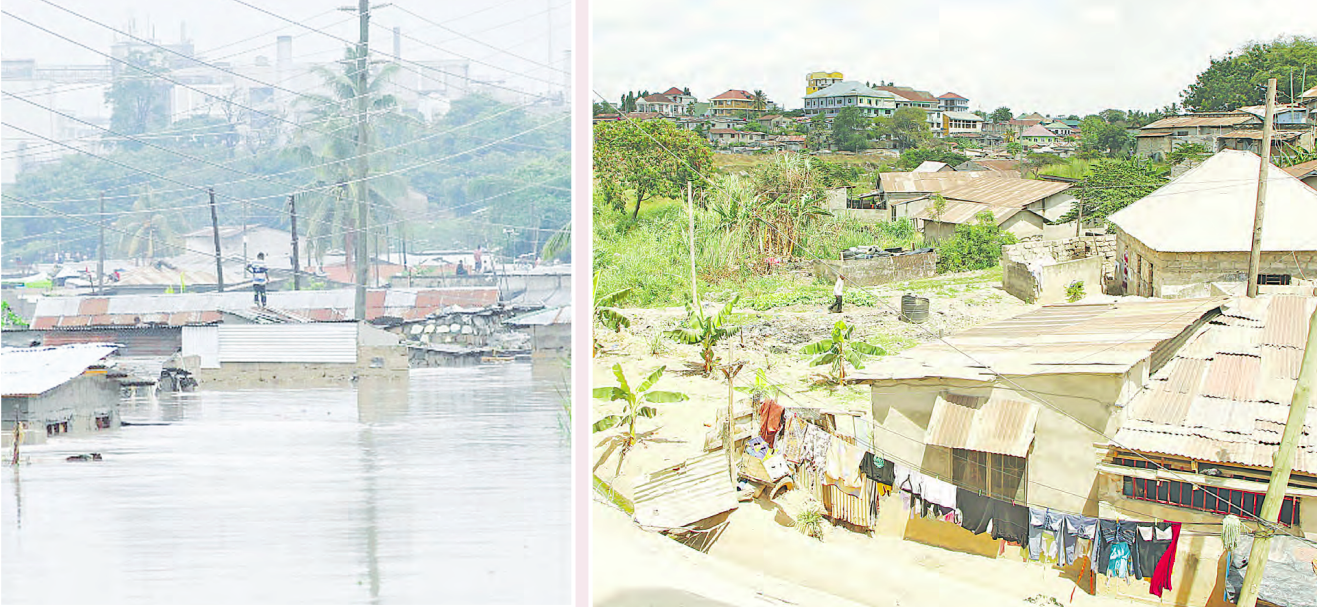

DAR ES SALAAM: THE rain did not stop. It fell through the day, drummed through the night and turned ordinary roads into rivers that swallowed bridges, cut railway lines and cut off communities from food and essential services.
In Musoma, Standard Six pupil Fredrick Pundo watched classmates disappear from school as flooded paths became too dangerous to cross.
In Shinyanga, farmer Dotto Tumbo saw her family’s rice harvest triple before cassava rotted in soaked fields because there was nowhere dry enough to save it.
Nearly three decades later, those memories still define what many Tanzanians mean when they talk about El Niño.
The 1997/98 episode remains the benchmark disaster against which meteorologists, climate researchers and emergency planners measure subsequent extreme rainfall events.
As the country prepares for another potentially powerful El Niño season, that extraordinary period offers more than historical memory.
It provides a record of how prolonged rainfall reshaped communities, agriculture, public services and the economy while exposing weaknesses that later influenced the country’s disaster preparedness systems.
Climate researcher Mr Ngogo Mang’enyi of the Saint Augustine University of Tanzania (SAUT) says the 1997/98 event continues to dominate scientific discussions because of its scale and consequences.
“National and regional planners still use the 1997/98 El Niño as the benchmark catastrophe against which they judge subsequent disasters,” he said.
The science behind the disaster began thousands of kilometres away in the Pacific Ocean, where sea-surface temperatures rose about 2.4 degrees Celsius above normal.
That warming altered atmospheric circulation across the tropics and eventually helped produce unusually heavy rainfall across East Africa. In Tanzania, the consequences became visible from October 1997 as rainfall intensified far beyond what communities had expected.
Historical Daily News records published in January 1998 reveal how extraordinary the season became. Meteorological stations in Pemba, Tanga and Zanzibar recorded rainfall exceeding 600 per cent of normal October levels.
Dar es Salaam received more than 400 per cent of normal rainfall, while the Lake Victoria Basin and the northeastern highlands recorded more than 150 per cent of normal rainfall.
Even Shinyanga, better known for dry weather than flooding, recorded 209.1 millimetres against a long-term average of only 33.7 millimetres.
The newspaper reported that several stations had recorded the highest monthly rainfall totals and highest 24- hour rainfall since their establishment.
Those figures confirmed that the country had entered unfamiliar territory. For many Tanzanians, however, the disaster is remembered less through meteorological records than through the way ordinary life slowly came apart.
Families who initially welcomed the rain as a blessing for agriculture soon realised they were confronting something entirely different.
In Shinyanga Rural, Ms Dotto Tumbo remembers experiencing the season as a 28-year-old farmer. At first, the rains appeared to promise prosperity.
Her family’s rice harvest rose from about 30 sacks during the 1995/96 season to around 90 sacks during the El Niño period, encouraging many farmers to expand cultivation because water was suddenly abundant.
The celebration did not last long. Farmers had not prepared seedling nurseries because they had not expected such persistent rainfall, and harvesting became increasingly difficult because there was nowhere dry enough to spread crops.
Cassava and sweet potatoes began rotting in saturated soil, while houses built in low-lying areas flooded repeatedly as runoff swept through residential settlements. “It was both a blessing and a loss,” she said.
The unusual season even produced scenes that residents still recall with disbelief. Fish and sardines found their way into flooded rice fields and drainage channels, allowing people to catch them on their way to the farms.
Those moments became brief flashes of abundance inside a much larger crisis. As rivers burst their banks, transport quickly became one of the country’s biggest casualties.
According to Mr Mang’enyi, some of the worst-hit areas included lowlying parts of Mara, Arusha, Kilimanjaro, Tanga and Shinyanga, together with heavy clay-soil areas of southern Mwanza.
Roads, bridges and railway lines suffered extensive damage, leaving communities increasingly isolated as the emergency deepened. The collapse of transport links affected far more than travel.
Food deliveries slowed, fuel became harder to move, medical supplies took longer to reach affected areas and markets struggled to function as producers found themselves cut off from buyers.
Communities that depended on regular road connections suddenly discovered how quickly infrastructure failures could ripple through everyday life.
Daily News reports from January 1998 captured the scale of that disruption. In Korogwe District, Tanga Region, around 200 families were rendered homeless after flooding destroyed homes and damaged about 1,000 hectares of paddy.
Property losses were estimated at nearly 40 million shillings, while floodwaters descending from the Pare Mountains disrupted both road and railway communication between Tanga and neighbouring northern regions.
Further inland, Arusha experienced widespread transport paralysis as passenger buses and heavy trucks abandoned district and feeder roads after bridges and culverts were swept away.
The Arusha-Babati Highway became impassable after sections between Minjingu and Mdori were washed away, forcing travellers to abandon journeys that had suddenly become impossible.
Those disruptions carried significant economic consequences. Farmers could not deliver crops to markets, traders struggled to maintain supply chains and businesses experienced delayed deliveries that affected commercial activity well beyond the flooded districts.
Although comprehensive national loss estimates remained limited at the time, the widespread damage to transport infrastructure demonstrated how a weather disaster could quickly become an economic one.
For children like Fredrick Pundo, the disaster was experienced through the routines it interrupted.
“The rains were non-stop,” he recalled. He was in Standard Six in Musoma, Mara Region, when flooded paths became too dangerous for many pupils to use.
Schools struggled to continue operating because attendance fell as families prioritised safety over education.
Lessons became irregular, not because classrooms disappeared, but because reaching them became increasingly difficult. His strongest memory, however, was not about school.
“I remember one day at home when we had only porridge,” he said. That single memory captures one of the less visible consequences of infrastructure failure.
When roads break, food supplies slow down. When markets cannot function normally, households begin adjusting meals long before official statistics record shortages. Public health became another casualty of the floods.
According to Mr Mang’enyi, Tanzania reported 40,249 cholera cases and 2,231 deaths, compared with 1,464 cases and only 35 deaths the previous year.
He cited World Health Organisation records showing that flooding overwhelmed sanitation systems and contaminated water sources, creating conditions in which disease spread rapidly.
Many toilets built from soil bricks, timber and grass collapsed after prolonged rainfall, leaving communities increasingly vulnerable to diarrhoeal diseases.
Floodwaters entered wells and other drinking water sources, while damaged roads complicated efforts to deliver medicines and medical assistance to affected communities.
In Kagera, government officials feared cholera would spread further after deaths were reported on Bumbire Island in Muleba District. Authorities responded by sending medicines to affected communities while urging residents to boil drinking water and improve sanitation practices.
The intervention helped contain the immediate outbreak, but it also illustrated how floods can trigger secondary crises that continue long after rainfall begins to ease.
Standing water created another threat as mosquitoes multiplied across flooded areas, while prolonged wet conditions increased disease risks for livestock. Mr Mang’enyi said Tanzania experienced widespread Rift Valley Fever infections in livestock during conditions favourable to outbreaks.
Although the wider regional outbreak affected neighbouring Kenya and Somalia particularly severely, Tanzania also experienced increased livestock health risks associated with prolonged flooding. The experience demonstrated that floods rarely end when rain stops.
They create chains of consequences involving contaminated water, damaged sanitation, disrupted health services, livestock disease and food insecurity that can persist for weeks or months.
Agriculture reflected those contradictions more clearly than perhaps any other sector. Rice benefited from abundant water in some areas, yet other crops suffered heavily because of prolonged moisture.
Farmers struggled with delayed planting, flooded fields, waterlogged soils and severe post-harvest losses because continuous rainfall prevented crops from drying properly before storage. Pastoral communities faced different challenges.
Mr Mang’enyi said grazing became increasingly difficult as cattle became trapped in deep mud across heavily waterlogged land, limiting livestock movement while exposing animals to greater disease risks.
The season ultimately demonstrated that excessive rainfall can become almost as damaging as drought, especially for farming systems built around predictable seasonal patterns.
In Dar es Salaam, Hassan Juma still describes the 1997/98 El Niño as the strangest rainy season of his lifetime.
“Until today, there has been no rainy season like that in my life,” he said.
He remembers watching floodwaters carry an enormous baobab tree from one place to another, an image that has remained fixed in his memory ever since.
For him, the season is inseparable from the deaths and destruction that accompanied it. Looking back now, Mr Pundo believes one major difference separates that period from today.
“Public education regarding the prolonged rainy season was not provided effectively,” he said.
Many local authorities did not communicate clearly about what was happening, leaving many people to experience extraordinary rainfall without understanding the climate phenomenon behind it.
Communication channels themselves were far more limited than they are today.
Radio reached many households, television reached fewer and newspapers had relatively limited circulation outside urban centres, making weather information much slower to reach rural communities.
“The good thing today is that people have information,” he said.
The disaster unfolded during President Benjamin Mkapa’s administration, when authorities responded through emergency warnings, public health interventions and relief efforts aimed at restoring essential services.
Meteorological officials continued warning communities about ongoing flooding risks, health authorities distributed medicines to affected areas and local officials advised residents to boil drinking water while emergency teams worked to reopen damaged transport routes wherever possible.
Compared with today’s disaster management structures, coordination remained limited, but the experience exposed the importance of stronger links between weather forecasting, emergency response and local government.
Those lessons would later influence reforms that strengthened disaster preparedness over subsequent decades.
The disaster also extended far beyond Tanzania’s borders.
ALSO READ: Government maps response to El Niño threat
According to Mr Mang’enyi, flooding across several East African countries caused more than 6,000 deaths and left an estimated 10 million people requiring humanitarian assistance as crops were destroyed, stored food supplies were lost and regional transport networks suffered severe disruption. That wider crisis reinforced an uncomfortable reality.
When El Niño becomes exceptionally strong, borders matter far less than weather systems, and the consequences spread across economies, communities and public services simultaneously.
Nearly thirty years later, the 1997/98 El Niño continues to shape how Tanzania understands extreme rainfall. Before then, heavy rain was often treated simply as part of the season.
After 1997/98, it became a reminder that extraordinary weather can close schools, destroy livelihoods, contaminate water, isolate communities and disrupt the economy within weeks.
That is why today’s forecasts carry unusual weight. Tanzania Meteorological Authority Director General Dr Chang’a says the Pacific Ocean has already warmed beyond 2.2 degrees Celsius above normal and could exceed 3 degrees as the season develops.
He continues urging Tanzanians to use monthly, ten-day and daily forecasts when planning their activities, arguing that timely information provides communities with opportunities to prepare before the heaviest rains arrive.
For scientists, 1997/98 remains the benchmark. For planners, it remains the lesson that shaped modern preparedness.
For people like Dotto Tumbo, Fredrick Pundo and Hassan Juma, however, it remains something simpler: the season when the rain did not stop.
Their memories remind the country that El Niño is not remembered because of Pacific Ocean temperatures or rainfall percentages alone.
It is remembered because roads washed away, schools fell silent, markets emptied, diseases spread and families discovered how quickly an extraordinary rainy season could change ordinary lives.
The post When phenomenon last hit Tanzania appeared first on Daily News.