Benin’s New President Seeks New Outreach to Togo and Niger
On May 24, 2026, former Beninese finance minister under the outgoing president Patrice Talon, Romuald Wadagni, was sworn into office as the President of Benin. His election was hardly surprising; the last parliamentary elections held earlier this year saw the two parties aligned with his predecessor win every available seat, resulting in the main opposition party, Les Democrates, losing their parliamentary representation. Furthermore, due to Benin’s ballot access law requiring a certain number of endorsements to run for president, Les Democrates were unable to secure the required number of endorsements needed to field a candidate. As a result, Wadagni faced […] The post Benin’s New President Seeks New Outreach to Togo and Niger appeared first on African Arguments.
 Black News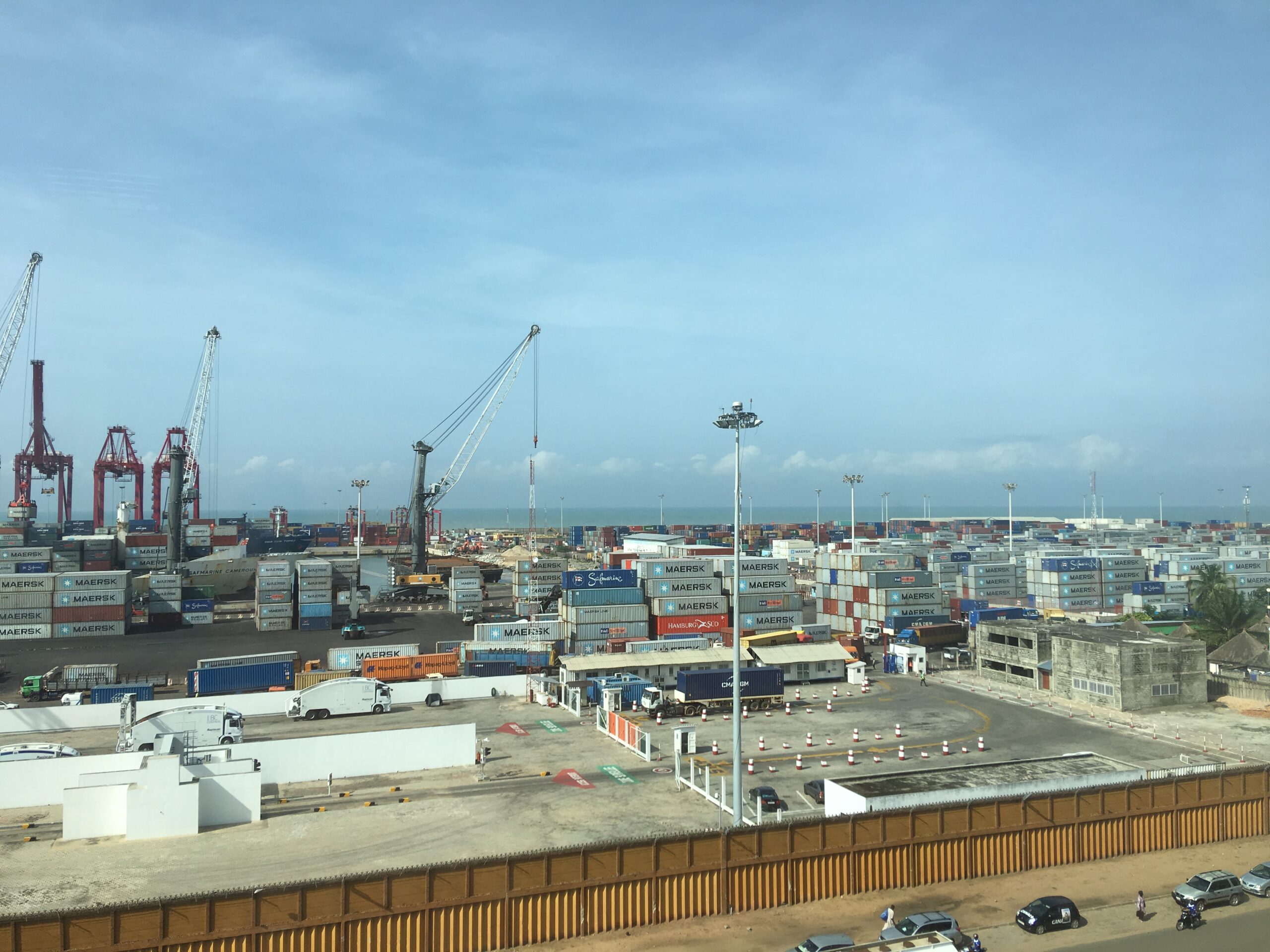
On May 24, 2026, former Beninese finance minister under the outgoing president Patrice Talon, Romuald Wadagni, was sworn into office as the President of Benin. His election was hardly surprising; the last parliamentary elections held earlier this year saw the two parties aligned with his predecessor win every available seat, resulting in the main opposition party, Les Democrates, losing their parliamentary representation. Furthermore, due to Benin’s ballot access law requiring a certain number of endorsements to run for president, Les Democrates were unable to secure the required number of endorsements needed to field a candidate. As a result, Wadagni faced only one opponent in the presidential election, Paul Hounkpe of the Cowry Forces for an Emerging Benin (FCBE), who won less that 6% of the vote against Wadagni.
Given this, Wadagni is likely pursuing his own source of legitimacy. After being sworn into office, Wadagni began a tour of West African countries, visiting Niger, Nigeria, Togo, Burkina Faso, and Côte d’Ivoire. Of these countries, Niger and Togo matter the most for Benin’s internal political economy. The question is whether a technocrat like Wadagni can navigate the relationships between Niger and Togo. All the while, Talon’s business networks, Talon’s fiscal centralisation reforms, and the country’s technocratic succession are the key drivers behind Wadagni’s outreach to both countries. This is especially the case given Niger’s 2025 exit from ECOWAS following the 2023 coup and Togo’s diplomatic flirting with the Alliance of Sahelian States, of which Niger is a member.
Porte autonome de Cotonou, Benin. Fawaz.tairou, CC BY-SA 4.0, via Wikimedia Commons
Talon’s political and business networks
Talon’s political and business networks likely underpin Wadagni’s early outreach to Togo and Niger. One of the likely reasons Talon chose Wadagni to succeed him as president was that, as finance minister, Wadagni had fewer opportunities to build his own independent support base, a feature common to technocratic politicians. This contrasts with Talon, who spent both political and economic capital over the course of decades in politics, initially backing the presidential bids of former president Thomas Boni Yayi in 2006 and 2011 and funding his own bids in 2016 and 2021.
Wadagni’s designation as Talon’s hand-picked successor served two purposes. First, it allowed for regime continuity, given that Wadgani was seen as the public face for Benin’s economic development as finance minister. In his capacity, Wadagni oversaw a 40% increase in GDP per capita between 2016 and 2024. With a booming economy behind him, it would have been difficult to lose even if he had faced a serious challenger in the presidential election.
Second, by choosing someone who would be dependent on his political and financial networks, Talon essentially sought to secure his political future. After being accused of embezzlement in 2012, Talon fled to France and had a major falling out with Boni Yayi. Despite being pardoned in 2014, this experience essentially meant that, regardless of the veracity of the allegations against him, the risk of investigation or prosecution would remain unless his successors were politically dependent on him.
At the same time, Benin’s political and financial elites had a stake in reviving the oil pipeline deal with Niger that had been suspended in 2025. Talon’s own suspected informal networks also reached into neighbouring Togo, and historically the two countries have had somewhat warm relations, despite something of a cooling under Talon. In essence, because Wadagni’s presidency is dependent on Talon’s networks, one of his most important early-term foreign policy objectives is to prioritise the relationships most important for those networks.
State capacity and centralisation
During his term as president, Talon embarked on a programme of fiscal centralisation. Specifically, he centralised the country’s tax collection and procurement systems and either consolidated or dissolved Benin’s state-owned enterprises that were deemed too inefficient or too political to remain as they were.
This state capacity building on Talon’s part had an important effect. Aside from serving as a catalyst for domestic growth, building out state institutional capacity meant that Benin would be in a better place to take advantage of deepened economic ties with its neighbours. With regard to neighbouring Togo and Niger, this created an opportunity for a reset once Wadagni succeeded Talon.
Wadagni’s pragmatism
Wadagni had previously held positions with the London-based professional services firm Deloitte. Having cultivated an image as a competent technocrat and pragmatist, given his reputation with international lenders and his elite Western credentials, Wadagni was in a position to reset relations with Niger. The initial falling out between Niger and Benin was triggered when Talon joined ECOWAS’s tough sanctions against Niger, which prompted a furious response from Niamey. Relations continued to sour in a tit-for-tat fashion that culminated in the halting of a pipeline deal between the two countries. This matters because the Niger-Benin oil pipeline is one of the most consequential infrastructure projects in Benin, and Benin was also hit hard by ECOWAS’s 2023 closure of the border with Niger.
Between Togo and Benin, analysts had described their relationship as “polite coldness.” While no major spats broke out between Lomé and Porto Novo, both pursued a rivalrous relationship with the other, largely due to competing economic interests, such as competition between the ports at Lomé and Cotonou. The difference in governing styles of Togo’s Faure Gnassingbe dynastic rule and Talon’s more technocratic approach also likely played a role.
Wadagni’s fresh face and distance from Talon’s government, even while depending on the ex-president politically, combined with his pragmatic stance on domestic and foreign policy, helped shape Benin’s outreach to its neighbours in these instances. Wadagni’s pursuit of regional outreach may also be a sign that his regional diplomacy is intended as a mark of competence for a domestic Beninese audience.
Roots of outreach
Ultimately, Wadagni’s outreach was influenced by Benin’s own political economy. Dependence on Talon’s networks, increased state capacity, and a technocratic succession preserving much of Talon’s governing priorities are some of the key initial drivers behind Wadagni’s diplomatic outreach to both Togo and Niger. Talon’s networks provide incentives for continuity, and state capacity reinforces policy options and effectiveness. Given that Wadagni was elected on the basis of being a capable technocrat who oversaw a growing economy, his presidency is likely to continue focusing on these issues for his legitimacy.
The post Benin’s New President Seeks New Outreach to Togo and Niger appeared first on African Arguments.