Malaba admits technological reforms were biggest challenge in his career
RETIRED Chief Justice Luke Malaba has said transforming Zimbabwe’s judiciary requires strategic leadership, constant learning and investing in people, describing resistance to technological reforms as one of the biggest challenges of his tenure. In an interview with journalists on his retirement day, Thursday, Malaba reflected on his years leading the Judicial Service Commission (JSC), saying […] The post Malaba admits technological reforms were biggest challenge in his career appeared first on NewZimbabwe.com.
 Black News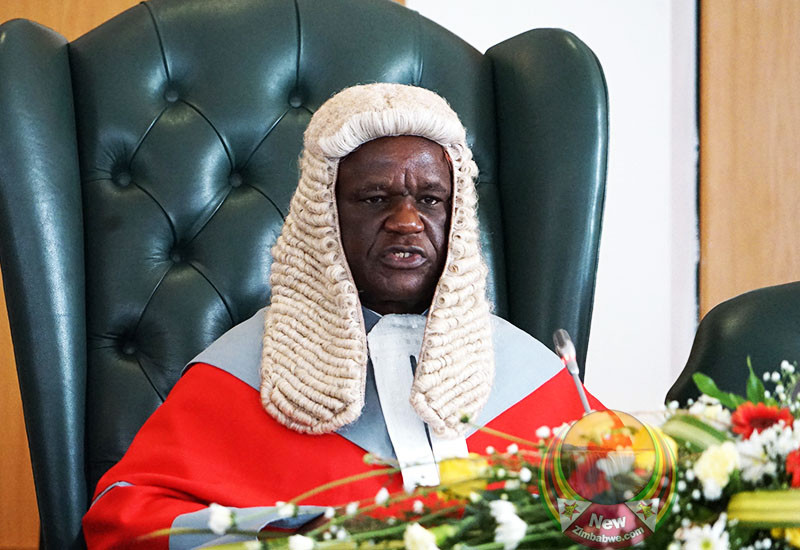

RETIRED Chief Justice Luke Malaba has said transforming Zimbabwe’s judiciary requires strategic leadership, constant learning and investing in people, describing resistance to technological reforms as one of the biggest challenges of his tenure.
In an interview with journalists on his retirement day, Thursday, Malaba reflected on his years leading the Judicial Service Commission (JSC), saying public office demanded “mental agility,” competence and commitment to improving citizens’ lives.
“You are in a public office because if you fail to be conscious of that, you fail to understand the duties of public office,” he said.
Malaba said leadership was not about maintaining the status quo but driving meaningful change within institutions.
“You lead the nation. You lead for the people,” he said.
“JSC must be looked at as an instrument of satisfying the objectives and material changes of the people.”
He described judicial reform as a difficult but necessary process, particularly the introduction of the Integrated Electronic Case Management System (IECMS), which initially faced resistance from judges accustomed to paperwork.
“They didn’t want it. They were saying they were too old and why are you bothering? We are happy with the paperwork.”
The outgoing Chief Justice said he adopted a gradual and strategic approach to force the transition to digital systems.
“I started withdrawing bit by bit the paper. Suddenly, they discovered there was a computer. There was no paper.”
Malaba credited training and mentorship for helping modernise the judiciary, saying leaders must continuously learn and empower others.
“You must learn all the time,” he said.
“What does it mean being a Chief Justice without value, without principles, without change?”
He also stressed the importance of treating employees with dignity and building institutions through persuasion rather than intimidation.
“You don’t harass employees. You must be as nice as possible to an employee because that employee also has the right of surviving without you.”
Malaba said one of his major goals was to create a judiciary capable of functioning effectively even in the absence of its leader.
“You must create many Chief Justices in the system,” he said.
His retirement closes a lengthy judicial career that saw major reforms in court administration and digitisation within Zimbabwe’s juristic space.
The post Malaba admits technological reforms were biggest challenge in his career appeared first on NewZimbabwe.com.